
Tech giants and US agencies pool $1.8B to build a digital twin of the human cell
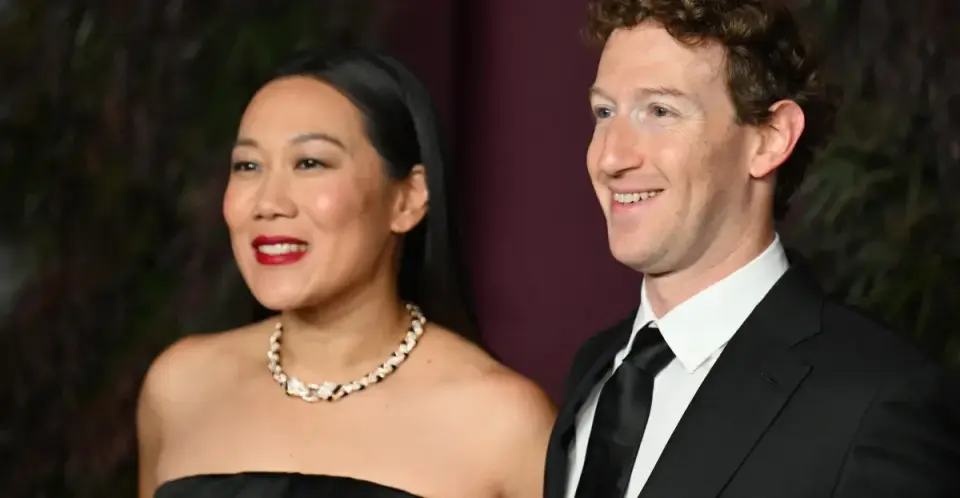
Google DeepMind, Meta, and Isomorphic Labs have committed $300 million to Biohub’s 'Virtual Biology' initiative, joining the US Department of Energy and National Institutes of Health in a $1.8 billion effort to create a high-accuracy predictive model of the human cell. The project aims to generate massive AI datasets that allow researchers to simulate biological processes digitally, reducing the need for expensive physical lab experiments. Biohub, founded by Mark Zuckerberg and Priscilla Chan in 2016, will lead the data generation, with commercial partners receiving a one-year exclusive access period before the data is released to the public scientific community.
Key points
- The total 'Virtual Biology' initiative is valued at $1.8 billion, combining $300 million from private tech firms, over $500 million from the US Department of Energy, and over $500 million in existing datasets from the National Institutes of Health.
- The primary goal is to create a 'universal virtual cell' that can predict how cells behave, allowing scientists to test hypotheses digitally before committing resources to physical laboratory work.
- Commercial partners, including Google and Meta, will have exclusive access to the newly generated data for one year to incentivize their financial contributions, after which the data will become an open scientific resource.
- Biohub’s head of science, Alex Rives, stated that the project addresses the gap between digital computing and physical biology, noting that biological data must be painstakingly measured from the real world to train accurate AI models.
- The initiative is expected to help researchers investigate complex medical questions, such as the molecular mechanisms behind Alzheimer’s disease and the processes of aging and regeneration.
Background
This development follows earlier AI-driven biological research efforts, such as the launch of Malva, a Google-like RNA search engine that indexes over 140 TB of single-cell data to accelerate cancer and infection research. It also aligns with Meta’s recent strategic shifts in AI leadership, where Zuckerberg has expanded his organization’s focus beyond social media into deep scientific and technological innovation. Additionally, Google’s DeepMind division has been actively streamlining its AI development under the influence of key figures like Sergey Brin, positioning the company to compete in high-stakes scientific AI applications.
How outlets are covering it
The Verge and Yahoo Finance emphasize the financial scale of the partnership, highlighting the $300 million joint investment from Google, Meta, and Isomorphic Labs as a major milestone for Zuckerberg’s Biohub. Axios provides a more technical perspective, focusing on the challenges of 'empirical AI' in biology, where models must accurately predict physical outcomes. While The Verge frames the news as a major corporate investment, Axios notes the practical hurdle of generating the necessary biological data from the physical world, which is significantly more complex than training models on existing digital datasets. All sources agree on the $1.8 billion total valuation and the involvement of federal agencies, but Axios uniquely details the one-year data embargo strategy designed to balance commercial incentives with public scientific benefit.
Why it matters
This initiative represents a potential paradigm shift in biomedical research, moving from hypothesis-driven physical experimentation to AI-driven digital simulation. By creating a predictive model of the cell, scientists could drastically reduce the time and cost associated with drug discovery and disease research. The collaboration between major tech corporations and federal agencies signals a new era of 'empirical AI,' where digital models are trained on real-world biological data to solve complex medical challenges like Alzheimer’s and aging. The one-year data embargo also sets a precedent for how private sector investments can be leveraged to create open scientific resources without compromising commercial incentives.
What to watch
The first phase of the project will focus on creating a broad map of cellular biology, gathering data on how cells respond to various changes. Within one year, researchers expect to train initial models and measure their capabilities to determine which additional biological data are most valuable. Following the one-year exclusive access period for commercial partners, the generated datasets will be released to the public, enabling a wider range of scientific organizations to utilize the 'virtual cell' for their own research and simulations.
- Google invests millions in Mark Zuckerberg’s efforts to create a ‘virtual cell’ The Verge
- US government, Google join Zuckerberg-backed Biohub in $1.8 billion push for AI biology data Reuters
- "The beginning of a new scientific paradigm": Zuckerberg's Biohub, U.S. and Google build virtual cell Axios
- Meta, Google Put $300M Into Zuckerberg-Backed $1.8B AI Biology Bet Yahoo Finance
- Zuckerberg’s Biohub Partners With DOE, NIH to Invest $1.8 Billion in Biological Data for AI Models WSJ
Want the full story? Read the original reporting
Read on The Verge