Tag

Biomedical Research

All articles tagged with #biomedical research

science-and-technology7 days ago

Open-source AI co-scientist accelerates biomedical analysis in minutes

A new open-source agentic AI system, OpenScientist, has demonstrated the ability to perform complex biomedical analyses in minutes that would typically take human experts months. Developed by a multidisciplinary team including researchers from Washington University in St. Louis and Harvard Medical School, the tool was validated across five case studies, including Alzheimer’s biomarker quantification and multiple myeloma hypothesis generation. The system operates in air-gapped environments to protect sensitive clinical data and aims to reduce the time and expertise barriers in analyzing large, complex datasets.
NIH Grant Renegotiations Force Scientists to Alter Research to Avoid Political Censorship
science-and-policy8 days ago

NIH Grant Renegotiations Force Scientists to Alter Research to Avoid Political Censorship

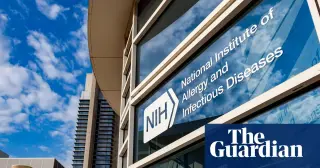
The Trump administration’s National Institutes of Health (NIH) has implemented a controversial 'renegotiation' process that forces researchers to alter grant language and scope to align with political priorities. This has led to widespread changes in funding, with HIV and health equity studies disproportionately affected. While the NIH claims these changes improve scientific rigor, critics and data suggest they constitute viewpoint-based discrimination, causing significant disruptions to medical research and morale.

MIT Scientist Wins $6M Defamation Verdict After Five-Year Legal Battle Over Sexual Misconduct Claims
legal1 month ago

MIT Scientist Wins $6M Defamation Verdict After Five-Year Legal Battle Over Sexual Misconduct Claims

Dr. David Sabatini, a former MIT and Whitehead Institute researcher, was awarded $6 million in damages by a Suffolk County jury on October 17, 2026. The verdict followed a five-year legal dispute with former colleague Dr. Kristin Knouse, who had accused Sabatini of sexual misconduct and coercion. The jury rejected Knouse's counterclaims, finding that Sabatini had defamed her. Sabatini had lost his position at the Whitehead Institute in 2021 after an internal investigation found he had fostered a sexualized atmosphere in his lab, though he maintained the relationship was consensual. The case involved text messages and testimony regarding the nature of their 2018-2019 relationship. Sabatini’s legal team argued Knouse sought to have him fired out of jealousy. The verdict does not resolve claims against the Whitehead Institute, which Sabatini’s team intends to pursue. Knouse’s attorneys plan to appeal. Sabatini, who has since relocated to Prague and Boston, expressed relief but noted the personal toll of the allegations, including threats against his family.

Tech giants and US agencies pool $1.8B to build a digital twin of the human cell
science-and-tech1 month ago

Tech giants and US agencies pool $1.8B to build a digital twin of the human cell

Google DeepMind, Meta, and Isomorphic Labs have committed $300 million to Biohub’s 'Virtual Biology' initiative, joining the US Department of Energy and National Institutes of Health in a $1.8 billion effort to create a high-accuracy predictive model of the human cell. The project aims to generate massive AI datasets that allow researchers to simulate biological processes digitally, reducing the need for expensive physical lab experiments. Biohub, founded by Mark Zuckerberg and Priscilla Chan in 2016, will lead the data generation, with commercial partners receiving a one-year exclusive access period before the data is released to the public scientific community.

Federal Judge Halts DHS Four-Year Cap on International Researcher Visas
policy-and-law2 months ago

Federal Judge Halts DHS Four-Year Cap on International Researcher Visas

A federal judge issued a preliminary injunction blocking the Department of Homeland Security from enforcing a new rule that would limit international students and postdoctoral researchers to a four-year stay in the U.S. The decision halts the implementation of the 'duration of status' policy change, which was set to take effect on Tuesday. Judge F. Dennis Saylor IV ruled that the administration failed to comply with the Administrative Procedure Act, citing insufficient public comment periods and a weak national security justification. While the judge did not issue a final summary judgment, he found the plaintiffs have a substantial likelihood of success. The ruling preserves the long-standing practice allowing scholars to remain in the country for the duration of their training, a policy that supports a significant portion of the U.S. life science workforce.

Lasker Awards Honor Sleep Science Breakthroughs and Hemophilia Treatments
science-and-health2 months ago

Lasker Awards Honor Sleep Science Breakthroughs and Hemophilia Treatments

The 2026 Lasker Awards, often called 'America's Nobel Prizes,' have been awarded to researchers for pivotal discoveries in sleep biology and hemophilia treatment, along with a public service honor for Parkinson's advocacy. Each winner receives a $250,000 honorarium, with ceremonies scheduled for September 17 in New York City.

AI system XunZi identifies new Parkinson's drug targets
science-and-technology3 months ago

AI system XunZi identifies new Parkinson's drug targets

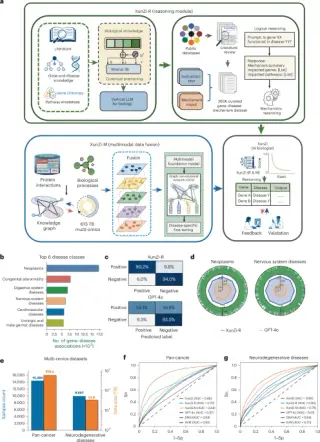
A new AI system named XunZi has been developed to autonomously generate testable hypotheses for disease-modifying therapeutic targets. Trained on massive datasets of biomedical literature and multi-omics data, the tool identifies potential drug targets by integrating logical reasoning with multimodal data fusion. In a key validation, XunZi identified the kinases CHK2 and IRAK4 as aberrantly activated in Parkinson's disease. Experimental tests confirmed that inhibiting CHK2 could rescue dopaminergic neuron loss and motor deficits in mouse models, demonstrating the system's potential to accelerate drug discovery.

Ackman Bets $260M on Upper West Side to Build Brain-Research Campus
real-estate4 months ago

Ackman Bets $260M on Upper West Side to Build Brain-Research Campus

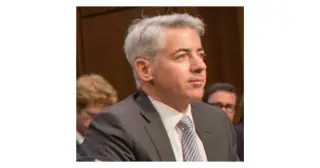
Pershing Square Foundation bought 125 West End Avenue for about $190 million and is under contract to acquire the adjacent 320 West 66th Street for roughly $70 million, with additional development rights that could push the project toward 700,000 square feet of life-science space on the Upper West Side. The plan is to create the Ackman Oxman Institute, a brain‑research campus developed with Mount Sinai, spanning genetics, nutrition, longevity, rehabilitation and neurosurgery. The board includes Nobel laureate Jim Rothman and Stanford neuroscientist Andrew Huberman; operations could begin in the main building by year-end if approvals proceed. The deal may trigger neighborhood reviews given the scale, and the West End Labs leasing site remains active as Taconic and partners prepare for a possible full build-out.

Biomedical preprints largely withstand peer review, large analysis finds
science4 months ago

Biomedical preprints largely withstand peer review, large analysis finds

A large, non‑peer‑reviewed study posted on bioRxiv analyzed 72,644 biomedical preprints (2018–2025) and found that central conclusions remain unchanged in 39.9% and are revised only modestly in about 50%, with major changes in around 10%. Revisions tend to become more cautious after peer review. Major revision rates vary by field (7.2% for bioinformatics vs 17.5% for microbiology) and have declined over time (17% in 2019 to 5.7% in 2024). Preprinted papers are retracted at roughly half the rate of non‑preprinted ones (8.1 vs 18.7 per 10,000), though the study is observational and subject to selection biases. Overall, preprints appear more reliable than some critics claim, but caveats remain regarding interpretation and methodology.

AI agent teams accelerate scientific discovery
technology6 months ago

AI agent teams accelerate scientific discovery

Two AI-agent systems described in Nature—Google DeepMind's Co-Scientist and FutureHouse's Robin—use teams of AI to generate hypotheses, pick experiments, and analyze data to speed up early drug-discovery work. In initial tests they proposed plausible repurposing candidates for AML and dry AMD, with humans carrying out the experiments and validating results; while promising, most candidates require further validation in broader use.

F-4 Phantom II: NASA’s Versatile Sky Laboratory for Aerodynamics and Sonic Booms
aviation-history8 months ago

F-4 Phantom II: NASA’s Versatile Sky Laboratory for Aerodynamics and Sonic Booms

NASA’s Flight Research Center used variants of the McDonnell F-4 Phantom II from 1965 to the mid-1980s for a range of research, including biomedical monitoring flights with instrumented pilots (and monkeys), sonic-boom experiments near Ely, Nevada, and later spanwise blowing studies on the F-4C to probe boundary-layer control and lift, illustrating the aircraft’s versatility before returning to the U.S. Air Force.