
AI-Designed Lung Drug Shows Early Signs of Reversing Biological Age
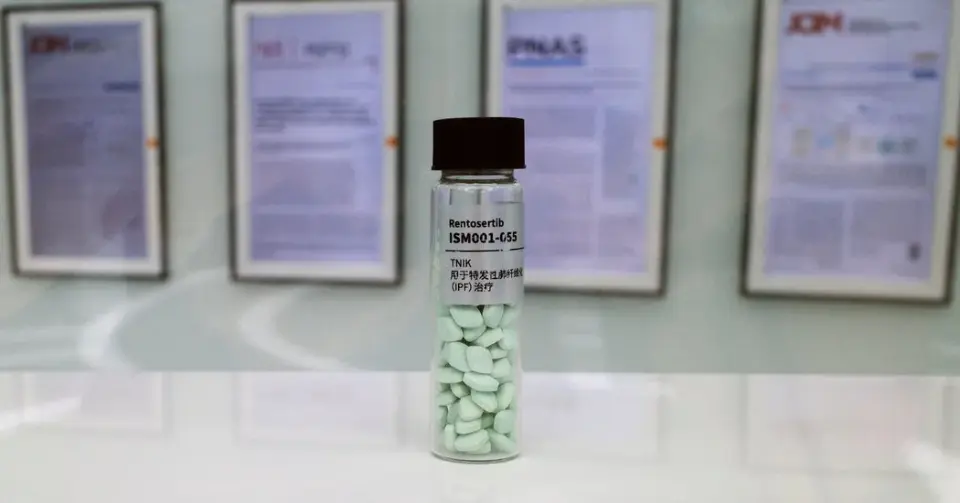
Insilico Medicine reported that rentosertib, an AI-designed drug for idiopathic pulmonary fibrosis, reduced biological age markers in a small clinical trial. Published in Nature Biotechnology, the study analyzed blood samples from 42 patients using six independent proteomic aging clocks. While the drug showed potential to reverse aging indicators by up to three years, experts caution that the results may reflect lung health improvements rather than true anti-aging effects. The findings highlight the promise of AI in drug discovery but require larger trials to confirm efficacy.
Key points
- Rentosertib, a TNIK inhibitor developed by Insilico Medicine using generative AI, showed reduced biological age markers in a phase 2a trial for idiopathic pulmonary fibrosis.
- The study, published in Nature Biotechnology, analyzed blood samples from 42 patients using six independent proteomic aging clocks, all indicating younger biological age in treated groups.
- The largest effect was observed at week four in the 30mg twice-daily arm, where treated patients appeared 2.7 to 3.5 years younger than expected.
- Researchers caution that the observed effects may be due to improved lung health rather than true anti-aging, as idiopathic pulmonary fibrosis is an inflammatory disease that affects blood proteins.
- Insilico Medicine deposited the proteomic data with the China National Center for Bioinformation and released its analysis pipelines as open-source software, enhancing transparency and reproducibility.
Background
This development follows earlier research on repurposed medications and GLP-1 drugs that showed potential to slow aging in animal models. The current study builds on these findings by using AI to design a drug candidate and analyzing its effects on biological age markers in humans.
How outlets are covering it
The New York Times emphasized the potential of AI in drug discovery and the intriguing possibility of slowing aging, while The Next Web highlighted the limitations of the study, noting that the observed effects may be due to improved lung health rather than true anti-aging. Yahoo Finance focused on the financial implications of the findings, suggesting that a drug that extends healthy life could have significant economic benefits.
Why it matters
The findings suggest that AI-designed drugs may have broader applications beyond their intended therapeutic targets, potentially leading to new treatments for aging-related diseases. However, the small sample size and the possibility that the observed effects are due to improved lung health rather than true anti-aging highlight the need for larger, more rigorous trials to confirm these results.
What to watch
Insilico Medicine has entered rentosertib into phase 3 trials to further evaluate its efficacy for idiopathic pulmonary fibrosis. The company will likely continue to analyze the proteomic data and refine its AI models to better understand the drug's effects on biological age. Larger trials will be necessary to determine whether the observed effects generalize beyond sick lungs and to confirm the drug's potential as an anti-aging treatment.
- Early Data Indicates an A.I.-Generated Drug Could Slow Aging The New York Times
- Insilico’s Co-CEO Has Big Hopes That Fibrosis Drug Can Reverse Aging Too WSJ
- AI-Discovered Drug Reverses Aging Markers In Study, Biotech Says Bloomberg.com
- Nature Biotechnology | Insilico's AI-Driven IPF Candidate Rentosertib Shows Potential for Biological Age Reversal, as Assessed by Six Proteomic Aging Clocks Yahoo Finance
- Insilico says its AI-designed lung drug lowered biological age markers in a 42-patient trial The Next Web
Want the full story? Read the original reporting
Read on The New York Times