
China's LandSpace Achieves First Land-Based Rocket Booster Recovery
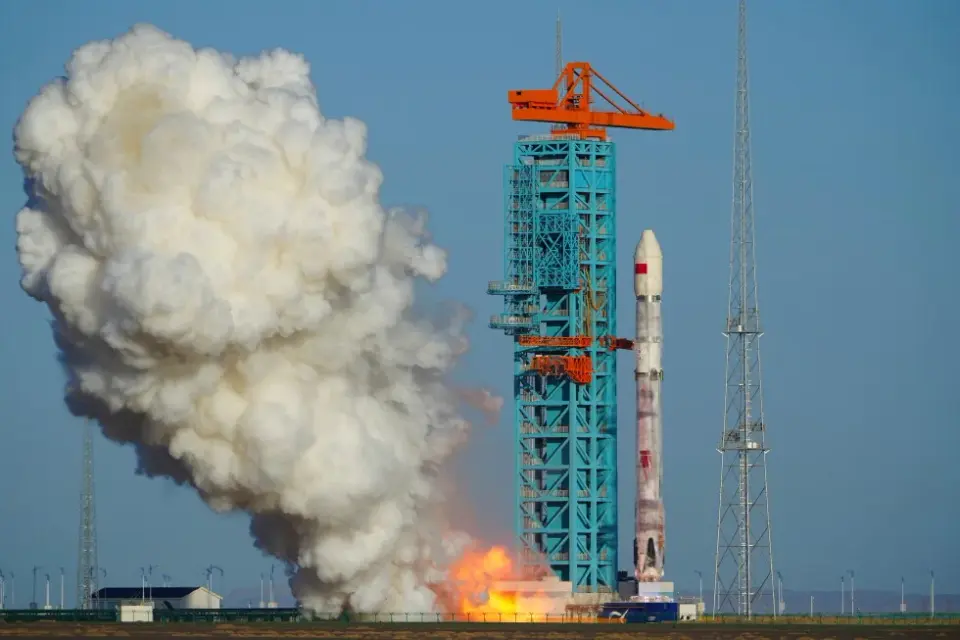
On August 19, 2026, Chinese private space company LandSpace successfully recovered the first stage of its Zhuque-3 rocket on land, marking the first time a Chinese firm has achieved an orbital booster landing on solid ground. The launch took place at the Dongfeng Commercial Space Innovation Pilot Zone in northwestern China, with the booster landing approximately 242 miles away in Gansu province. This success follows a failed recovery attempt eight months prior and coincides with a similar achievement by state-owned CASC's Long March 10B one month earlier. While the Zhuque-3 is designed to rival SpaceX's Falcon 9, it has a lower payload capacity and is intended for fewer reuses.
Key points
- LandSpace successfully landed and recovered the first stage of its Zhuque-3 rocket on August 19, 2026, at a site in Gansu province, 242 miles from the launchpad in northwestern China.
- This was the second orbital flight for the Zhuque-3; the first attempt eight months earlier ended in failure when the booster exploded upon landing.
- The Zhuque-3 is a stainless-steel rocket, 66.1 meters tall, designed to lift 14.2 metric tons to low-Earth orbit, compared to SpaceX's Falcon 9 which lifts 22.8 tons.
- The Zhuque-3 is designed for up to 20 reuses, whereas the most reused Falcon 9 booster has completed 36 flights as of July 2026.
- This achievement follows a successful first-stage landing by China's state-owned Long March 10B rocket one month earlier, highlighting rapid progress in Chinese reusable launch technology.
Background
China has been accelerating its reusable rocket development to compete with the United States in the new space race. The U.S. plans to return humans to the moon by 2028, while China aims for 2030. LandSpace's success is part of a broader trend of Chinese private and state entities achieving orbital booster landings, signaling a narrowing gap with U.S. capabilities like SpaceX's Falcon 9.
How outlets are covering it
AP News reported the event as a historic first for China, emphasizing the land-based recovery. Scientific American highlighted the competitive implications, noting how close China is to the U.S. in the space race and comparing the Zhuque-3's specs to SpaceX's Falcon 9. Space.com focused on the technical achievement, calling it a 'touchdown' for a private Chinese rocket on its second-ever flight. Yahoo Finance framed the event in the context of SpaceX stock performance, suggesting the milestone could impact market perceptions of SpaceX's dominance.
Why it matters
The successful land-based recovery of a rocket booster by a Chinese private company marks a significant milestone in the global race for reusable launch technology. It demonstrates China's rapid advancement in space capabilities, potentially challenging U.S. dominance and influencing future space exploration and commercial launch markets.
What to watch
LandSpace and other Chinese firms will likely continue testing and deploying reusable rockets, aiming to increase payload capacity and reuse frequency. The U.S. and China will continue competing for lunar exploration milestones, with China planning crewed lunar landings by 2030. Investors and analysts will monitor the impact on SpaceX and other U.S. space companies as China closes the technological gap.
- China successfully recovers rocket stage on land for the first time AP News
- SpaceX stock in focus after China rocket milestone, share unlock ahead Yahoo Finance
- What China’s latest reusable rocket feat reveals about its space ambitions Scientific American
- Touchdown! Private Chinese rocket aces landing on 2nd-ever flight (video) Space
- China's LandSpace lands rocket booster; joins SpaceX, Blue Origin with reusable tech Reuters
Want the full story? Read the original reporting
Read on AP News