Tag

China Space Program

All articles tagged with #china space program

Beijing’s Space Surge: Reusable Rockets, Military Risks, and US Vulnerabilities
geopolitics-and-defense1 month ago

Beijing’s Space Surge: Reusable Rockets, Military Risks, and US Vulnerabilities

China has achieved its first land-based rocket booster recovery, signaling a major leap in reusable launch technology. While the US still leads in launch volume, Beijing’s rapid expansion of commercial and military space capabilities is eroding American dominance. Analysts warn that US over-reliance on SpaceX and satellite infrastructure creates critical vulnerabilities in a potential conflict, urging Washington to diversify its space architecture and strengthen allied cooperation.


Mars Sample Return Collapse Leaves Perseverance's Biosignature Hints in Limbo
science1 month ago

Mars Sample Return Collapse Leaves Perseverance's Biosignature Hints in Limbo

NASA has officially canceled its Mars Sample Return program, leaving Perseverance’s 33 collected rock samples, including a potential biosignature, stranded on Mars. While China’s Tianwen-3 mission targets a 2031 return, NASA remains committed to retrieving the samples via commercial or alternative methods, though no concrete plan exists yet.

China's Tianwen-3 on track for 2028 Mars launch as US cancels sample return
science-and-technology2 months ago

China's Tianwen-3 on track for 2028 Mars launch as US cancels sample return

China's Tianwen-3 mission is on schedule to launch in 2028 and return Martian samples to Earth by 2031, potentially beating the United States. The US Mars Sample Return program has been canceled due to funding cuts, leaving Perseverance rover samples stranded on Mars. China's simpler, single-mission approach avoids the complex multi-stage design that caused US cost overruns.

Chang'e 7 Launch Delayed to 2027 Amid Typhoon; Mission Aims to Map Lunar South Pole Ice
space3 months ago

Chang'e 7 Launch Delayed to 2027 Amid Typhoon; Mission Aims to Map Lunar South Pole Ice

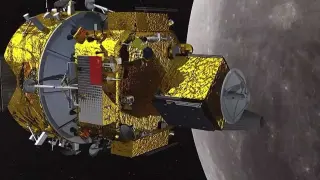
China’s Chang'e 7 lunar mission, designed to search for water ice at the Moon’s south pole, has been delayed until 2027 due to weather conditions at the Wenchang launch site. The mission, which includes an orbiter, lander, rover, and a novel hopping vehicle, aims to assess the feasibility of extracting lunar resources. It is part of a broader strategy to establish a human presence on the Moon by 2030 and includes international scientific payloads, including a U.S.-supported telescope.

LandSpace Lands First Chinese Commercial Booster, Narrowing Gap with SpaceX
space-and-defense3 months ago

LandSpace Lands First Chinese Commercial Booster, Narrowing Gap with SpaceX

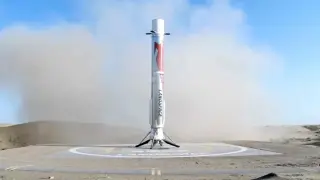
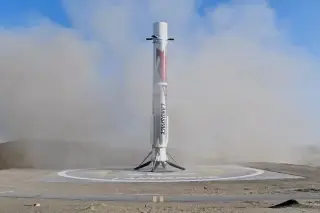
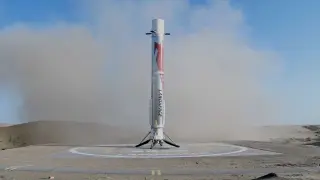
On August 19, 2026, Chinese firm LandSpace successfully recovered the first stage of its Zhuque-3 orbital rocket on land, marking the first successful land-based booster recovery for a Chinese commercial entity. This follows a July sea-based recovery by state-owned CASC. The milestone signals a rapid acceleration in China’s reusable launch capabilities, potentially reducing costs and increasing launch frequency for both commercial and military space operations.

China's Land Rocket Recovery Challenges SpaceX Amid Share Unlock
space-and-technology3 months ago

China's Land Rocket Recovery Challenges SpaceX Amid Share Unlock

China successfully recovered the first stage of its Zhuque-3 rocket on land for the first time, marking a significant milestone in reusable launch technology. This achievement comes as SpaceX faces increased scrutiny due to a major share unlock and competitive pressure from Beijing's advancing space capabilities.

China's LandSpace Achieves First Land-Based Rocket Booster Recovery
space3 months ago

China's LandSpace Achieves First Land-Based Rocket Booster Recovery

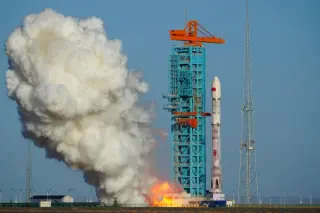
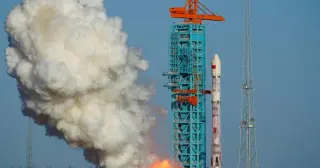
On August 19, 2026, Chinese private space company LandSpace successfully recovered the first stage of its Zhuque-3 rocket on land, marking the first time a Chinese firm has achieved an orbital booster landing on solid ground. The launch took place at the Dongfeng Commercial Space Innovation Pilot Zone in northwestern China, with the booster landing approximately 242 miles away in Gansu province. This success follows a failed recovery attempt eight months prior and coincides with a similar achievement by state-owned CASC's Long March 10B one month earlier. While the Zhuque-3 is designed to rival SpaceX's Falcon 9, it has a lower payload capacity and is intended for fewer reuses.

China Achieves First Land-Based Rocket Booster Recovery
space3 months ago

China Achieves First Land-Based Rocket Booster Recovery

On August 18, 2026, the Beijing-based startup LandSpace successfully landed the first stage of its Zhuque-3 rocket on a terrestrial pad. This marks China's first-ever land-based recovery of an orbital-class booster, utilizing deployable landing legs. While the state-owned CASC achieved a sea-based recovery in July, this new milestone demonstrates a different approach to reusability, mirroring SpaceX's Falcon 9 methodology.

Unexplained Tapping on Shenzhou 5 Capsule Remains a Mystery for Chinese Space Program
space3 months ago

Unexplained Tapping on Shenzhou 5 Capsule Remains a Mystery for Chinese Space Program

During China's first crewed orbital mission in 2003, astronaut Yang Liwei reported hearing a rhythmic knocking sound against his capsule's hull. Despite visual checks showing no external objects, the noise persisted and was later reported by astronauts on subsequent missions. While speculative theories abound, experts suggest thermal expansion of the spacecraft due to temperature fluctuations as the most plausible explanation, though the exact cause remains officially unresolved.

China’s Tianwen-2 Closes in on Earth’s Tiny Quasi-Moon for First Asteroid Sample
science4 months ago

China’s Tianwen-2 Closes in on Earth’s Tiny Quasi-Moon for First Asteroid Sample

China’s Tianwen-2 spacecraft has approach within about 12.5 miles of the near-Earth quasi-moon Kamo'oalewa after a 400-day, 620-million-mile journey, enabling the first close photos and potentially a sample collection using an anchor-and-attach method, signaling a major milestone for China's space program.

China’s Tianwen-2 Approaches Earth’s Quasi-Moon for Possible Asteroid Sample
space4 months ago

China’s Tianwen-2 Approaches Earth’s Quasi-Moon for Possible Asteroid Sample

China’s Tianwen-2 spacecraft is within about 12.5 miles of Kamo'oalewa, one of Earth's quasi-moons, to capture the first clear photo and potentially collect surface samples over a year-long co-orbital mission using anchor-and-attach or touch-and-go methods; success would make China the third nation to sample an asteroid, though the tiny, rapidly rotating target poses significant challenges.

China’s Tianwen-2 aims for first-ever sampling of Earth’s quasi-moon Kamo'oalewa
space-exploration5 months ago

China’s Tianwen-2 aims for first-ever sampling of Earth’s quasi-moon Kamo'oalewa

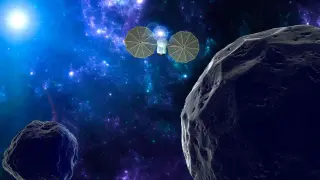
China’s CNSA Tianwen-2 spacecraft has reached the near-Earth quasi-moon Kamo'oalewa and is set to attempt sampling on July 4, 2026, potentially via a touch‑and‑go grab or direct drilling, collecting about 100 grams of surface material. After mapping the rock from ~300 m to 20 km altitude, the samples would return to Earth in late 2027, with a planned 2035 follow‑up to study 311P/PanSTARRS. The mission could reveal Kamo'oalewa’s origin—perhaps lunar debris or a main-belt fragment—while showcasing China’s space capabilities and informing future asteroid resource exploration.

China Probes Early Human Development in Space With Synthetic Embryos
science6 months ago

China Probes Early Human Development in Space With Synthetic Embryos

China has sent synthetic human embryos to the Tiangong space station to study how microgravity affects early development. The two sample groups—one cultured on uterine cells simulating implantation and another on a microfluidic chip modeling early tissue formation—will run for five days before being frozen for Earth-based analysis; the samples cannot develop into a fetus. Results will be compared with a planet-based control to gauge space effects on development, building on prior animal studies and addressing questions about human reproduction in space.

China unveils 198-ton Tiangong expansion to six modules as ISS era ends
space6 months ago

China unveils 198-ton Tiangong expansion to six modules as ISS era ends

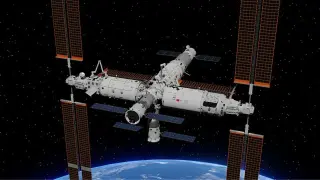
China plans a six‑module expansion of its Tiangong space station, boosting total mass to about 198 tons with a multifunctional extension to the Tianhe core, docking interfaces and upgraded propulsion/robotics. The move would widen international participation (Pakistan, Hong Kong, Macau) and position Tiangong as a global orbital laboratory as the ISS retires around 2030.

Crack in Orbit: Chinese Taikonauts Survive Space Debris Hit
science9 months ago

Crack in Orbit: Chinese Taikonauts Survive Space Debris Hit

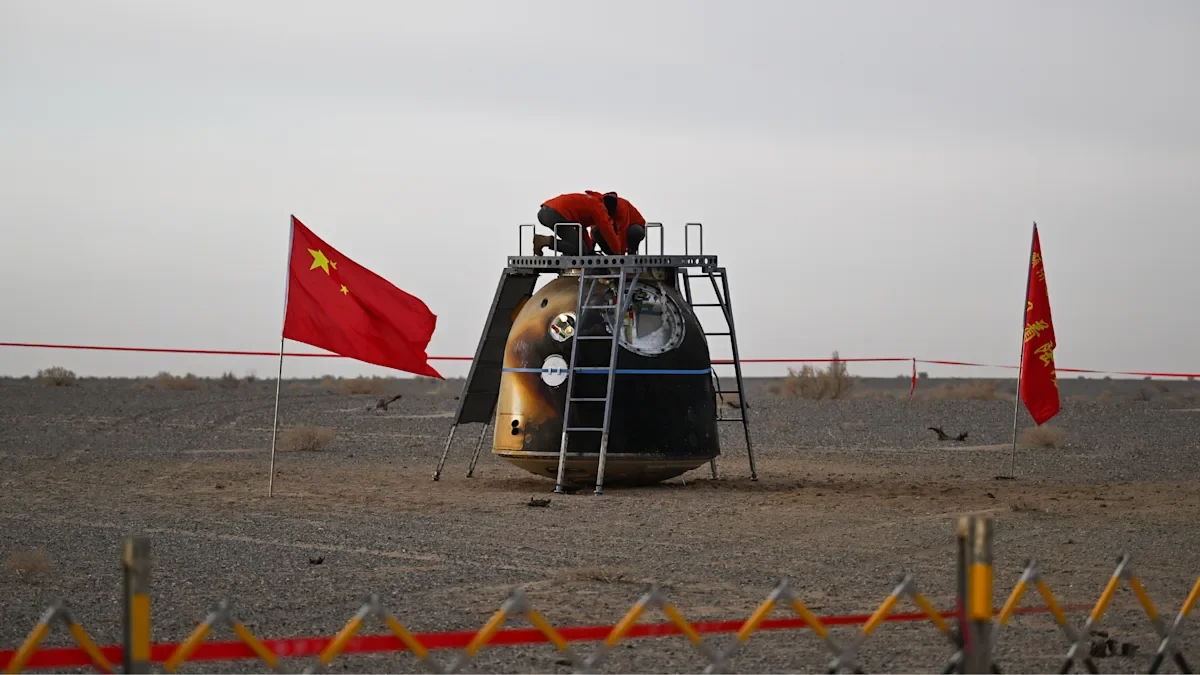
An anomaly on China’s Shenzhou 20 mission left three taikonauts temporarily stranded in space after a tiny piece of space debris cracked the viewport. After inspection, ground crews ferried them back to Earth using the Shenzhou 21 capsule that had been sent to retrieve the relief crew, leaving Shenzhou 20 docked. The empty Shenzhou 20 was later brought back to Earth as the Shenzhou 21 crew returned in another capsule. The crew landed in Inner Mongolia on Jan. 19, 2026. The incident highlights the dangers of orbital debris and showcases China’s space program’s safety and resilience.