
Starship’s historic catch accelerates reuse, but human flights remain years away
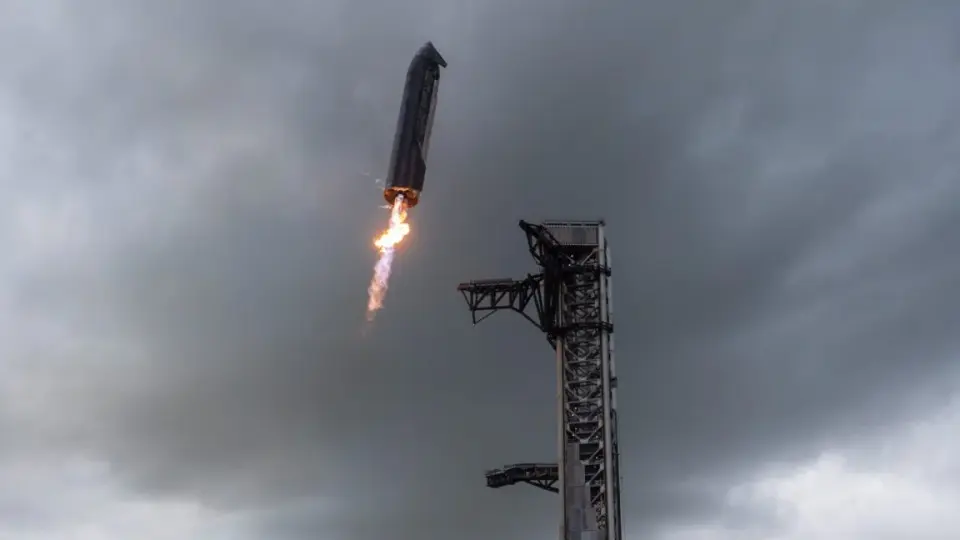
SpaceX’s 15th Starship test flight achieved a historic milestone by catching the upper stage with tower arms, validating full reusability. While this accelerates plans for rapid launch cadences to support satellite constellations, human flights remain distant. NASA’s lunar landing target is 2028, but Earth-based human flights are not expected until the mid-2030s due to safety and regulatory hurdles.
Key points
- The 15th Starship flight successfully caught the upper stage with the 'chopsticks' arms on Nov. 14, 2026, after a 22.5-hour orbital mission.
- The Super Heavy booster failed to land on the tower due to a low-fuel alarm and splashed down in the Gulf of Mexico.
- SpaceX targets 10,000 launches per year by 2030 to support Starlink V3 and Starmind data center constellations.
- NASA’s Artemis IV lunar landing using Starship is targeted for 2028, contingent on successful orbital refueling tests.
- Human flights from Earth are not expected before 2030, potentially not until the mid-2030s, due to lack of launch abort systems and regulatory challenges.
Background
Previous Starship milestones included the first orbital flight and booster catches, but this was the first successful catch of the upper stage. Earlier human flight estimates, such as the 2024 Mars target and 2023 lunar flyby, were missed or canceled. SpaceX has historically struggled with meeting public launch dates for crewed missions.
How outlets are covering it
Ars Technica emphasizes the uncertainty of human flight timelines, noting that SpaceX prioritizes revenue-generating satellite launches over crewed missions. The Atlantic highlights the technological breakthrough of the catch as a redefinition of rocketry. Space.com focuses on the remaining technical hurdles, such as orbital refueling and cabin development, for the 2028 lunar target. Fox Business commentary suggests SpaceX has a 'forever advantage' due to this reusability breakthrough.
Why it matters
The success of the catch validates SpaceX’s vision for fully reusable rockets, which could drastically reduce launch costs and enable massive satellite constellations. However, the delay in human flights highlights the complexity of adapting cargo vehicles for crewed missions, impacting NASA’s Artemis timeline and commercial spaceflight prospects.
What to watch
SpaceX will attempt to reuse the caught upper stage on the next flight. The company will continue testing orbital refueling capabilities, crucial for lunar missions. NASA will monitor SpaceX’s progress on the crew cabin prototype, with Blue Origin’s Blue Moon as a backup for Artemis IV if SpaceX misses the 2028 target.
- When will humans actually fly on Starship? Ars Technica
- Awesome The Atlantic
- What's next for SpaceX's Starship after epic Flight 15 chopsticks catch? Space
- SpaceX Starship returns to landing pad from orbit, acing test for reusable rockets Reuters
- Lou Basenese on SpaceX: This is not a 'first mover advantage, but a forever advantage' Fox Business
Want the full story? Read the original reporting
Read on Ars Technica