Tag

Human Spaceflight

All articles tagged with #human spaceflight

Starship’s historic catch accelerates reuse, but human flights remain years away
space7 days ago

Starship’s historic catch accelerates reuse, but human flights remain years away

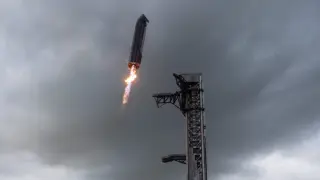
SpaceX’s 15th Starship test flight achieved a historic milestone by catching the upper stage with tower arms, validating full reusability. While this accelerates plans for rapid launch cadences to support satellite constellations, human flights remain distant. NASA’s lunar landing target is 2028, but Earth-based human flights are not expected until the mid-2030s due to safety and regulatory hurdles.
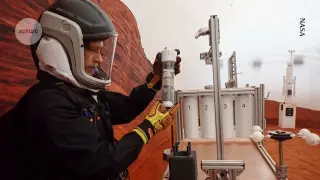
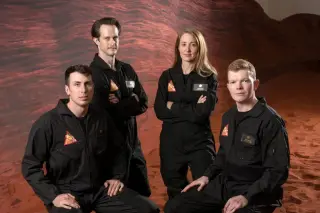
NASA CHAPEA Crew Exits Houston Habitat After 378-Day Mars Simulation

NASA CHAPEA Crew Exits Houston Habitat After 378-Day Mars Simulation

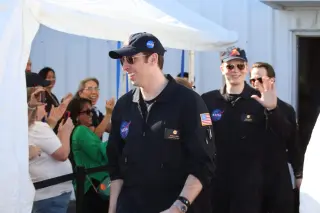
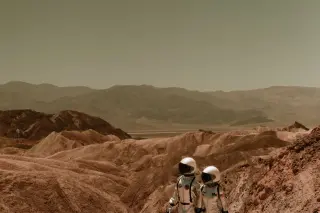
Four NASA volunteers emerged from a 3D-printed habitat in Houston on October 31, 2026, after 378 days of isolation to simulate a Mars mission. The Crew Health and Performance Exploration Analog (CHAPEA) Mission 2 tested long-duration isolation, communication delays, and crop cultivation to prepare for future lunar and Martian exploration. The crew will undergo two weeks of post-mission evaluations, while NASA plans to transition the program into a broader Moon and Mars Exploration Analog (MMEA) starting in 2027.

NASA CHAPEA Crew Exits Houston Hangar After 378-Day Mars Simulation
science-and-technology23 days ago

NASA CHAPEA Crew Exits Houston Hangar After 378-Day Mars Simulation

Four volunteers exited a 3D-printed habitat at NASA’s Johnson Space Center on October 31, 2026, after spending 378 days in a simulated Mars environment. The CHAPEA Mission 2 crew, led by Ross Elder, tested life-support systems, crop cultivation, and communication delays to gather data for future lunar and Martian exploration. The mission concluded with a family reunion and the start of a two-week post-mission evaluation period.

Crew-12 Astronauts Urge Global Unity After 237-Day ISS Mission
space1 month ago

Crew-12 Astronauts Urge Global Unity After 237-Day ISS Mission

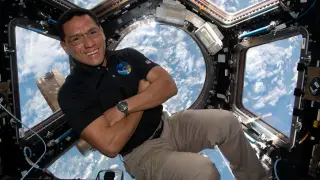
After 237 days in orbit, SpaceX Crew-12 astronauts returned to Earth on Oct. 8 and held a press conference on Oct. 15. Commander Jessica Meir emphasized the fragility of Earth's atmosphere and the artificial nature of national borders, urging humanity to protect the planet. The crew described their mission as a period of 'joy' despite significant challenges, marking the end of a record-breaking European spaceflight for Sophie Adenot and concluding a mission that replaced an earlier medical evacuation.

Crew-12 Returns to Earth After 237 Days, Closing Medical Evacuation Era
science1 month ago

Crew-12 Returns to Earth After 237 Days, Closing Medical Evacuation Era

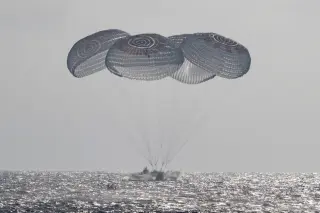
Four astronauts returned to Earth on October 8 after 237 days on the International Space Station. The crew, which included NASA’s Jessica Meir and Jack Hathaway, ESA’s Sophie Adenot, and Roscosmos’ Andrey Fedyaev, splashed down in the Pacific off Los Angeles. Their mission replaced a previous crew sent home early due to a medical emergency, marking NASA’s first medical evacuation in 65 years.

Crew-12 astronauts splash down after 237-day ISS mission
space1 month ago

Crew-12 astronauts splash down after 237-day ISS mission

Four astronauts returned to Earth on October 8, 2026, after a 237-day mission aboard the International Space Station. The crew, consisting of Jessica Meir, Jack Hathaway, Sophie Adenot, and Andrey Fedyaev, splashed down in the Pacific Ocean off Los Angeles. Their mission included significant scientific research and multiple spacewalks, concluding a period that began with an emergency medical evacuation.

Mars missions face severe physiological hurdles from gravity shifts, radiation, and confinement
science-and-technology1 month ago

Mars missions face severe physiological hurdles from gravity shifts, radiation, and confinement

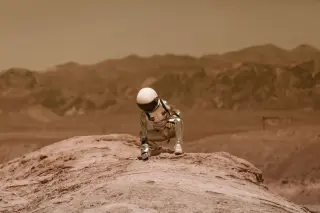
While private firms and NASA advance Mars plans, a round trip could take three years, far exceeding current spaceflight records. The journey poses severe risks from zero-gravity muscle and bone loss, intense cosmic radiation, and psychological stress in confined spaces. Current countermeasures like exercise and experimental shielding are insufficient for the duration and isolation required, making human survival on the Red Planet a significant scientific challenge.

Artemis II Pilot Victor Glover Trades Spacesuit for Cal Poly Leadership Role
space2 months ago

Artemis II Pilot Victor Glover Trades Spacesuit for Cal Poly Leadership Role

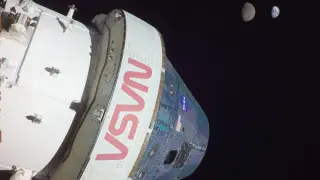
NASA astronaut Victor Glover has transitioned to emeritus status and accepted a full-time executive advisory role at California Polytechnic State University (Cal Poly). This move follows the conclusion of the Artemis II lunar flyby in April 2026. While his commander, Reid Wiseman, also entered emeritus status, Glover is the only one to publicly announce a new external appointment. He will continue to support NASA missions as a consultant while guiding Cal Poly’s strategic initiatives in engineering and aerospace.

Prototype 'Laundry Gun' Uses Cold Plasma to Sterilize Astronaut Clothing
space3 months ago

Prototype 'Laundry Gun' Uses Cold Plasma to Sterilize Astronaut Clothing

Engineers at the University of Alabama in Huntsville have developed a prototype device nicknamed the 'laundry gun' to address hygiene challenges for long-duration space missions. The tool sterilizes fabric by emitting violet-colored, room-temperature plasma, which kills bacteria without requiring water. This innovation aims to solve the issue of astronauts wearing the same clothes for weeks in confined spacecrafts, where traditional washing is impossible due to water scarcity. The technology could also be used to sanitize spacesuits and tools before astronauts step onto Mars, ensuring microbial safety for crew health.

NASA’s Mars Architecture Remains a Blueprint, Not a Flight Manifest
space-exploration3 months ago

NASA’s Mars Architecture Remains a Blueprint, Not a Flight Manifest

As of August 2026, NASA has not set an official date for the first crewed Mars landing because its 'Moon to Mars Architecture' is a systems blueprint, not a funded mission manifest. While the agency has finalized key technical choices like nuclear fission power and a minimum four-person crew, critical logistical questions regarding ascent vehicles and propellant sources remain unresolved. Historical precedents, such as the 1980s US plans and the 2033 European roadmap, illustrate how landing dates depend on continuous funding and political support rather than just technical feasibility.

AstroRad Vest Passes Artemis I Test, Offering Personal Shielding for Lunar and Mars Missions
space3 months ago

AstroRad Vest Passes Artemis I Test, Offering Personal Shielding for Lunar and Mars Missions

A new study confirms that the AstroRad radiation-shielding vest, developed by Israeli startup StemRad with support from the Israel Space Agency and Lockheed Martin, successfully passed testing during NASA’s Artemis I mission. The vest, worn by the 'phantom' Zohar inside the uncrewed Orion spacecraft, aims to protect astronauts from solar particle events, which pose a significant cancer risk during long-duration missions to the Moon and Mars. While traditional shielding like lead is ineffective against certain space particles due to weight constraints and secondary radiation issues, personal garments offer a viable alternative. This development addresses a major health challenge for future human exploration beyond Earth.

Boulder Summit Concludes: Titan Human Missions Blocked by Engineering, Not Physics
science-and-technology3 months ago

Boulder Summit Concludes: Titan Human Missions Blocked by Engineering, Not Physics

A two-day summit in Boulder, Colorado, concluded that sending humans to Saturn's moon Titan is feasible but requires decades of sustained engineering effort rather than overcoming physical impossibilities. Organizers emphasized that Titan's dense atmosphere offers radiation protection and potential fuel sources, though extreme cold remains a major challenge. The event aimed to normalize the concept of Titan exploration to build long-term momentum, with robotic missions like NASA's Dragonfly serving as essential precursors.