
ULA Vulcan Centaur fails to orbit 40 Amazon satellites after early booster anomaly
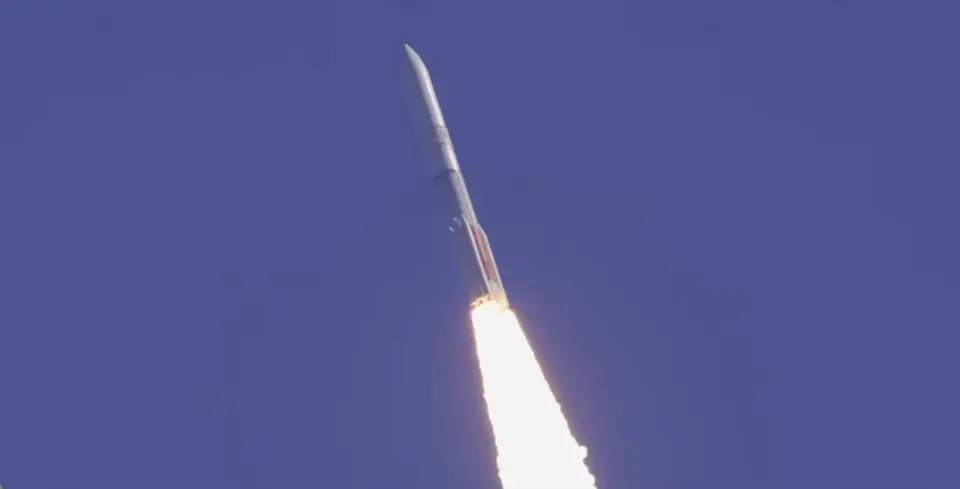
United Launch Alliance confirmed on Nov. 17 that its Vulcan Centaur rocket failed shortly after liftoff on Nov. 15, resulting in the loss of 40 Amazon Leo internet satellites. Although telemetry was lost at 10 minutes, ULA stated the issue began immediately after launch due to low first-stage booster performance. The Centaur V upper stage performed nominally but could not compensate for the deficit. This is the first total mission failure for ULA since 2006 and the third anomaly for the Vulcan rocket since its 2024 debut.
Key points
- ULA attributes the failure to low performance in the first-stage booster, which prevented the rocket from reaching minimal velocity and altitude for stage separation.
- The Centaur V upper stage, powered by RL-10C engines, functioned correctly but lacked the energy to reach orbit due to the initial deficit.
- Solid rocket boosters (SRBs) performed nominally, indicating the previous nozzle issues were resolved, but the core stage anomaly remains under investigation.
- The failure impacts Amazon’s plan to deploy over 3,200 satellites, with 38 launches booked on Vulcan, and delays ULA’s return to the Space Force’s National Security Space Launch program.
- The incident exacerbates concerns over US launch capacity, as both Vulcan and Blue Origin’s New Glenn are currently grounded, increasing reliance on SpaceX.
Background
The Vulcan Centaur debuted in January 2024 and experienced two previous anomalies involving SRB nozzles in October 2024 and February 2026. Following the second incident, the US Space Force grounded the rocket for nine months. ULA implemented nozzle improvements, and the Nov. 15 launch was intended as a return-to-flight mission for Amazon Leo LV-01. The rocket had been rescheduled twice due to scrubs prior to the failed attempt.
How outlets are covering it
Space.com and Breaking Defense report that ULA CEO Mark Peller confirmed the first-stage booster underperformed, leaving the exact cause unconfirmed. Ars Technica cites preliminary data suggesting the issue may not be with the BE-4 engines themselves but rather with propellant feed systems or an asymmetric engine shutdown, noting that high-zoom cameras showed one engine dimmer than the other. Yahoo Finance highlights the financial impact, noting Amazon shares fell 3.34% on Nov. 16 following the failure and other news. Breaking Defense emphasizes the strategic implications, noting that the failure deepens concerns about a US launch bottleneck as SpaceX phases out Falcon 9 by 2030.
Why it matters
The failure removes a critical heavy-lift option for both commercial and military payloads at a time when US launch capacity is constrained. It delays Amazon’s broadband network expansion and threatens ULA’s contract with the Space Force. Additionally, if the BE-4 engine is implicated, it could delay Blue Origin’s New Glenn rocket, which is essential for NASA’s Artemis program.
What to watch
The Federal Aviation Administration is overseeing an investigation led by ULA, which is described as complicated and in early stages. ULA and Blue Origin are collaborating to determine the root cause. The Vulcan rocket is expected to be grounded for at least six months. Blue Origin is testing modified BE-4 valves and expects to complete its own anomaly investigation by the end of the month.
- ULA lost a Vulcan Centaur rocket 10 minutes after launch — but the failure began just after liftoff Space
- The data is very preliminary, but Vulcan failure may not be due to BE-4 engines Ars Technica
- Amazon loses 40 Leo satellites as Boeing-Lockheed rocket fails DW.com
- Vulcan failure deepens concerns over US military launch capacity Breaking Defense
- Stock Market Today, Nov. 16: Amazon Falls on New AI Chip Export Rule and Leo Satellite Launch Failure Yahoo Finance
Want the full story? Read the original reporting
Read on Space