
ULA Vulcan Centaur suffers first mission failure, losing 40 Amazon Leo satellites
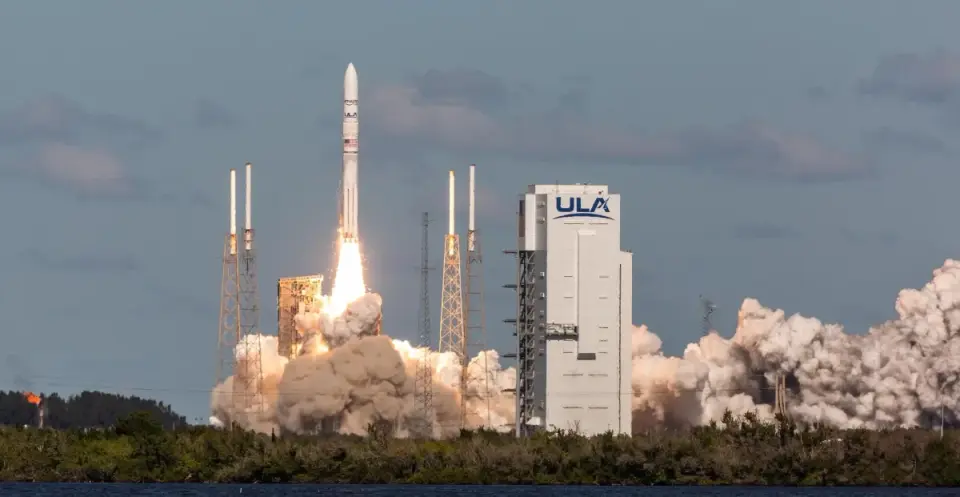
United Launch Alliance’s Vulcan Centaur rocket experienced its first mission failure in 20 years, destroying 40 Amazon Leo satellites during a launch from Cape Canaveral on November 15, 2026. The anomaly occurred 10 minutes into the flight, preventing the payload from reaching orbit. This incident marks the first total mission loss for ULA since its founding and follows a nine-month grounding of the Vulcan due to solid rocket booster nozzle issues. Amazon expressed confidence in ULA’s ability to resolve the issue, while ULA pledged transparency as it investigates the cause.
Key points
- The Vulcan Centaur rocket launched from Space Launch Complex 41 at Cape Canaveral on November 15, 2026, at 12:11 p.m. ET.
- The mission, designated Amazon Leo LV-01, aimed to deploy 40 broadband satellites to low Earth orbit for Amazon’s Leo constellation.
- An anomaly occurred 10 minutes into the flight, causing the rocket to fail to deliver the satellites to orbit.
- This is the first total mission failure for ULA in its 20-year history, following a nine-month grounding due to solid rocket booster nozzle issues.
- Amazon expressed confidence in ULA’s ability to resolve the issue, while ULA pledged transparency as it investigates the cause.
Background
The Vulcan Centaur rocket had been grounded for nine months following solid rocket booster nozzle issues on previous missions. The U.S. Space Force had paused national security launches on Vulcan until ULA addressed the problem. ULA had been working on a redesigned nozzle and a new launch platform dedicated to Amazon missions. The Amazon Leo constellation, formerly known as Project Kuiper, is planned to consist of more than 3,200 satellites in low Earth orbit, competing with SpaceX’s Starlink network.
How outlets are covering it
The Verge reported that the Vulcan Centaur suffered its first mission failure in 20 years, losing 40 Amazon Leo satellites. Space.com noted that the launch was the first for the Vulcan Centaur in nine months, following a grounding due to solid rocket booster nozzle issues. Florida Today provided live coverage of the launch, noting that the rocket was fueled with cryogenic propellant and that the launch was scheduled for 12:11 p.m. ET. All sources agreed that the anomaly occurred 10 minutes into the flight, but only The Verge and Space.com mentioned the nine-month grounding and the solid rocket booster nozzle issues. Amazon expressed confidence in ULA’s ability to resolve the issue, while ULA pledged transparency as it investigates the cause.
Why it matters
The failure of the Vulcan Centaur rocket marks the first total mission loss for ULA in its 20-year history, raising concerns about the reliability of the rocket. The incident follows a nine-month grounding due to solid rocket booster nozzle issues, and the cause of the failure remains unconfirmed. The loss of 40 Amazon Leo satellites could delay the development of Amazon’s Leo constellation, which is planned to compete with SpaceX’s Starlink network. The incident also raises questions about the safety and reliability of the Vulcan Centaur rocket, which is used for national security missions.
What to watch
ULA pledged transparency as it investigates the cause of the failure. Amazon expressed confidence in ULA’s ability to resolve the issue and deliver on its long-term plans for Vulcan. The cause of the failure remains unconfirmed, and ULA is expected to provide more information as its investigation progresses. The incident may lead to further delays in the development of Amazon’s Leo constellation and could raise concerns about the reliability of the Vulcan Centaur rocket for national security missions.
- Vulcan rocket fails, destroying 40 Amazon Leo satellites The Verge
- Vulcan Centaur rocket fails during return-to-flight launch, 40 Amazon satellites lost (video) Space
- Rocket from Boeing-Lockheed firm fails mid-flight, destroys payload of Amazon satellites Reuters
- United Launch Alliance loses Vulcan rocket and 40 Amazon Leo internet satellites in launch mishap CBS News
- Live updates from unsuccessful ULA Vulcan launch from Cape Canaveral Florida Today
Want the full story? Read the original reporting
Read on The Verge