
Google’s New TPU Systems Confirm AMD’s Role in AI Infrastructure
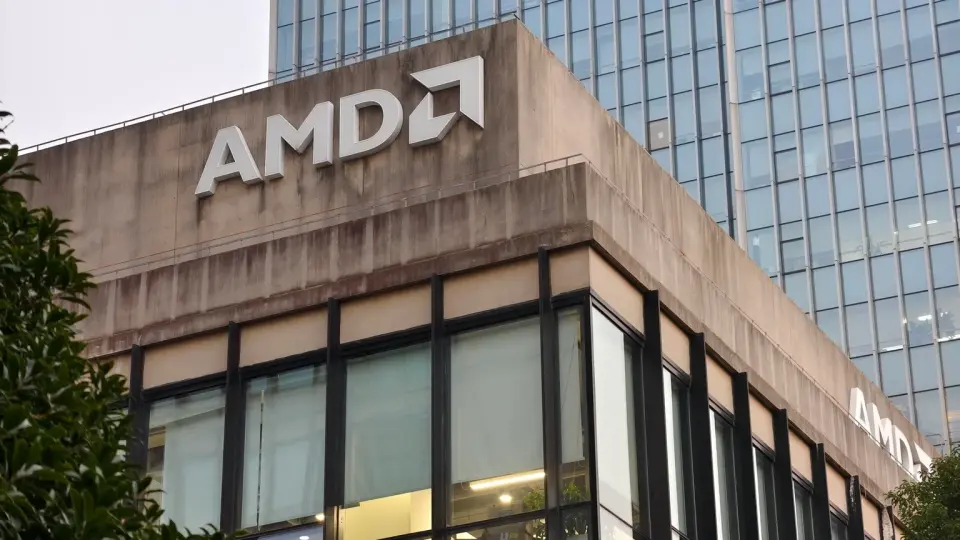
Alphabet introduced two new eighth-generation Tensor Processing Unit (TPU) systems, TPU 8tx and TPU 8i Max, on November 9, 2026. These additions expand Google’s custom silicon portfolio to address secure inference and massive context windows. The announcement highlights AMD’s strategic importance, as the new TPU 8tx utilizes AMD EPYC Turin CPUs as host processors. This reinforces AMD’s dual position in both merchant CPUs and custom AI accelerators, supporting its data center growth trajectory despite recent market volatility.
Key points
- Alphabet launched TPU 8tx for confidential computing and TPU 8i Max for high-density, large-context workloads.
- TPU 8tx is built on the same silicon as TPU 8t and paired with 5th Generation AMD EPYC CPUs.
- Google has introduced four distinct TPU systems in a single year, marking a significant acceleration in its custom silicon roadmap.
- The new systems target specific AI lifecycle stages, including secure inference and massive context windows for agentic workloads.
- AMD shares rebounded 13.3% on November 9, 2026, following the announcement, capitalizing on the broader sector recovery.
Background
In late October 2026, US stock markets experienced a severe sell-off, with the Nasdaq 100 dropping 2.6% and the broader AI trade losing approximately $5 trillion in market value. This decline was triggered by disappointing earnings and massive capital expenditure announcements from major tech firms, including Alphabet, which suffered its worst single-day drop in history. Investors grew skeptical of the return on investment for hyperscale AI infrastructure. Prior to this, in early October, the rapid adoption of autonomous AI agents shifted computational workloads from GPUs to CPUs, fueling a massive rally for AMD. AMD’s stock surged 32% in the past month, reaching a record high of $649.42 and a market cap exceeding $1 trillion. This shift occurred because agents require long-running CPUs for task execution, whereas GPUs handle model inference. AMD’s data center revenue doubled to $6.7 billion in the second quarter, accounting for 60% of total sales. Analysts noted that AMD currently holds the best CPU product for this new agentic workload, with the CPU market forecast to reach $220 billion by 2030.
How outlets are covering it
Bloomberg reports that Alphabet is rolling out a broader array of AI chips to capitalize on its rapid ascent as a challenger to Nvidia in a market worth hundreds of billions of dollars. The company is introducing two new variations of its TPUs, aiming to address the need for confidential computing and help models access a wider range of information when handling queries. More broadly, they are meant to serve an industry that is shifting toward the use of AI agents and confronting security challenges. Seeking Alpha emphasizes that AMD is poised for a sustained, fundamental-led recovery, with prospects reinforced by accelerating Google TPU adoption and a robust data center growth trajectory. Google’s confirmation of EPYC Turin as the host CPU for next-generation TPUs highlights AMD’s increasingly dual-pronged penetration into merchant and custom ASIC opportunities, broadening its server TAM. Coupled with accelerating Helios and Instinct adoption, AMD’s increasing mix shift towards higher-margin data center growth underscores incremental earnings upside that remains underappreciated. Google’s official blog details the technical specifics, noting that TPU 8tx provides hardware-level security for sensitive data, while TPU 8i Max handles massive context windows. These systems help manage complex agentic workloads by providing specialized hardware for security, density, and reasoning. Google is also making TPUs more accessible by supporting PyTorch, open-source software, and automated tools for developers.
Why it matters
The announcement of new TPU systems by Alphabet underscores the intensifying competition in the AI chip market. By integrating AMD EPYC CPUs into its latest TPU designs, Google validates AMD’s position as a key supplier for both custom and merchant AI infrastructure. This dual-pronged strategy broadens AMD’s total addressable market and supports its data center growth trajectory. The focus on secure inference and massive context windows addresses emerging needs in the AI industry, particularly for agentic workloads and regulated enterprises. This development is significant for AMD’s earnings trajectory and valuation upside, as it highlights the company’s ability to capture higher-margin data center growth. The broader market context, including recent volatility and investor skepticism of AI infrastructure returns, makes these fundamental developments crucial for sustaining investor confidence in AI-related stocks.
What to watch
Investors will monitor AMD’s stock performance and earnings trajectory in the coming quarters, focusing on the impact of Google’s TPU adoption on its data center revenue. The broader AI chip market will likely see continued competition between Nvidia and Alphabet, with AMD playing a pivotal role in both CPU and custom ASIC segments. Google’s expansion of its TPU portfolio and the integration of open-source software and automated tools may further accelerate adoption among developers and enterprises. The market will also watch for signs of stabilization in the AI sector following the late October sell-off, as companies like Alphabet and AMD demonstrate the tangible benefits of their AI infrastructure investments.
- AMD: Alphabet Just Announced A $1 Trillion Game Changer (NASDAQ:AMD) Seeking Alpha
- Google Escalates Nvidia Rivalry With Specialized Versions of AI Chips Bloomberg.com
- Google unveils new AI chip variants as cloud demand surges Reuters
- Our newest TPUs: 8tx and 8i Max, built for the agentic era blog.google
- Introducing TPU Sync: Fast KV cache and weight transfer for inference and RL on TPU Google Cloud
Want the full story? Read the original reporting
Read on Seeking Alpha