
Italian guide finds Ice Age bear graveyard in hidden Dolomites cave
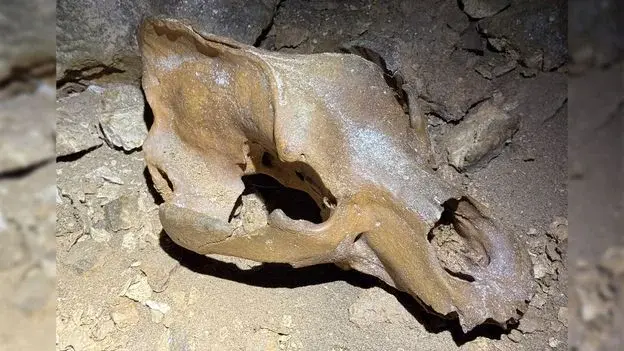
Mountain guide Kurt Walde discovered a previously uncharted cave in the Italian Dolomites containing hundreds of bones from the extinct cave bear species Ursus ladinicus. The site, located near the famous Conturines cave, is being sealed for preservation until scientific research begins in 2027.
Key points
- Kurt Walde, a 41-year veteran mountain guide, found the cave in July 2026 after spotting a dark mark on a cliff face three years prior.
- The cave contains hundreds of bones, likely from Ursus ladinicus, a species that went extinct around 24,000 years ago and was previously only confirmed at the Conturines cave.
- Conturines cave, discovered in 1987, revealed that these bears were massive (up to 1,200kg) and exclusively plant-eaters, feeding on Alpine herbs and grasses.
- Christian Terzer, director of the Province of Bolzano's Department of Archaeology, has sealed the site with a gate and tarpaulin to prevent contamination and trespassing.
- Scientists plan to resume research in June 2027 to determine how bears accessed the cave, reconstruct their appearance, and analyze potential human activity.
Background
Recent studies have shown that Ice Age populations in Europe were genetically connected, challenging previous assumptions of isolation. Additionally, archaeologists in Spain recently identified 280 Paleolithic engravings in a long-visited cave, highlighting the potential for new discoveries in previously overlooked sites. These findings suggest that Ice Age ecosystems and human activities were more complex and interconnected than previously thought.
Why it matters
This discovery could significantly alter our understanding of Ice Age cave bears, their behavior, and the ecosystems they inhabited. The new cave may provide more complete skeletons and genetic material, allowing scientists to reconstruct the bears' appearance and social structures. It also raises questions about how these animals accessed the cave and whether humans were present, potentially revealing new insights into Ice Age human-animal interactions.
What to watch
The site will remain sealed until June 2027, when scientists will begin detailed research. They aim to minimize contamination and disturbance while analyzing the bones, mineral deposits, and geological context to build a fuller picture of the bears and their environment.
Want the full story? Read the original reporting
Read on BBC