Tag

Ice Age

All articles tagged with #ice age

Ice-Age Denisovans: Two Taiwanese Bones Point to Giant Modern Ancestors
science12 days ago

Ice-Age Denisovans: Two Taiwanese Bones Point to Giant Modern Ancestors

Proteomic analysis of two Denisovan leg bones (Penghu 2 and Penghu 3) from the Penghu Channel near Taiwan suggests some Denisovans were among the Ice Age’s giants, with Penghu 2 around 176–179 cm (≈83 kg) and Penghu 3 potentially up to ~189–190 cm (≈91 kg). Placed in the Denisovan lineage via collagen proteins, these bones reveal a mix of archaic and modern features and imply a diverse, widespread population across Asia, possibly with different hunting adaptations and interbreeding with modern humans. DNA wasn’t recoverable, so proteins provided the link; the findings complement prior genetic work (e.g., Harbin skull, Penghu 1) and highlight Denisovans as a more varied lineage than once thought.

Ice-Age Spadefoot Toad Discovered at La Brea Tar Pits
science18 days ago

Ice-Age Spadefoot Toad Discovered at La Brea Tar Pits

Researchers at the La Brea Tar Pits and Museum have identified Spea labreae, a newly named extinct ice-age spadefoot toad, one of only two ice-age amphibians found in the U.S. The holotype is an incomplete sacro-urostyle bone, and the discovery came from re-examining decades-old amphibian collections and comparing them with specimens at other museums. Published in the Journal of Vertebrate Paleontology, the find sheds light on late Pleistocene climate and local environmental changes around Los Angeles.

La Brea Tar Pits Uncover Spea labreae, a New Ice-Age Amphibian
science19 days ago

La Brea Tar Pits Uncover Spea labreae, a New Ice-Age Amphibian

Scientists at the La Brea Tar Pits in Los Angeles have identified Spea labreae, the first extinct ice-age amphibian found there, from two 1929 fossils of the spadefoot toad. The tiny 1 cm sacro-urostyle fragments indicate a previously unknown species that lived sometime in the last 60,000 years, highlighting how the tar’s preservation can reveal small fossils long overlooked. The discovery doubles North America’s known extinct ice-age amphibians and, alongside a living relative, the Mexican burrowing toad, hints at a past LA habitat more rainforest-like and informs conservation paleobiology.

New Ice Age Spea labreae Toad Found at La Brea—A Clue to Ancient LA Climate
science20 days ago

New Ice Age Spea labreae Toad Found at La Brea—A Clue to Ancient LA Climate

Scientists have named Spea labreae, a new extinct spadefoot toad from La Brea fossil bones dating to the Ice Age, making it one of North America’s few extinct amphibians from that era. Described in the Journal of Vertebrate Paleontology, the find—based on bones excavated in 1929—helps illuminate Los Angeles’s Ice Age climate, since amphibians are highly sensitive to water availability and temperature. The discovery, which also includes the first record of the Mexican burrowing toad in LA, may reflect climate shifts or human arrival, and the specimen will be incorporated into the La Brea Tar Pits’ evolving museum exhibits after renovations.

La Brea Tar Pits Uncover Extinct Ice-Age Toad Spea labreae
science20 days ago

La Brea Tar Pits Uncover Extinct Ice-Age Toad Spea labreae

Scientists at Los Angeles’ La Brea Tar Pits report the first extinct ice-age amphibian found in the area: the spadefoot toad Spea labreae. Two tiny sacro-urostyle fragments from 1929 were re-examined in 2023, revealing distinct features that identify a previously unknown species. The fossils likely date to within the last 60,000 years, making Spea labreae only the second extinct ice-age amphibian known from North America; the collection also included the living Mexican burrowing toad, offering climate context for past and present amphibians.

Tiny Ivory Birds Reveal Ice Age Artistry at Hohle Fels Cave
archaeology24 days ago

Tiny Ivory Birds Reveal Ice Age Artistry at Hohle Fels Cave

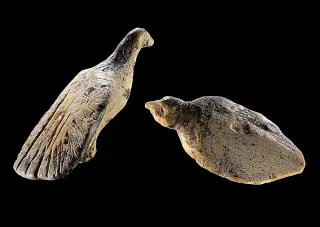
Archaeologists in the Swabian Jura’s Hohle Fels cave recovered two minuscule mammoth-ivory bird figurines from the Aurignacian period, about 40,000 years old, one brooding and one with outstretched wings. Weighing roughly two grams, the carvings show impressive detail—eyes, feathers, and beak—revealing that early modern humans were skilled ivory carvers who depicted living creatures in miniature and possibly used such figures as talismans or narrative aids. The find adds to a small but growing set of bird carvings from the site, suggesting site-specific artistic traditions, though their exact purpose remains uncertain.

Ice and ingenuity: Glaciers and ancient people moved Stonehenge's Altar Stone
science2 months ago

Ice and ingenuity: Glaciers and ancient people moved Stonehenge's Altar Stone

A Curtin University-led study using geological analysis and ice-sheet modeling suggests Stonehenge's Altar Stone originated in northeast Scotland and was carried by glaciers about 200 miles to Dogger Bank, after which prehistoric communities hauled it roughly 250 more miles to Wiltshire, for a total journey of about 450 miles — implying a carefully planned, multi-stage transport rather than ice doing the whole trek.

Ancient Britons Likely Haul 6-Ton Stone 435 Miles to Stonehenge, New Study Finds
science2 months ago

Ancient Britons Likely Haul 6-Ton Stone 435 Miles to Stonehenge, New Study Finds

Curtin University researchers conclude Stonehenge’s central Altar Stone, weighing about six tons, originated in northeast Scotland and was moved to Wiltshire by deliberate human transport rather than glaciers. Glacial routes to southern England are unlikely, suggesting a staged journey that combined overland hauling with rivers or coastal transport, reflecting planning and cooperation in Neolithic Britain; future work aims to pinpoint the stone’s exact source.

Ancient East Asian Hominins Invented Complex Stone Tools During a Harsh Ice Age
science3 months ago

Ancient East Asian Hominins Invented Complex Stone Tools During a Harsh Ice Age

New dating of a Lingjing, China rib crystal shows 146,000-year-old stone cores and flakes were made by an archaic human relative (Homo juluensis) during a harsh ice age, revealing planning and advanced stone‑knapping skills. The calcite dating revises theTools’ age from a warmer period to a cold glacial era, suggesting sophisticated technology arose under environmental stress and indicating broader East Asian implications for Paleolithic innovation.

Texas Cave Unveils Ice Age Giants Dating to 100,000 Years Ago
science4 months ago

Texas Cave Unveils Ice Age Giants Dating to 100,000 Years Ago

Paleontologist John Moretti uncovered a fossil-rich chamber in Central Texas' Bender’s Cave, revealing Ice Age megafauna—giant tortoises, saber-toothed cats, and large armadillo relatives—dating to about 100,000 years ago and providing new clues about a warmer Ice Age climate and the region's ancient ecosystem (findings published in Quaternary Research).