
DRC Ebola Crisis: Artisanal Mining and Conflict Complicate Response in Ituri
The Bundibugyo Ebola outbreak in the Democratic Republic of the Congo (DRC) has become the deadliest in the country's history, with over 5,000 cases and 2,400 deaths. The crisis is exacerbated by armed conflict, community mistrust, and a lack of approved vaccines or treatments. While the WHO and Africa CDC are shifting to door-to-door surveillance, funding gaps and logistical challenges in remote mining areas hinder containment efforts.
Key points
- The outbreak, caused by the Bundibugyo virus, has resulted in nearly 5,000 confirmed cases and over 2,000 deaths since May 15, 2026, making it the most lethal in DRC history.
- There is no licensed vaccine or treatment for the Bundibugyo strain; existing vaccines target the Zaire strain, though trials for new vaccines and drugs are underway.
- Contact tracing is failing, with only 12% of contacts identified compared to a 95% target, leading to a shift in strategy toward active door-to-door case finding in villages.
- Funding is insufficient, with only $264 million of the required $518 million disbursed, causing strikes among unpaid health workers and safe burial teams.
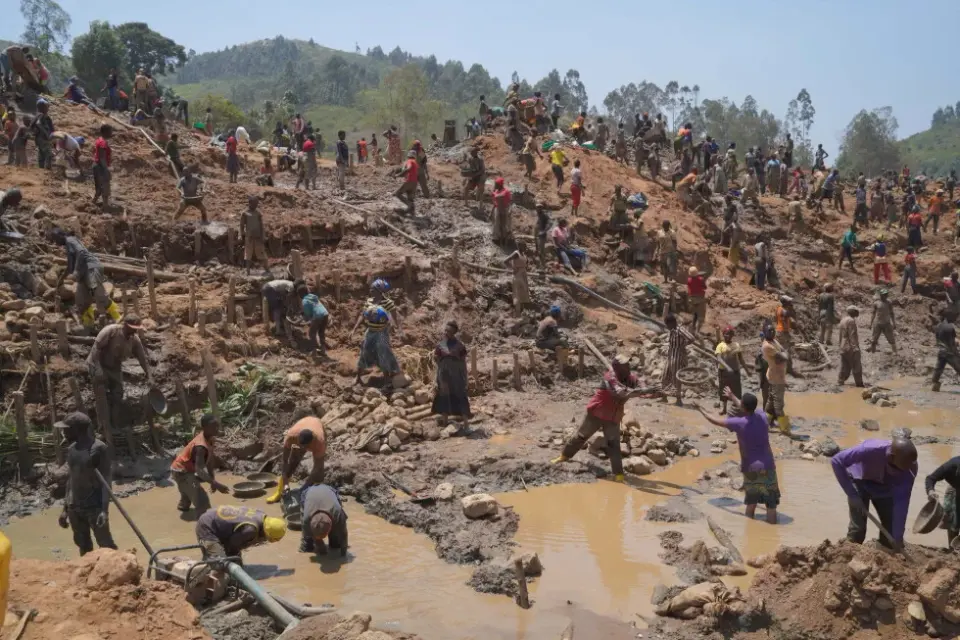
- Artisanal gold mining in Ituri province creates overcrowding and mobility that hinders epidemiological surveillance, as highlighted by recent AP photography and reports.
Background
This outbreak follows a pattern of recurring Ebola crises in the DRC, with the 2018 outbreak being the previous deadliest. Recent studies confirm a new animal-to-human spillover event for this Bundibugyo variant. The current crisis occurs amidst broader regional instability, including recent artisanal mining disasters in the Central African Republic and Colombia, which highlight the safety risks and displacement associated with informal mining operations in the region.
How outlets are covering it
The Guardian emphasizes the 'head start' of the virus due to months of unreported transmission and the critical failure in contact tracing, noting that 60-70% of deaths occur outside treatment centers. EL PAÍS highlights the economic impact on local communities, such as fishermen in Ituri, and the 'lethargy' of the state response, while also noting the specific challenge of diagnostic errors that delayed the outbreak declaration. AP News provides visual context through photography of artisanal mining in Iga-Barrière, Ituri, illustrating the environmental and human dimensions of the areas where the outbreak is spreading. All sources agree on the lack of approved treatments and the urgent need for increased funding and community trust.
Why it matters
The DRC Ebola outbreak poses a significant regional and global health risk, with potential spread to neighboring countries like South Sudan and Uganda. The lack of effective medical countermeasures and the intersection of conflict, poverty, and mining activities create a complex humanitarian crisis that tests international solidarity and pandemic preparedness mechanisms. The high case-fatality rate and ongoing transmission underscore the need for rapid, well-funded, and community-integrated response strategies.
What to watch
WHO and Africa CDC are implementing a new door-to-door surveillance strategy and expanding treatment capacity to 3,000 beds. Safety trials for two Bundibugyo-specific vaccines and new drug treatments are ongoing. The outcome depends on securing the remaining $254 million in funding and reversing the case-fatality rate, with hopes of containing the outbreak within three months, though no precise timeline is set.
- One photo shows the human and environmental dimensions of artisanal mining in Congo AP News
- Ebola outbreak: five big questions The Guardian
- DRC Ebola outbreak 'growing exponentially,' UN says DW.com
- Ebola outbreak out of control in Democratic Republic of the Congo, WHO says: ‘It is spreading faster than our ability to contain it’ EL PAÍS English
- Congo's M23 rebels introduce new movement restrictions over Ebola concerns Reuters
Want the full story? Read the original reporting
Read on AP News