
Congo’s Ebola Crisis Reaches 11,042 Cases as Funding Gaps and Conflict Hinder Containment
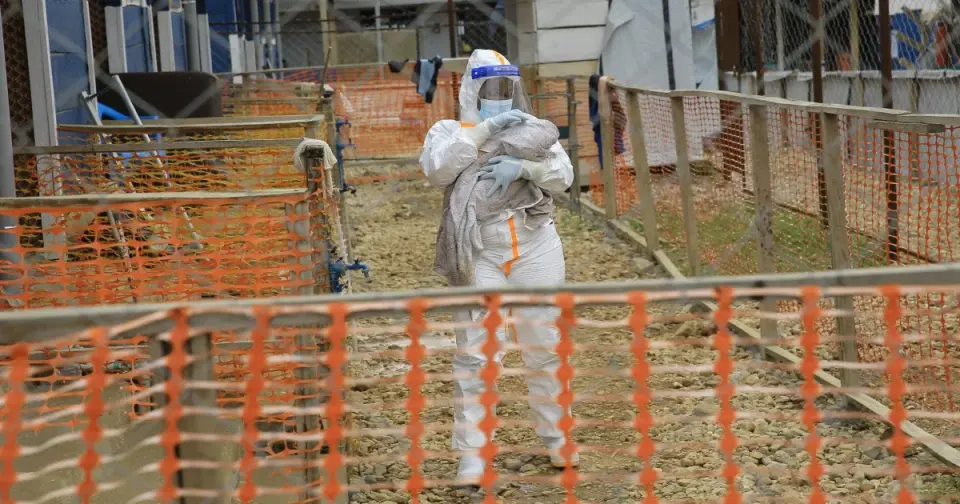
The Democratic Republic of the Congo’s current Ebola outbreak has surpassed 11,000 confirmed cases, resulting in 5,387 deaths. Caused by the rare Bundibugyo strain, which lacks a specific vaccine or treatment, the epidemic is the country’s deadliest on record. Containment efforts are severely hampered by armed conflict, community mistrust, and a significant regional funding shortfall.
Key points
- The outbreak, declared in mid-May 2026, has infected 11,042 people and killed 5,387, with a fatality rate approaching 50%.
- The Bundibugyo virus has spread to eight of the DRC’s 26 provinces, with Ituri accounting for nearly 70% of total cases.
- North Kivu has emerged as the primary site for new transmission, while violence in both provinces disrupts health worker access.
- The International Organization for Migration (IOM) reports a USD 59.8 million funding gap, with nearly half concentrated in the DRC.
- The WHO approved clinical trials for two new Ebola vaccines earlier this month, with results expected in early 2027.
Background
This outbreak is the second largest and deadliest in history, trailing only the 2014-2016 West African epidemic. It has grown faster than previous outbreaks due to delayed detection and strained health services. As of late October, the DRC had already passed 10,000 cases, marking a rapid escalation in the nation's most severe health crisis in decades.
How outlets are covering it
While all sources agree on the core statistics, they emphasize different challenges. NBC News and NPR highlight the impact of armed conflict and community violence on health workers, noting recent attacks that killed four staff members. Al Jazeera focuses on the lack of a specific vaccine for the Bundibugyo strain and the virus's wide geographic spread across East, Central, and West Africa. The IOM provides a distinct perspective on the logistical and financial barriers, detailing how a USD 59.8 million funding gap threatens surveillance efforts at border crossings and displacement sites. The IOM also notes that 71 cases were detected through their surveillance points, highlighting the importance of monitoring informal travel routes.
Why it matters
The crisis represents a major humanitarian emergency with potential for further international spread. The combination of a high fatality rate, lack of medical countermeasures, and insufficient funding creates a volatile situation that could overwhelm regional health systems. The WHO has called for a halt to fighting to allow health workers access, while experts warn that without increased resources, the outbreak may remain out of control.
What to watch
The WHO expects results from the two new Ebola vaccine trials in early 2027. Health authorities are urgently calling for a cessation of hostilities in Ituri and North Kivu to restore contact tracing and treatment access. The IOM is mapping population movements in neighboring countries like Uganda and Kenya to strengthen screening at informal border crossings, though these efforts are currently threatened by the ongoing funding shortfall.
- Ebola tops 11,000 cases in Congo’s deadliest outbreak NBC News
- Congo Ebola outbreak still out of control after six months, MSF says Reuters
- Ebola tops 11,000 cases in Congo's deadliest outbreak NPR
- Ebola cases in DR Congo pass 11,000, with 5,387 deaths Al Jazeera
- 71 Ebola Cases Detected on DRC Routes as Funding Gap Risks Outbreak Remaining Out of Control, IOM Warns International Organization for Migration
Want the full story? Read the original reporting
Read on NBC News