
DRC Ebola Crisis: Africa CDC Warns Outbreak Uncontrolled as Funding Gaps Persist
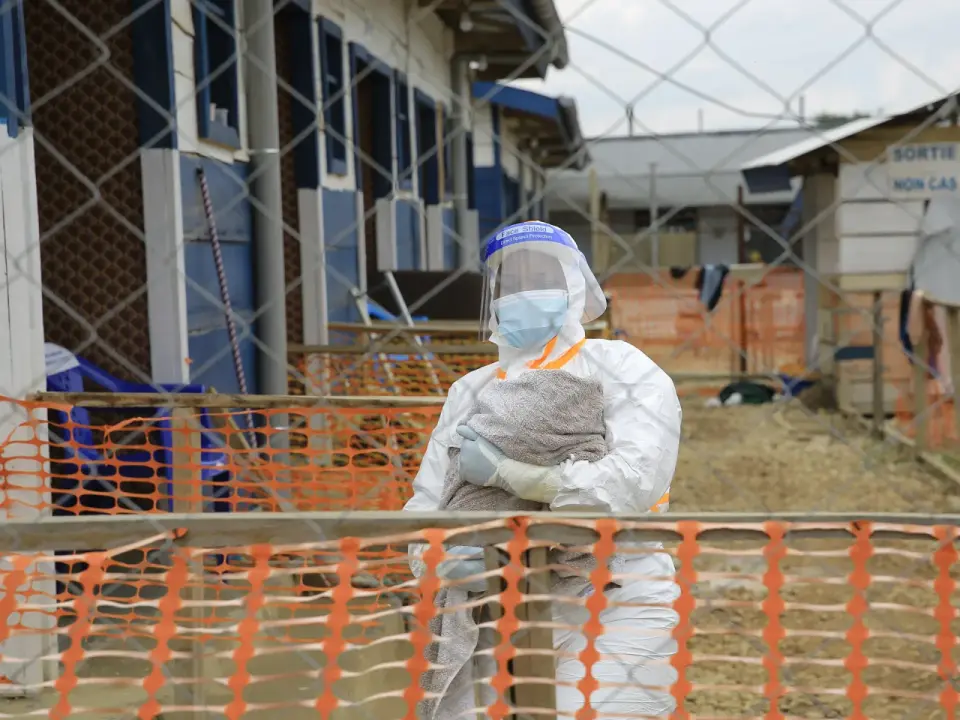
The Ebola outbreak in the Democratic Republic of the Congo (DRC) remains uncontrolled six months after its declaration, with over 11,200 cases and 5,500 deaths. Caused by the rare Bundibugyo strain, the crisis lacks specific vaccines or treatments. Funding shortfalls and logistical failures have hindered containment, though the WHO notes slowing transmission in early epicentres.
Key points
- Africa CDC Director Jean Kaseya stated the outbreak is 'still not under control,' warning it could become the worst in history if not stopped.
- The Bundibugyo strain has no approved vaccine or treatment, with a fatality rate of approximately 50%.
- Only $1.3 billion of the $2.9 billion pledged by donors has been released, according to Africa CDC.
- Over 80% of new cases emerge outside contact lists, and 65% of deaths occur in communities rather than health centres.
- The WHO approved clinical trials for two new vaccines, expecting results in early 2027.
Background
This outbreak began in May 2026 and has become the second-deadliest in history, behind only the 2014-2016 West African epidemic. Previous coverage highlighted the spread to Kenya, Uganda, and Nigeria, as well as the lack of approved treatments for the Bundibugyo strain. The current situation reflects a worsening of these earlier trends, with the virus now affecting eight DRC provinces and parts of East, Central, and West Africa.
How outlets are covering it
Al Jazeera and the Africa CDC emphasize the overall lack of control and the critical funding gap, noting that only 45% of pledged funds have been released. The New York Times highlights the geographic spread and the impact of armed conflict, describing the outbreak as a 'more elusive foe' splintering into numerous hot spots. Médecins Sans Frontières (MSF) focuses on the 'considerable disconnect' between disbursed funds and frontline resources, citing unpaid staff and lack of equipment. While the WHO acknowledges slowing transmission in some areas, it contrasts this with the broader uncontrolled spread reported by other agencies. All sources agree on the severity of the crisis but differ in emphasis: Africa CDC and MSF focus on financial and logistical failures, while the NYT focuses on the complex, fragmented nature of the spread.
Why it matters
The uncontrolled spread of the Bundibugyo strain poses a significant global health risk, as it lacks specific medical countermeasures. The funding and logistical failures highlight systemic issues in international health response coordination, potentially affecting future pandemic preparedness. The high mortality rate and community-based transmission underscore the urgent need for effective containment strategies and resource allocation.
What to watch
The WHO expects results from new vaccine trials in early 2027. Continued efforts to secure and disburse the remaining pledged funds are critical. Monitoring the spread in affected provinces and neighboring countries will be essential to prevent further cross-continental transmission. The focus will shift to improving frontline resource allocation and addressing the root causes of delayed detection and community mistrust.
- Africa CDC says Ebola outbreak in DR Congo ‘still not under control’ Al Jazeera
- Caught Between Killers: Ebola on One Side, Islamic State on the Other The New York Times
- Congo Ebola Outbreak Defies Control as Conflict, Hunger Fuel Crisis Six Months In Bloomberg
- Africa CDC says Ebola outbreak still out of control six months since it was declared Reuters
- Ebola in DR Congo: Millions of dollars going missing as virus spreads, MSF warns BBC
Want the full story? Read the original reporting
Read on Al Jazeera