
DRC Ebola Crisis: 2,420 Dead as Bundibugyo Strain Outpaces Containment Efforts
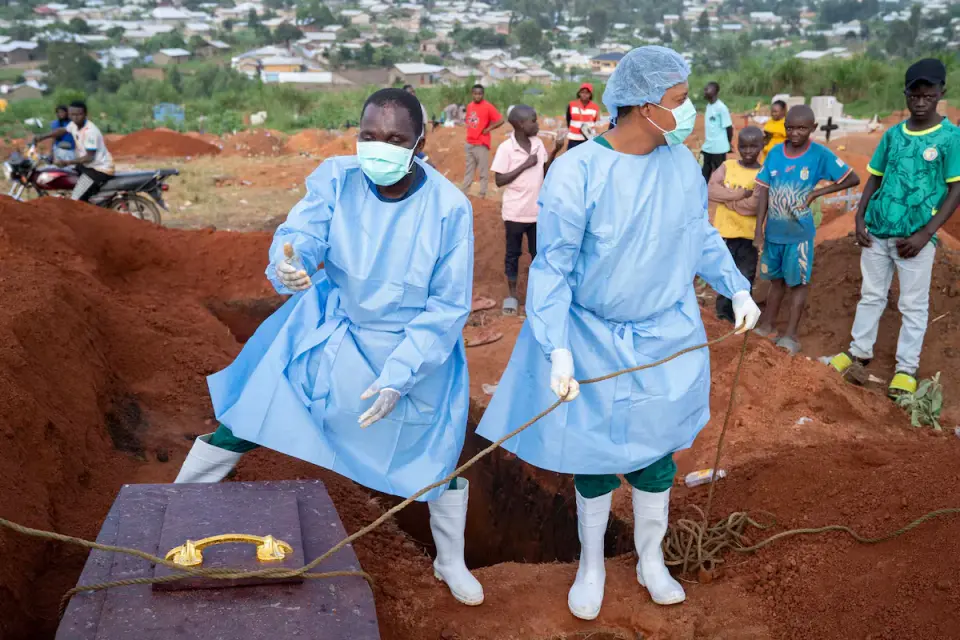
The World Health Organization (WHO) has declared the Ebola outbreak in the Democratic Republic of Congo (DRC) out of control, with over 5,100 infections and 2,420 deaths. Caused by the Bundibugyo variant, this is the deadliest and fastest-growing outbreak in DRC history. The crisis is exacerbated by a lack of approved vaccines, delayed detection due to misdiagnosis, and significant cuts in international aid, particularly from the United States.
Key points
- The outbreak has resulted in over 5,100 infections and 2,420 deaths, surpassing the 2018 outbreak as the deadliest in DRC history.
- The Bundibugyo variant is spreading faster than containment efforts, with 60-70% of deaths occurring in communities rather than hospitals.
- There is no approved vaccine or treatment for the Bundibugyo strain; existing tools target the Zaire variant.
- The WHO has received only 60% of the $115 million needed to contain the epidemic, with US funding cuts reducing health sector support by 70%.
- The outbreak has affected six provinces in eastern and northeastern DRC, with over 1,000 recoveries reported.
Background
The DRC has experienced 17 Ebola outbreaks, with the current one being the deadliest. Previous outbreaks, such as the 2018 crisis, resulted in 2,300 deaths. The 2014-2016 West African epidemic, caused by the Zaire strain, killed over 11,300 people. The current outbreak began circulating in January or February 2026 but was not declared until May due to misdiagnosis.
How outlets are covering it
The WHO and El País emphasize the lack of control and the speed of transmission, noting that the outbreak is 'far from under control' and that deaths are occurring in communities. The Guardian highlights the role of international aid cuts, particularly from the US and Europe, in weakening the DRC's health infrastructure. Both sources agree on the impact of armed conflict and displacement on containment efforts, but the Guardian places greater emphasis on the political decisions in the West that have undermined the response.
Why it matters
The outbreak poses a significant risk to regional and global health security, with the potential to spread to neighboring countries like Uganda. The lack of effective vaccines and treatments, combined with reduced international aid, highlights the vulnerability of the DRC and the need for a coordinated global response. The crisis also underscores the importance of early detection and community engagement in containing infectious diseases.
What to watch
The WHO plans to increase treatment capacity to 3,000 beds and continue clinical trials for two experimental vaccines. The organization is also focusing on community surveillance and safe burial practices. However, the lack of funding and the ongoing security challenges in the DRC may hinder these efforts. The WHO has warned that the outbreak could be reversed in three months if sufficient resources are available, but no precise timeline has been set.
- Ebola outbreak out of control in Democratic Republic of the Congo, WHO says: ‘It is spreading faster than our ability to contain it’ EL PAÍS English
- Congo's M23 rebels introduce new movement restrictions over Ebola concerns Reuters
- The Guardian view on the Ebola outbreak in the DRC: a case study in why international aid matters | Editorial The Guardian
- What to know about the outbreak of a rare kind of Ebola PBS
- Congo's Ebola outbreak reaches 5,000 cases as it outpaces response efforts NPR
Want the full story? Read the original reporting
Read on EL PAÍS English