
NHS-Galleri trial results show mixed outcomes for multi-cancer blood test
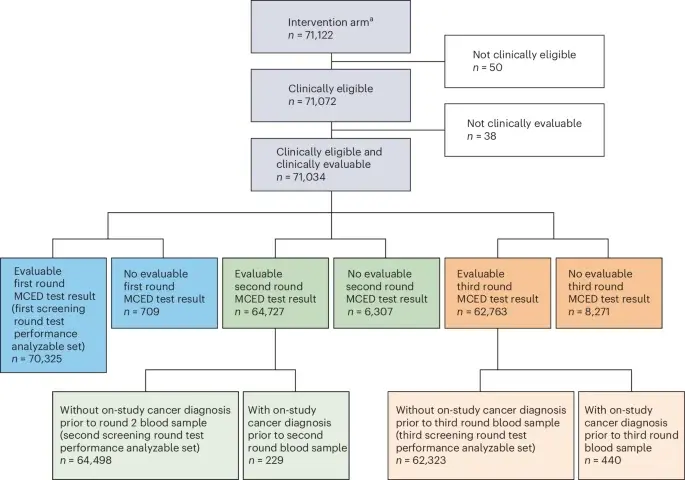
The NHS-Galleri trial, involving 142,250 participants, found that a multi-cancer early detection blood test did not significantly reduce late-stage cancer diagnoses overall, though it detected about 30% of cancers and had a high specificity.
Key points
- The primary endpoint of reducing stage III/IV cancer diagnoses was not met, but stage IV cancers alone showed a reduction in the test group.
- The test detected 937 primary cancers across three rounds, with a positive predictive value of 45.8% to 58.0%.
- Specificity was high, ranging from 99.50% to 99.60%, meaning false positives were rare.
- The test detected 41 distinct cancer types, including many without standard screening programs in the UK.
Background
The NHS-Galleri trial is the world's first randomized controlled trial of a multi-cancer early detection (MCED) test, evaluating the Galleri test by GRAIL Inc. in the UK. Previous studies and US trials have shown promise for blood-based cancer detection, but this trial provides the first large-scale evidence in a national health service setting. The trial was conducted alongside existing NHS screening programs, which currently cover only a small percentage of cancers.
How outlets are covering it
The Nature article, the primary source, reports that the test's primary endpoint was not met, but it provides detailed performance metrics, including positive predictive values and specificity. The University of Exeter News, a secondary source, emphasizes that the trial did not meet its main goal but highlights that fewer people were diagnosed with stage 4 cancers alone and more with early-stage cancers. Both sources agree on the test's high specificity and its ability to detect cancers not covered by standard screening, but they differ in emphasis, with the Nature article focusing on detailed performance data and the Exeter News highlighting the broader implications for NHS screening.
Why it matters
The results of the NHS-Galleri trial are significant for the future of cancer screening in the UK and globally. While the test did not meet its primary endpoint, its high specificity and ability to detect cancers not covered by standard screening suggest it could still have a role in early detection. The findings will inform decisions by the NHS and other health organizations about the integration of MCED tests into routine care.
What to watch
Further results from the NHS-Galleri trial will be published in the coming months and years, including analyses of cancer-specific mortality, healthcare resource utilization, and the potential impact of overdiagnosis. The NHS and other health organizations will review the results to determine how MCED tests could be used in the future.
- Performance of a multi-cancer early detection test in the randomized controlled NHS-Galleri trial Nature
- Performance and safety of a multi-cancer early detection test: the PATHFINDER 2 study Nature
- First papers published in major NHS cancer blood test trial University of Exeter News
- PATHFINDER 2 findings advance multi-cancer early detection blood testing Medical Xpress
- Nima Nabavizadeh, M.D. (IMAGE) EurekAlert!
Want the full story? Read the original reporting
Read on Nature