
Surgeons Repair 13.5 cm Atherosclerotic Aortic Aneurysm in 70-Year-Old Woman
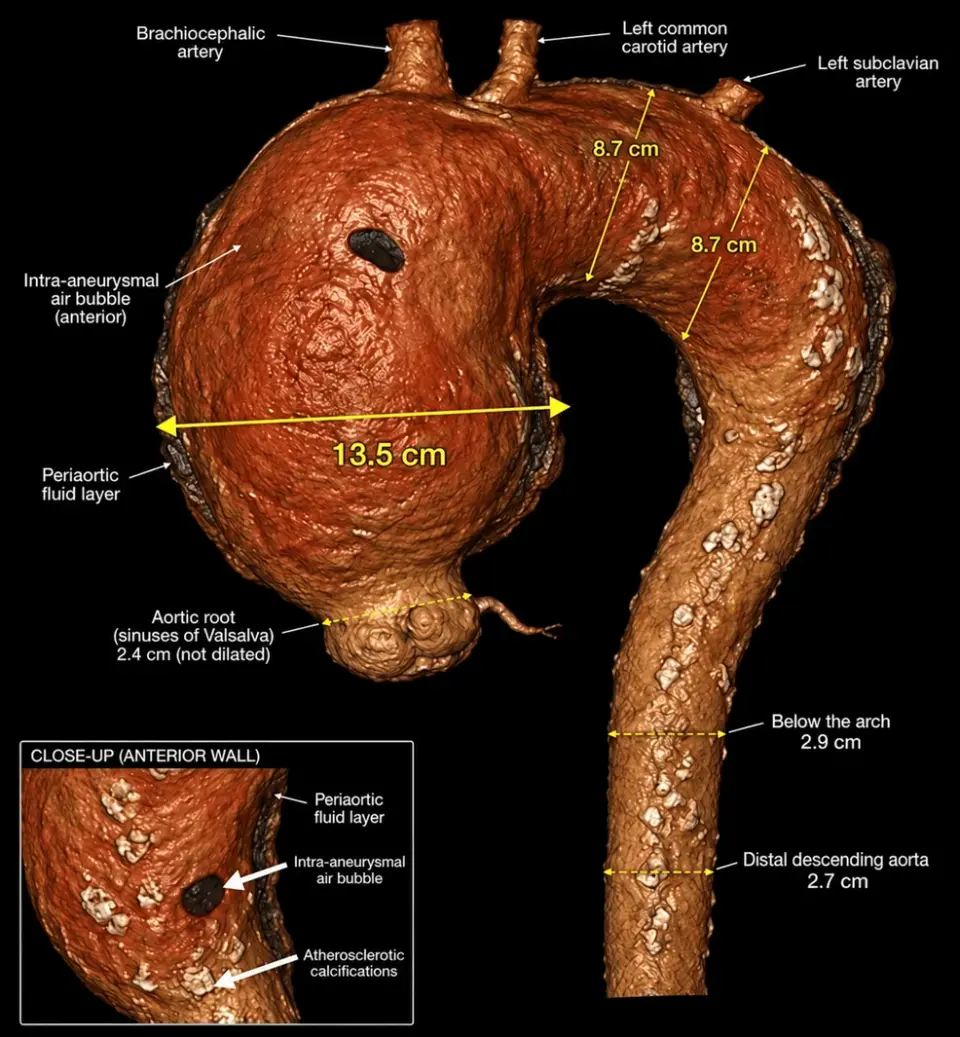
A 70-year-old woman with a massive 13.5 cm ascending aortic aneurysm caused by atherosclerosis underwent successful valve-sparing total arch replacement. The rare case, reported in Cureus, highlights the extreme rarity of such large proximal aortic aneurysms and the efficacy of advanced open surgical reconstruction.
Key points
- The patient presented with severe dyspnea and hemodynamic compromise due to a 13.5 cm ascending aortic aneurysm extending into the aortic arch.
- Computed tomography angiography revealed impending rupture signs, including periaortic fluid and an intra-aneurysmal air bubble.
- Surgery involved supracoronary ascending aortic replacement and total arch replacement using a branched Dacron graft under deep hypothermic circulatory arrest.
- The native aortic valve and coronary ostia were preserved, while the diseased ascending aorta and arch were completely resected.
- Histopathology confirmed atheromatous degeneration, a rare cause for proximal aortic aneurysms, which are typically linked to medial degeneration or connective tissue disorders.
- The patient recovered without major complications or neurological deficits and was discharged six days postoperatively.
Background
This case adds to the limited literature on extreme-diameter ascending aneurysms. While ascending aortic aneurysms are more common now, giant aneurysms exceeding 10 cm remain exceptionally rare due to earlier diagnosis and prophylactic intervention. The ascending aorta is typically resistant to isolated atherosclerotic degeneration, making this case an outlier. Previous guidelines recommend surgical intervention for ascending aortic aneurysms at diameters of 5.5 cm or greater due to sharply increasing risks of rupture and dissection.
Why it matters
This case underscores the importance of prompt diagnosis and individualized operative planning for extreme aortic aneurysms. It demonstrates that successful treatment is achievable through advanced, anatomy-driven open surgical reconstruction, even in cases with massive aneurysm dimensions and complex arch involvement. The preservation of native root structures while excluding extensive disease provides a durable solution for highly complex proximal aortic disease.
What to watch
Continued reporting of such rare cases is important to expand the evidence base regarding optimal operative strategies for extreme ascending aortic aneurysms. Further studies may explore the long-term outcomes of valve-sparing total arch replacement with separate branch reconstruction in similar complex cases.
Want the full story? Read the original reporting
Read on Cureus