
NHS England Launches STRIDE-RCT Trial for Multi-Cancer Blood Screening
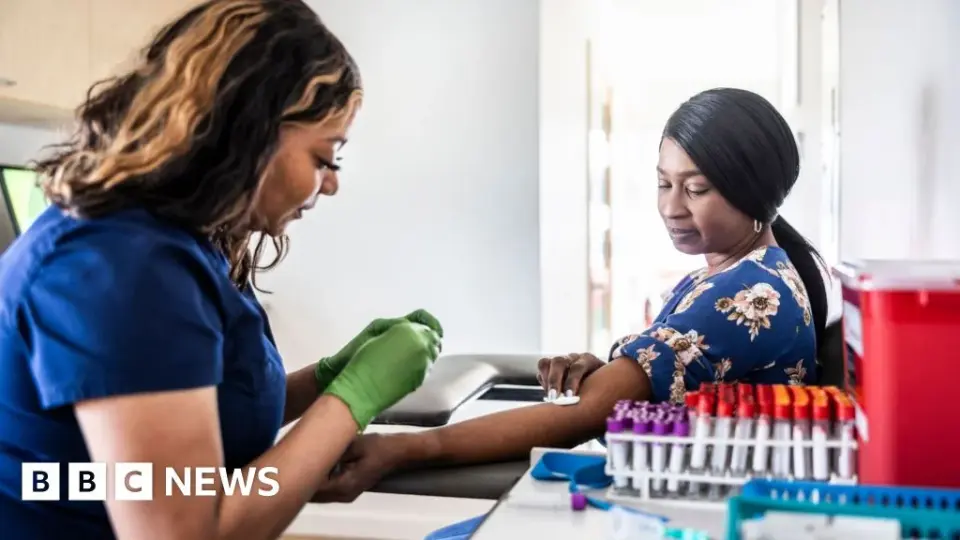
NHS England is rolling out the STRIDE-RCT trial, a multi-cancer blood test screening for 13 types of abdominal and pelvic cancers. While experts note that early detection improves survival, previous trials have shown mixed results regarding overall mortality reduction.
Key points
- The STRIDE-RCT trial will screen for 13 cancers, including bowel, pancreatic, liver, ovarian, and prostate.
- Approximately 71,000 people in England are diagnosed annually with these specific cancers, with nearly 35,000 deaths.
- Patients provide one or two blood tubes at GP surgeries, analyzed for tumor DNA signals.
- Positive results do not confirm cancer, and negative results do not guarantee its absence.
- Health Secretary Yvette Cooper hopes the test will accelerate urgent investigations for at-risk patients.
Background
This development follows recent debates over the Grail Galleri test, which screens for over 50 cancer types. Previous NHS-Galleri trials involving 142,250 participants found that while the test detected about 30% of cancers, it did not significantly reduce late-stage diagnoses overall. FDA approval for similar multi-cancer tests has also faced scrutiny regarding clinical efficacy and false negatives.
How outlets are covering it
BBC emphasizes the practical rollout in GP surgeries and the difficulty of detecting abdominal cancers due to vague symptoms. The Conversation highlights the scientific potential of liquid biopsy to detect weak genetic signals before symptoms appear, while noting technical challenges in distinguishing true mutations from sequencing errors. Hospital News provided no substantive content, only a cookie consent notice. The BBC notes that a positive result requires further investigation, whereas The Conversation focuses on the precision of detecting circulating tumor DNA.
Why it matters
Early detection is critical for survival rates in cancers that lack standard screening methods. If successful, this trial could reduce the burden of late-stage diagnoses in England, potentially saving lives and reducing treatment costs. However, the mixed results of previous trials suggest that widespread adoption may not yield the expected mortality reductions without further validation.
What to watch
The STRIDE-RCT trial will analyze blood samples for signs of cancer and attempt to locate the tumor. Results will determine if the test can reliably identify patients needing urgent investigation. Broader adoption depends on proving clinical efficacy and managing false positives/negatives.
- 'Multi-cancer' blood tests coming to some GP surgeries soon BBC
- Opinion | I’ve studied cancer DNA. This test raises a new question. The Washington Post
- From 9000 Clues to a Clinical Test: Mass Spectrometry-Driven Lipidomics for Early Cancer Detection LCGC International
- A simple blood test could detect cancer The Conversation
- Canadian study finds cancer signals in blood up to eight years before diagnosis www.hospitalnews.com
Want the full story? Read the original reporting
Read on BBC