Tom's Guide reports that the Apple Watch Vitals app detected early signs of illness in its editor before physical symptoms emerged. The article highlights how the feature can alert users to potential health issues, offering tips to improve the accuracy of these readings.
A 62-year-old man from Virginia, Robert Pfleghardt, credits a painful prank during a trip to Las Vegas five years ago with saving his life. While engaging in horseplay with friends, a friend twisted his nipple, causing persistent pain that led to a medical visit. Doctors discovered an eraser-sized lump, which a mammogram confirmed as breast cancer that had spread to lymph nodes. Pfleghardt, who initially believed men could not get the disease, underwent a lumpectomy and radiation therapy in 2022. He now warns that many men ignore chest lumps, delaying treatment for a condition that affects roughly one in 100,000 males but carries a higher mortality rate than in women due to late diagnosis.
A breast oncologist warns that skin dimpling is a critical, often overlooked sign of breast cancer that requires immediate medical evaluation. While the World Health Organization reports that 2.4 million women are diagnosed globally each year, many cases lack specific risk factors beyond age and sex. Early detection through monitoring subtle changes like skin texture is vital, as untreated cancer can metastasize. Recent cases, such as actor Amanda Peet’s, highlight that skin changes can precede lumps, underscoring the need for vigilant self-examination and professional screening.
A new study reveals that colorectal cancer in adolescents is rare but highly aggressive, with 45% of patients dying. Symptoms like abdominal pain and weight loss are often mistaken for common conditions, leading to delayed diagnoses. Researchers urge doctors to take these signs seriously in young patients.
A new study presented at the American Academy of Pediatrics conference reveals that colorectal cancer in patients under 21 is increasingly common, highly aggressive, and often diagnosed at advanced stages. Despite being rare, these cases show poor outcomes, with nearly half of patients dying, highlighting the need for earlier clinical suspicion in young people.
Sean Stalker, a 44-year-old Michigan father, was diagnosed with stage 4 colon cancer in 2023 after experiencing severe abdominal pain and weight loss. Although routine screening for average-risk adults typically begins at age 45, his symptoms led doctors to recommend a colonoscopy earlier. Stalker, now approaching three years cancer-free, co-founded the nonprofit End the Trend to advocate for early detection and support colorectal cancer research.
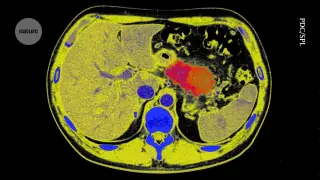
Researchers are pursuing a strategy of 'cancer interception' to treat pre-cancerous pancreatic tissue before it becomes malignant, aiming to boost five-year survival from 13.7% to 50%. This approach leverages the recent FDA approval of daraxonrasib, a drug that nearly doubled median survival in metastatic cases. While current trials focus on advanced disease, new studies are testing the drug for early-stage prevention and screening.
Actor Amanda Peet revealed that her first sign of breast cancer was a change in skin texture, not a lump. She was diagnosed with Stage 1 lobular breast cancer in late 2025 after a six-month delay following an initial MRI. Peet underwent a lumpectomy and radiation, highlighting the importance of monitoring skin changes and dense breast tissue.
Two recent studies suggest that changes in voice quality and specific language patterns during memory tests may serve as early warning signs for cognitive decline. A large-scale US study found that voice disorders, particularly when combined with hearing loss, are associated with a significantly higher risk of developing dementia. Meanwhile, research from Boston University indicates that analyzing the structure of spoken responses in memory tests can predict future cognitive performance years in advance. These findings highlight the potential for using auditory and linguistic markers to identify at-risk individuals before traditional symptoms appear.
Natalie May, an Australian papercraft expert, was diagnosed with stage 1 ovarian cancer at age 37 after noticing irregular bleeding. Her prompt medical response prevented the cancer from advancing to later stages. She now uses her platform to advocate for early symptom recognition, highlighting that ovarian cancer is increasingly affecting younger women.
Joseph Wayne Singleton, a 33-year-old musician from Louisiana, was diagnosed with prostate cancer after a routine physical revealed dangerously high prostate-specific antigen (PSA) levels, despite having no symptoms. Treated at UT MD Anderson Cancer Center, he underwent a prostatectomy and recovered quickly. His case highlights the debate over early screening, as current guidelines generally do not recommend PSA testing for men under 40 unless they have high-risk factors. Singleton now advocates for earlier screening, while experts note that guidelines vary by age and risk profile.
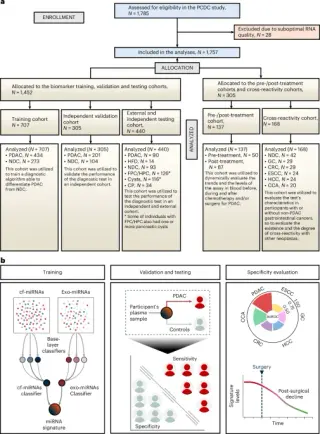
A new blood test called PANXEON shows promise for detecting early-stage pancreatic cancer and precancerous changes, potentially improving survival rates for a disease with a low five-year survival rate.
Oncologists warn that cancer signs can be subtle and easily overlooked. Key indicators to watch for include unexplained weight loss, persistent fatigue, changes in urination or bowel habits, difficulty swallowing, new or changing skin spots, and night sweats. Because early diagnosis improves prognosis, seek medical evaluation for persistent or worrisome symptoms and advocate for yourself if your concerns aren’t addressed. Maintain regular cancer screenings (like mammograms and colonoscopies) and healthy lifestyle choices to lower risk.
Colorectal cancer is highly preventable with early detection; the article spotlights bowel incontinence as a possible sign—though not common—when rectal cancer affects sensing or stool passage, often appearing after other symptoms like rectal bleeding or weight loss. It also notes many incontinence cases are non-cancerous and urges timely medical evaluation for persistent GI changes, since early detection improves outcomes. Prevention centers on regular screenings (colonoscopy) starting around age 45, plus healthy lifestyle; treatments vary by stage and can include surgery, chemo, radiation, and immunotherapy.
Researchers developed PANXEON, a blood-based microRNA signature combined with CA19-9, to detect early-stage pancreatic ductal adenocarcinoma (PDAC). In a multinational prospective study with 1,785 participants, the miRNA panel achieved AUROC of 88.6% and 83.8% sensitivity for early-stage PDAC, with minimal cross-reactivity to other GI cancers. When combined with CA19-9, sensitivity reached 86.8% for stage I–II PDAC, and false-positive rates were 3.2% in low-risk and 15.6% in high-risk controls. PANXEON also showed potential for detecting high-grade dysplasia in high-risk cysts (64.3%). The authors suggest PANXEON could complement existing early-detection strategies but require larger prospective studies for clinical adoption.