
12-Year Russian Trial Suggests Low-Dose Radiation May Slow Knee Osteoarthritis Progression
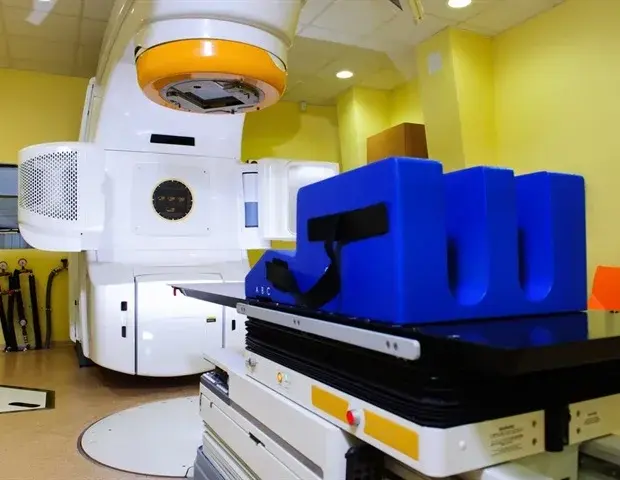
A long-term analysis of a Russian trial indicates that low-dose radiation therapy may not only relieve pain but also slow structural deterioration in early-stage knee osteoarthritis, potentially reducing disability and the need for knee replacements.
Key points
- A 12-year follow-up of 292 patients found that low-dose radiation therapy resulted in a 67% lower adjusted hazard of government-certified disability compared to medication alone.
- MRI scans showed significantly less structural joint deterioration in the radiation group, with benefits sustained over three years, unlike the medication-only group which showed worsening.
- The greatest benefits were observed in patients with grade 2 osteoarthritis, where disability rates were 31% versus 61% and knee replacement rates were 14% versus 36%.
- The treatment involves 10 sessions of low-energy X-rays totaling 4.5 Gray, a dose far lower than cancer treatments, aimed at reducing inflammation rather than killing cells.
- Researchers emphasize that while results are promising, the study had limitations including a single-site design, lack of blinding, and incomplete MRI data, necessitating larger multicenter trials.
Background
This study adds to a growing body of research exploring non-surgical interventions for knee osteoarthritis. Recent archive coverage highlights that while traditional therapies like exercise, hydrotherapy, and knee braces offer strong symptom relief, they do not typically alter the disease's structural progression. Other emerging treatments, such as genicular artery embolization (GAE), have shown mixed results in rigorous trials, with some evidence suggesting they may delay knee replacement. The current findings suggest low-dose radiation could be a unique approach that targets the inflammatory drivers of cartilage breakdown, potentially offering a disease-modifying effect that symptom-management therapies lack.
How outlets are covering it
News-Medical and Bioengineer.org both highlight the convergence of patient-reported outcomes and MRI evidence as the study's most compelling aspect, noting that pain relief was accompanied by measurable structural preservation. The Eastleigh Voice focuses on the practical implication of delaying knee replacement surgery. All sources agree on the study's limitations, particularly the lack of blinding and the single-institution setting in Russia, which may limit generalizability. Dr. Bobby Koneru, the study author, emphasizes the need for a multicenter trial with simulated radiation controls to confirm these findings, while ASTRO expert Gopal Bajaj notes that the MRI data moves the discussion beyond simple pain relief to potential disease modification. No source disputes the statistical significance of the disability reduction, but all caution that the knee replacement difference across the full population did not reach statistical significance, only within the grade 2 subgroup.
Why it matters
If confirmed in larger trials, low-dose radiation could become a standard disease-modifying treatment for early osteoarthritis, potentially reducing the burden of chronic pain and the high costs associated with knee replacement surgeries. This would represent a significant shift from current standard care, which primarily focuses on symptom management rather than preventing structural joint deterioration.
What to watch
The next step is a multicenter randomized trial using simulated radiation as a control, with prospectively defined imaging and long-term clinical endpoints, focusing specifically on patients with grade 2 disease. Researchers also need to assess long-term safety, particularly regarding rare late effects and lifetime cancer risk in this relatively young patient population.
- Low-dose radiation shows lasting benefits in patients with knee osteoarthritis News-Medical
- Low-dose radiation therapy may slow progression of knee osteoarthritis, long-term study indicates Medical Xpress
- ASTRO: Low-dose RT tied to fewer knee replacements AuntMinnie
- Low-Dose Radiation Shows Promise for Slowing Knee Osteoarthritis in Long-Term Trial Bioengineer.org
- Low-dose radiation could slow early knee arthritis and delay need for replacement surgery, study shows The Eastleigh Voice
Want the full story? Read the original reporting
Read on News-Medical