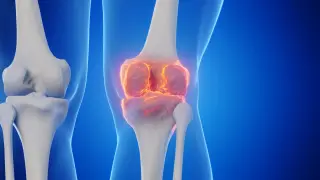
Stanford researchers discovered that blocking the aging protein 15-PGDH can restore cartilage in mice and human tissue. This approach reverses age-related joint damage and prevents arthritis after injury, potentially replacing joint surgeries with a simple drug.
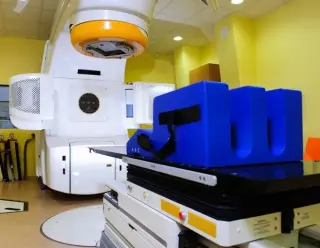
A long-term analysis of a Russian trial indicates that low-dose radiation therapy may not only relieve pain but also slow structural deterioration in early-stage knee osteoarthritis, potentially reducing disability and the need for knee replacements.
Researchers at the University at Buffalo have created an injectable hydrogel that transforms into a semisolid depot at body temperature, allowing drugs to remain in joints for weeks. This system addresses the rapid clearance of traditional osteoarthritis treatments by using nanocarriers to deliver hydrophobic compounds gradually, potentially reducing the need for frequent injections and minimizing systemic side effects.
A new guide from Eat This Not That outlines six low-impact exercises performed on a bed to rebuild hip strength in adults over 60. Citing Karly Mendez, PhD, a Senior Human Performance Specialist at Memorial Hermann Rockets Sports Medicine Institute, the article argues that bed-based workouts offer a stable surface and natural movement patterns that engage core muscles more effectively than fixed gym machines. The recommended routine includes glute bridges, side-lying leg lifts, supine marching, clamshells, heel slides, and glute squeezes. These movements are designed to be joint-friendly, requiring no balance or artificial support, making them accessible for older adults seeking to maintain mobility and reduce injury risk without the strain of traditional gym equipment.
Dr. Zaki Afzal, a physical therapist, argues that the deep squat is a natural human rest position that maintains hip, knee, and ankle mobility. He notes that the ability to rise from the floor without aid is a predictor of longevity, as it reflects the strength and mobility required for independence. Afzal recommends three specific exercises to restore this capability: supported deep squat holds, heel-elevated goblet squats, and ankle mobility drills. He emphasizes that while many people have lost this mobility, it can be regained through consistent practice, cautioning against forcing range of motion to avoid injury.
Knee pain in active adults often stems from weaknesses in the hips, ankles, or calves rather than the joint itself. Experts recommend strengthening glutes, improving ankle mobility, and building calf strength to reduce load. Gradual mileage increases and cross-training are also advised to prevent injury.
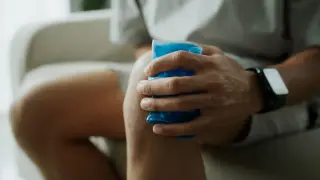
Orthopedic surgeons Robert Carangelo and Jonathan Bell emphasize that knee pain, often caused by osteoarthritis or injury, can be managed through specific lifestyle changes. Key strategies include strengthening supporting muscles, maintaining a healthy weight, and engaging in low-impact activities. While ice and heat offer temporary relief, consistent movement and physical therapy are crucial for long-term joint health. Medical intervention is recommended if pain persists or causes instability.
A physical therapist advises adults over 60 experiencing knee stiffness to incorporate a specific daily mobility habit into their routine. The article, published by Tom's Guide, highlights that age-related joint tightness and reduced mobility are common but manageable through consistent, simple exercises. While the provided text cuts off before detailing the specific move, it frames the advice as a low-barrier intervention for maintaining joint function and reducing discomfort in older adults.
Experts link grip strength to longevity, joint protection, and biological age. Simple exercises, specific foods, and consistent resistance training can help maintain hand power and overall health as you age.
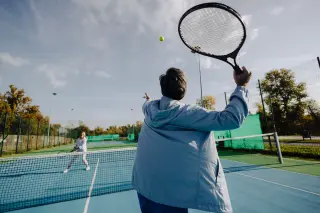
A Washington Post Well‑Being piece reports that research indicates high‑impact activities—such as running, tennis, hiking, skiing, and ballet—do not damage joints for people with hip or knee arthritis and may even lower hip‑replacement risk, with guidance to progress gradually and listen to your body.
Gelatin-based, low-calorie desserts are highlighted as a way to support gut health, joint strength and aging due to the amino acids in collagen. Gelatin can help skin and cartilage, aid gut lining and calcium absorption via lysine, and may reduce inflammation with glycine. The dessert is low in calories (about 10 per tablespoon) and provides roughly 6 g protein, 2 g sugar and no fat; NIH guidance suggests 5–15 g daily if taken as a supplement for up to six months, though human evidence is still limited and much of the data comes from animal studies.
A writer swaps walking for swimming during a hot Sri Lankan holiday, quickly falling in love with cardio as she scales from 20 to 60 pool lengths a day; she highlights swimming’s low-impact benefit for joints, its full-body workout, and its calming, distraction-free focus, which together boost fitness and ease knee pain.
Movement is the most powerful treatment for osteoarthritis, helping nourish cartilage, strengthen muscles, reduce inflammation, and slow progression; yet many healthcare systems underutilize exercise therapy, often directing patients to surgery before trying non-surgical options.
A sponsor-supported Tom’s Guide wellness piece outlines a trainer-approved 10-minute morning routine to improve joint mobility after age 60. It features chair squats, stair steps, seated arm circles, ankle circles, and wrist rotations to lubricate joints, improve circulation, and support balance with minimal equipment. The routine targets hips, knees, ankles, shoulders and wrists and is suitable for beginners, recommending 2–3 sets of 5–8 reps per exercise. A healthcare professional should be consulted if arthritis or osteoporosis is a concern.
The article highlights that osteoarthritis is increasingly diagnosed in younger, active individuals and discusses how emerging diagnostic techniques—such as spectral fingerprinting using spectroscopy to analyze blood biomarkers—could detect risk before pain or joint damage appears. This early detection could enable preventive actions like targeted exercise, weight management, and injury prevention, potentially reducing long-term disability and healthcare costs. Current treatments focus on symptom management and may involve injections or, in severe cases, joint replacement, but early identification could shift care toward prevention and preservation of joint health.