
Bone marrow dysfunction drives Alzheimer’s progression by limiting monocyte brain homing
TL;DR Summary
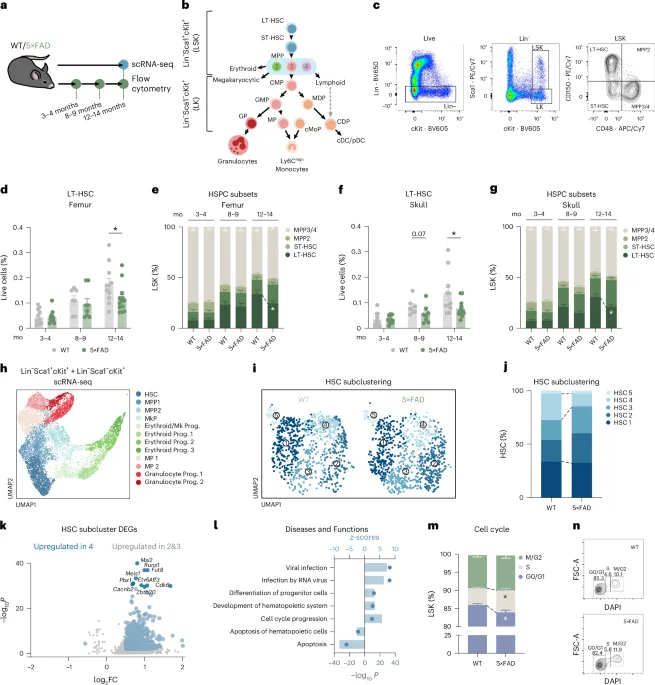
In 5xFAD mice and patients with Alzheimer's disease, bone marrow–derived myelopoiesis is impaired by a maladaptive type I interferon (IFN-I) response, altering monocyte development and peripheral monocyte phenotypes. Blocking IFN-I signaling or using IFNAR1-deficient bone marrow restores hematopoiesis, normalizes monocyte phenotypes, and increases monocyte-derived macrophage homing to the brain, mitigating disease pathology and highlighting a systemic contributor to AD progression.
- Bone marrow myelopoiesis dysfunction in Alzheimer’s disease limits monocyte homing to the brain and drives disease progression Nature
- Key path to Alzheimer's-like brain damage starts outside the brain Medical Xpress
- T cells by peripheral dendritic cells exacerbates tau-mediated neurodegeneration Nature
- Scientists traced a hidden immune route that may worsen tau-linked brain damage News-Medical
- Inside the brain: Rethinking the mechanisms of Alzheimer’s disease The Conversation
Reading Insights
Total Reads
1
Unique Readers
8
Time Saved
42 min
vs 43 min read
Condensed
99%
8,551 → 60 words
Want the full story? Read the original article
Read on Nature