
Bone marrow dysfunction drives Alzheimer’s progression by limiting monocyte brain homing
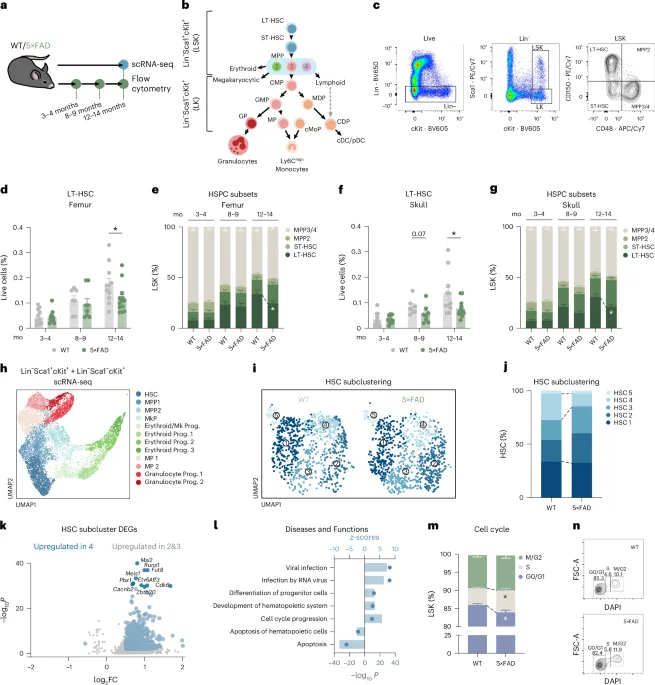
In 5xFAD mice and patients with Alzheimer's disease, bone marrow–derived myelopoiesis is impaired by a maladaptive type I interferon (IFN-I) response, altering monocyte development and peripheral monocyte phenotypes. Blocking IFN-I signaling or using IFNAR1-deficient bone marrow restores hematopoiesis, normalizes monocyte phenotypes, and increases monocyte-derived macrophage homing to the brain, mitigating disease pathology and highlighting a systemic contributor to AD progression.