
Australia Evacuates Macquarie Island Researchers to Prevent Psychological Trauma from Seal Mass Deaths
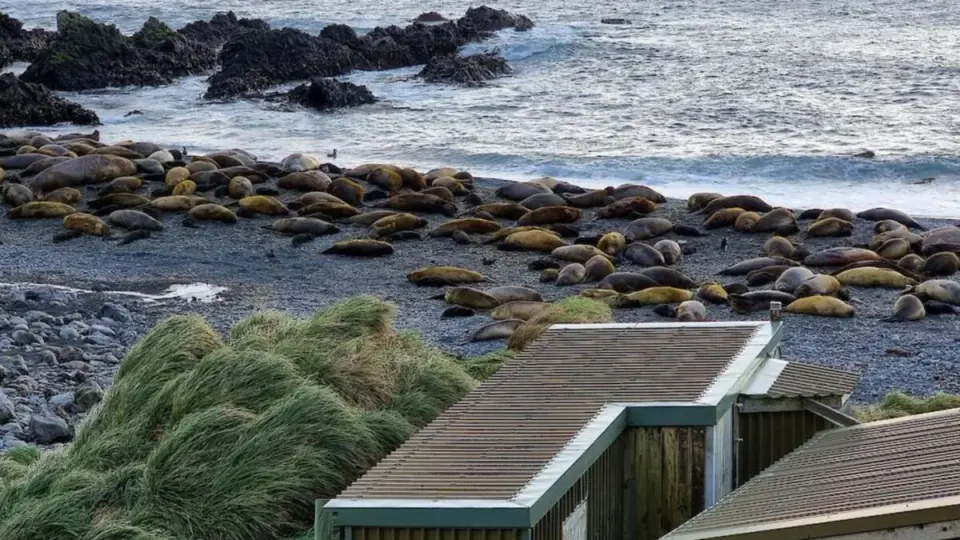
Australia is evacuating 24 staff from Macquarie Island research station to protect them from the psychological impact of witnessing mass seal deaths from H5N1 bird flu. The island is home to 100,000 seals, and experts predict a high likelihood of a significant mortality event during the upcoming breeding season. While the human risk is low, the government prioritizes staff wellbeing over continued scientific monitoring, a decision criticized by some experts who argue that remote monitoring cannot replace field sampling needed to track virus evolution and wildlife impacts.
Key points
- The Australian Antarctic Division (AAD) announced the withdrawal of all 24 expeditioners from Macquarie Island, located 1,500 km southeast of Tasmania, due to the risk of H5N1 bird flu causing mass seal deaths.
- The decision was made primarily to mitigate 'psychosocial risks' for staff, who would otherwise witness the potential decimation of the island's elephant seal population, with past outbreaks showing pup mortality rates up to 90%.
- The AAD's icebreaker RSV Nuyina is scheduled to pick up staff and essential cargo in late September or early October, marking the first time the station, established in 1948, will be left without personnel.
- Experts from The Conversation argue that removing scientists hampers the ability to document the outbreak, collect biological samples, and monitor virus evolution, suggesting that remote monitoring via drones and cameras is insufficient for scientific needs.
- The evacuation follows a similar H5N1 outbreak at Heard Island, where over 13,000 seal pups died, and coincides with a A$370 million project to rebuild the Macquarie Island station, expected to be completed by 2032.
- Recent H5N1 detections in South Australia, including a common dolphin and mass penguin die-offs, highlight the virus's spread across Australian wildlife, though human risk remains low.
Background
Australia has been grappling with the spread of H5N1 bird flu since early 2026, with mass seabird die-offs reported in South Australia and vaccination drives for wild penguins in Victoria. The current evacuation is part of a broader response to the virus's impact on wildlife, particularly in sub-Antarctic regions. The AAD has also been pushing for increased investment in Antarctic research infrastructure, including a proposed Polar Pillar within the AUKUS security framework, to safeguard Australia's claims and scientific presence in the region.
How outlets are covering it
Gizmodo and The Maritime Executive emphasize the government's focus on protecting staff from psychological trauma, framing the evacuation as a necessary measure given the severity of potential seal deaths. The Conversation, however, criticizes the decision, arguing that it undermines scientific monitoring and the ability to track virus evolution, suggesting that other nations have successfully maintained research during outbreaks with enhanced biosecurity and support. The Guardian highlights the broader context of H5N1 spread in Australia, including new detections in dolphins and penguins, while noting the government's low assessment of human risk. The sources agree on the severity of the bird flu threat to wildlife but differ on the balance between staff wellbeing and scientific necessity.
Why it matters
The evacuation of Macquarie Island researchers highlights the tension between human safety and scientific monitoring in the face of emerging infectious diseases. The decision underscores the challenges of managing wildlife health in remote areas and the potential long-term impacts of bird flu on vulnerable species like elephant seals. It also raises questions about the adequacy of remote monitoring tools and the need for sustained investment in Antarctic research infrastructure to address future outbreaks and environmental changes.
What to watch
The AAD is exploring options for monitoring Macquarie Island, with plans to return expeditioners in future seasons. The RSV Nuyina will proceed with its scheduled Antarctica resupply operations in late October. The A$370 million rebuild of the Macquarie Island station is expected to be completed by 2032, aiming to ensure a continued year-round presence. Ongoing H5N1 surveillance and vaccination efforts will continue across Australia, with a focus on wildlife and captive species.
- Australia Is Evacuating an Antarctic Base So No One Has to Watch Thousands of Seals Die Gizmodo
- Bird flu could devastate Macquarie Island. Why are we removing the scientists we need to understand it? The Conversation
- Icebreaker to Extract Macquarie Island Researchers Due to Bird Flu Fear The Maritime Executive
- Dolphin dies from H5 bird flu in SA as researchers withdrawn from sub-Antarctic island over ‘psychosocial risk’ The Guardian
- Bird flu threat gets real for elephant seals Dungog Shire News Of The Area
Want the full story? Read the original reporting
Read on Gizmodo