
Engineered 'glue' stabilizes chromosomes in aging mouse eggs, offering potential fertility breakthrough
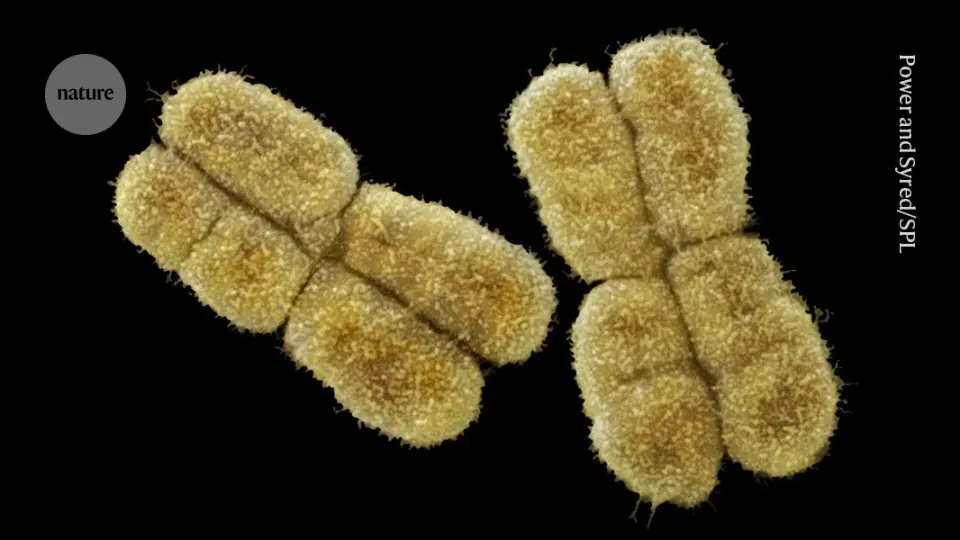
Researchers at Germany's Max Planck Institute have developed an artificial protein system called TALhesin that mimics natural cohesin, a protein that declines with age and causes chromosomal errors in eggs. Published in Science on 26 November, the study shows that injecting TALhesin into aging mouse eggs significantly reduces premature chromosome separation, raising the rate of error-free eggs from 46.7% to 74.1%. While the system has been adapted for human eggs, it has not yet been tested in human oocytes to confirm efficacy or safety. The discovery challenges the view that age-related chromosomal errors are irreversible and has spurred commercialization efforts by startups Ovo Labs and U-Ploid.
Key points
- TALhesin is an engineered protein system designed to replace the function of cohesin, which naturally diminishes in eggs as women age, leading to aneuploidy.
- In 17-month-old mice, TALhesin treatment increased the proportion of eggs without premature chromosome separation from 46.7% to 74.1%, matching levels seen in young mice.
- The system includes a 'molecular scissor' mechanism that deactivates the glue at the correct time during cell division, ensuring proper chromosome separation.
- Researchers have adapted TALhesin for human chromosomes and confirmed its binding in donated human eggs, but have not yet tested whether it reduces errors in human oocytes.
- Melina Schuh, the lead researcher, co-founded Ovo Labs to commercialize the technology, while her colleague Alexandre Webster co-founded rival startup U-Ploid with a similar approach.
Background
Aneuploidy, or abnormal chromosome numbers, is a leading cause of infertility, failed IVF cycles, and miscarriage, particularly in women over 35. Previous research by Schuh's team in 2015 established that cohesin levels decline in human eggs with age. This new study builds on that foundation by proposing a synthetic replacement. The archive notes a surge in egg freezing in the UK, reflecting growing public concern about age-related fertility decline, though no direct link to this specific research exists.
How outlets are covering it
Nature and STAT emphasize the technical innovation of TALhesin and its potential to address a long-standing biological barrier, with Bettina Mihalas calling it a 'creative, well-engineered approach.' STAT highlights the commercial race between Ovo Labs and U-Ploid, noting that while Ovo Labs' candidate EmbryoProtect 1 showed promising results in a preprint, it lacks peer review and safety data. Earth.com reports on a separate but related discovery of a protein called OMC1 that protects chromosome stability in mice, cautioning that this does not reverse aging but may preserve remaining cohesion. Martin Cid Magazine frames the story around Schuh's dual role as a basic researcher and startup founder, questioning the ethical and scientific implications of commercializing unproven technologies. All sources agree that human testing is the critical next step, but differ on the immediacy of clinical application, with STAT and Martin Cid Magazine expressing more caution regarding safety and regulatory hurdles.
Why it matters
If successful in humans, TALhesin could expand the biological reproductive window for women, reduce the need for repeated IVF cycles, and potentially lower the rate of miscarriages caused by aneuploidy. It represents a shift from treating symptoms to addressing the root mechanical cause of age-related egg decline.
What to watch
The next critical step is testing TALhesin in human oocytes to determine if it reduces chromosomal errors. Researchers must also conduct safety and toxicity studies to ensure the method does not introduce other developmental problems. Commercialization efforts by Ovo Labs and U-Ploid will likely proceed in parallel, with both companies seeking to validate their respective technologies through clinical trials.
- Chromosome ‘glue’ could boost fertility by stabilizing ageing eggs Nature
- In a fertility advance, engineered molecular glue stabilizes chromosomes in aging eggs STAT
- An engineered 'glue' for aged eggs could prevent premature chromosome separation Medical Xpress
- What keeps a woman’s egg cells viable for decades? Scientists uncover a clue to reproductive aging Earth.com
- Melina Schuh, the biochemist who filmed why eggs age and now wants to undo it Martin Cid Magazine
Want the full story? Read the original reporting
Read on Nature