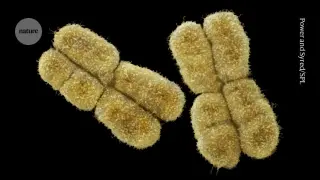
Engineered 'glue' stabilizes chromosomes in aging mouse eggs, offering potential fertility breakthrough
Researchers at Germany's Max Planck Institute have developed an artificial protein system called TALhesin that mimics natural cohesin, a protein that declines with age and causes chromosomal errors in eggs. Published in Science on 26 November, the study shows that injecting TALhesin into aging mouse eggs significantly reduces premature chromosome separation, raising the rate of error-free eggs from 46.7% to 74.1%. While the system has been adapted for human eggs, it has not yet been tested in human oocytes to confirm efficacy or safety. The discovery challenges the view that age-related chromosomal errors are irreversible and has spurred commercialization efforts by startups Ovo Labs and U-Ploid.