
Long-lived monocyte cells in lungs may boost flu vaccine efficacy
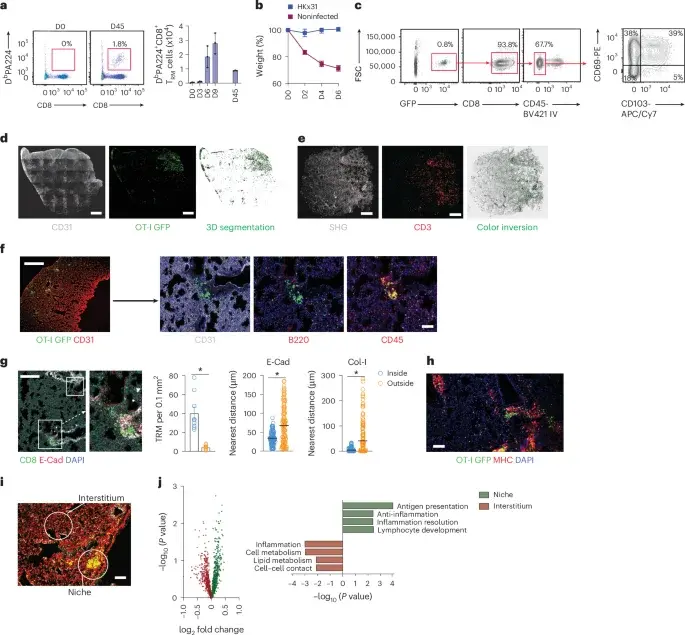
Researchers at the University of Rochester have identified a previously overlooked subset of monocyte-derived cells that persist in the lungs for months after influenza infection. These cells secrete galectin-1, a protein that supports the formation and function of tissue-resident memory CD8+ T cells. Adding galectin-1 as an adjuvant to intranasal flu vaccines in mice significantly improved immune responses, suggesting a new strategy for enhancing respiratory protection.
Key points
- A subset of CCR2+ monocytes differentiates into long-lived cells that remain in the lung for over four months post-infection.
- These cells secrete galectin-1, which directly activates CD8+ T cells and enhances TGF-β sensing to maintain tissue-resident memory.
- Depleting these cells significantly reduced the formation of lung CD8+ tissue-resident memory cells and compromised secondary immune protection.
- Intranasal administration of recombinant galectin-1 alongside an influenza vaccine induced superior memory CD8+ T cell responses in mice.
- The findings challenge the traditional view that immune memory is driven solely by T and B cells, highlighting the role of innate immune cells in long-term defense.
Background
This study builds on recent findings that innate immune cells, such as monocytes and macrophages, play a critical role in shaping long-term immune memory. Previous research, including a 2026 study on midlife brain remodeling, highlighted how blood-derived monocytes can replace original tissue cells, influencing inflammation and disease risk. Additionally, 2026 studies on T cell mechanosensing and lung-resident immune cell genetics have underscored the importance of local tissue environments in immune memory formation. The current research extends this by identifying a specific monocyte-derived population that actively supports CD8+ T cell residency in the lungs, a key site for respiratory virus entry.
How outlets are covering it
Nature Immunology and the University of Rochester emphasize the discovery of a long-lived monocyte-derived subset that provides innate immune help for CD8+ T cell memory. DongA Science and Genetic Engineering and Biotechnology News highlight the potential of galectin-1 as a vaccine adjuvant for next-generation flu vaccines. All sources agree on the significance of the finding but differ in emphasis: Nature focuses on the mechanistic details of galectin-1 and TGF-β sensing, while the University of Rochester and DongA Science stress the translational potential for improving nasal flu vaccines. Genetic Engineering and Biotechnology News notes the broader implications for respiratory virus protection beyond influenza.
Why it matters
Current flu vaccines are effective at preventing severe illness but often fail to generate strong immune memory in the respiratory tract, where the virus first enters. This research identifies a new mechanism by which innate immune cells support long-term protection, offering a potential strategy to enhance vaccine efficacy. If translated to humans, galectin-1-based adjuvants could lead to vaccines that not only prevent severe disease but also block infection earlier at the point of entry, potentially reducing transmission and the impact of respiratory viruses.
What to watch
Researchers are now working to develop more stable forms of galectin-1 that can be safely used as a vaccine adjuvant in humans. Further studies will be needed to determine the efficacy and safety of this approach in clinical trials. The findings may also inform the design of vaccines for other respiratory viruses, including those that cause seasonal illness and pandemics.
- cells provide innate immune help in the generation of functional memory CD8 Nature
- Good neighbors make lasting memory Nature
- Hidden Immune Cells in the Lung Could Lead to Better Flu Vaccines University of Rochester
- Rochester University team identifies lung immune cells guiding next-generation flu vaccines dongascience.com
- Key Immune Cells Identified That Could Strengthen Flu Vaccines Genetic Engineering and Biotechnology News
Want the full story? Read the original reporting
Read on Nature