
AI-designed viruses spark debate over lab security vs. censorship
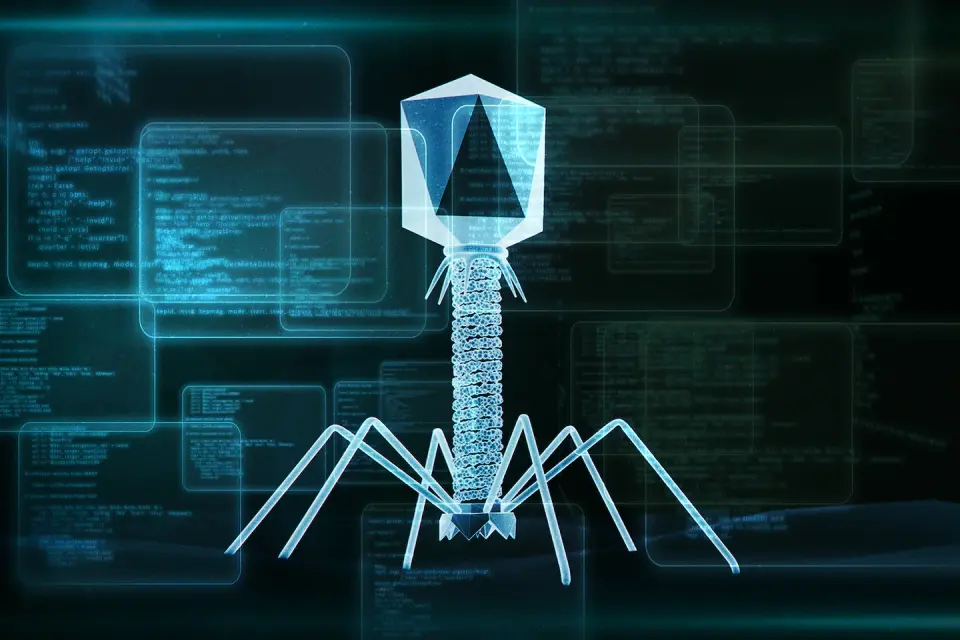
Researchers at Stanford and the Arc Institute used AI to design 16 functional viruses from scratch, marking a milestone in synthetic biology. While the viruses target bacteria and pose no human threat, experts warn of biosafety risks. The Washington Post argues for regulating physical lab synthesis rather than censoring AI models, as a bipartisan bill faces legislative delays.
Key points
- Stanford and Arc Institute researchers used AI models Evo1 and Evo2 to design 16 novel bacteriophages that infect E. coli, published in Science.
- The AI models were trained on millions of DNA sequences to predict genomes capable of producing functional viruses, a first for generative AI in biology.
- The Washington Post editorial board argues that fears of AI-designed viruses should not lead to censorship of AI models, but rather to stricter physical lab regulations.
- A bipartisan bill mandating screening for harmful agents in gene synthesis labs is attached to the National Defense Authorization Act but stalled by partisan disputes over Iran.
- Experts from Johns Hopkins University warn that the technology raises urgent biosafety and biosecurity questions, though the specific viruses created are harmless to humans.
Background
This development follows earlier discussions on the potential of AI in biological design, such as the creation of new antibiotics. The current breakthrough extends AI capabilities to designing complete viral genomes, moving beyond previous templates based on known microorganisms. The debate echoes broader concerns about the balance between innovation and safety in synthetic biology, where the gap between digital design and physical synthesis remains a critical control point.
How outlets are covering it
The Washington Post editorial board emphasizes the potential of AI for medical breakthroughs, particularly against antimicrobial-resistant infections, and advocates for physical infrastructure controls over information censorship. They note that synthesizing viruses is costly and requires physical labs, making lab regulations more effective. In contrast, experts like Dr. Thomas Inglesby and Dr. Moritz Hanke from Johns Hopkins University highlight urgent biosafety and biosecurity concerns, warning that the technology could enable serious harm if misused. The BBC reports on the excitement among researchers, describing the achievement as a 'very significant turning point' in science, while also noting the 'urgent' safety questions raised by the findings. IEEE Spectrum frames the issue as a question of whether to worry, highlighting the technological milestone without taking a strong policy stance.
Why it matters
The ability of AI to design functional viruses from scratch represents a significant leap in synthetic biology, with potential implications for both medical advancements and biological security. The debate over how to regulate this technology, whether through censorship of AI models or physical lab controls, has direct implications for public health, biotech industry practices, and national security. The stalled legislation highlights the political challenges in addressing emerging biotechnological risks.
What to watch
The bipartisan bill attached to the National Defense Authorization Act, which mandates screening for potentially harmful biological agents in gene synthesis labs, is currently stalled due to partisan disputes over Iran. Progress on this legislation will determine the regulatory framework for AI-designed biology. Researchers may continue to explore AI-designed organisms, potentially moving toward more complex living organisms, as indicated by Stanford's Brian Hie. The outcome of the legislative debate will influence whether physical lab controls or information censorship become the primary regulatory approach for AI in biology.
- Opinion | AI can design new viruses. That’s not as scary as it sounds. The Washington Post
- AI Can Now Make Deepfake Biological Viruses. We Are Not Prepared Forbes
- Artificial Intelligence used to design brand new viruses bbc.com
- The Latest Scary-Sounding AI Milestone: A Brand-New Virus WSJ
- AI Designed Functional Viruses. But How New Were They? IEEE Spectrum
Want the full story? Read the original reporting
Read on The Washington Post