
Pocket-Sized Fluorometer Matches Lab Accuracy for Cancer and HIV Detection
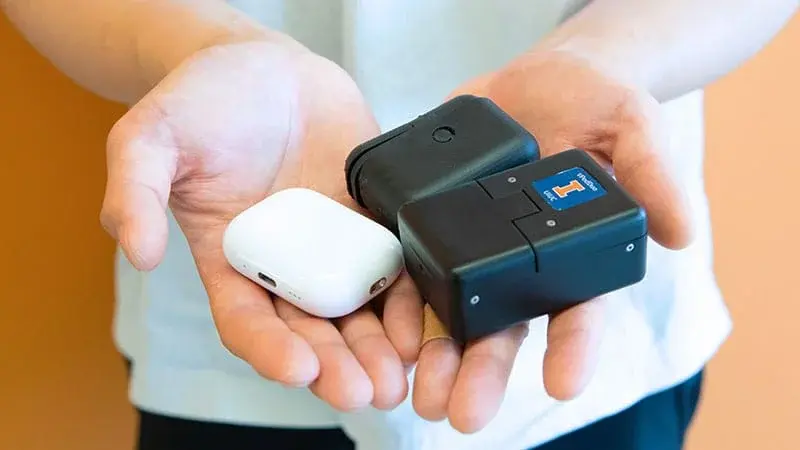
Researchers at the University of Illinois Urbana-Champaign have developed a handheld device called the VPodDuo that performs fluorescence assays with accuracy comparable to expensive laboratory equipment. The device, roughly the size of an AirPod case, can detect pathogens like HIV and Zika, as well as cancer biomarkers including microRNA and circulating tumor DNA. Published in the IEEE Sensors Journal in July 2026, the technology aims to bring sophisticated diagnostics to home settings to enable earlier detection and preventable deaths. While the device has shown promising results in initial tests, it is not yet commercially available as researchers work on automating sample processing.
Key points
- The VPodDuo device uses photodiodes to measure fluorescence intensity, achieving analytical performance similar to high-end laboratory fluorimeters.
- Developed by Han-Keun Lee, Brian Cunningham, and Xing Wang at the University of Illinois Urbana-Champaign, the device was validated against three lab-grade instruments.
- The technology successfully detected Zika virus, Staphylococcus aureus, HIV, lung cancer-associated circulating tumor DNA, and microRNA biomarkers.
- The device is designed to be compact and inexpensive, aiming to overcome the limitations of simple home tests that often lack sensitivity.
- Current challenges include automating sample processing and reagent mixing, with the team working to integrate these steps before market release.
Background
This development follows a trend in 2026 toward miniaturized and accessible diagnostic tools. In July 2026, researchers proposed using existing Large Hadron Collider hardware to detect dark matter, highlighting a broader push for repurposing or simplifying complex scientific instruments. Earlier in August, a Pennsylvania teen developed a blood test for pancreatic cancer using magnetic nanoparticles, and Johns Hopkins researchers validated an AI-driven blood test for liver cancer. These efforts, alongside the new VPodDuo, reflect a growing focus on making advanced diagnostics more accessible and rapid outside traditional laboratory settings.
Why it matters
Early detection is critical for effective cancer treatment and managing infectious diseases like HIV. By bringing laboratory-grade accuracy to a portable, affordable device, this technology could significantly reduce the time between symptom onset and diagnosis. This shift toward point-of-care testing could democratize access to high-quality diagnostics, potentially saving lives through earlier intervention and reducing the burden on centralized laboratory infrastructure.
What to watch
The research team is currently focusing on improving automation and sample processing to create a complete diagnostic workflow. They aim to move from the current device prototype to a fully integrated system that handles sample preparation, reagent mixing, and analysis. Once these hurdles are overcome, the goal is to bring the device to market for widespread use by patients and healthcare providers.
Want the full story? Read the original reporting
Read on Medscape