
Ancient Retrovirus Silences Key Brain Gene in Chimpanzees, Driving Human-Chimp Divergence
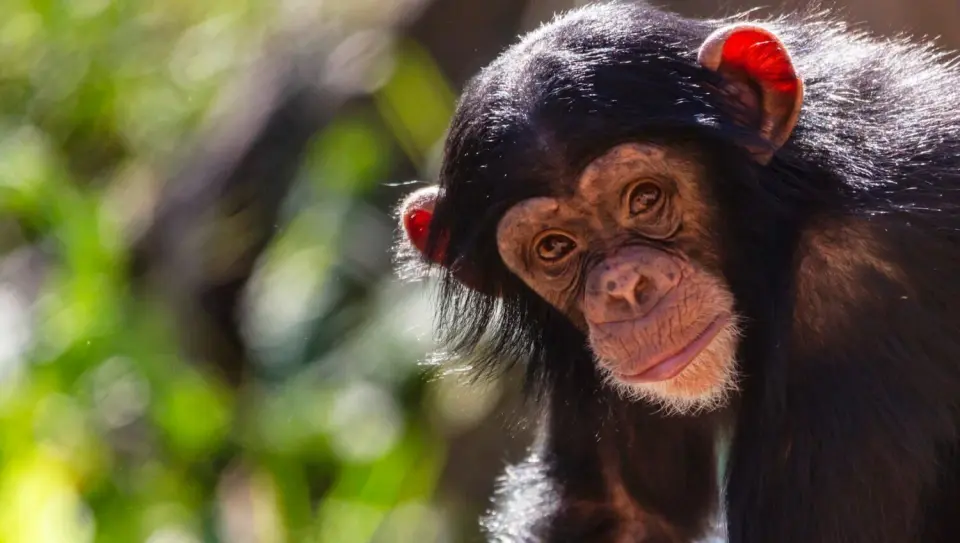
A study by Lund University researchers reveals that an ancient retrovirus, PTERV1, integrated into chimpanzee genomes millions of years ago, silencing the LINC00662 gene. This gene remains active in humans and is crucial for early brain development. By using CRISPR to remove the viral sequence in chimpanzee cells, researchers restored gene expression, confirming the virus’s causal role in suppressing neural maturation genes. The findings suggest that differences in gene regulation, rather than protein-coding DNA, may explain significant brain divergence between humans and chimpanzees.
Key points
- PTERV1, an endogenous retrovirus, is present in chimpanzee and bonobo genomes but absent in humans, having infected ancestors 5–7 million years ago.
- The virus’s DNA insertion on chromosome 19 triggers methylation, a chemical process that silences the LINC00662 gene in chimpanzees.
- LINC00662 is a long noncoding RNA active in human brain organoids, playing a role in neuronal maturation and axon growth.
- CRISPR-Cas9 experiments removing PTERV1 from chimpanzee cells restored LINC00662 expression, proving the virus’s direct causal role in gene silencing.
- Disabling LINC00662 in human organoids reduced activity in genes linked to neural connection formation, highlighting its importance in brain development.
Background
This finding builds on earlier discussions of how ancient viral DNA influences modern genomes, such as the 2026 discovery that the human brain gene BC200 retains mobility and can insert into viruses. It also aligns with broader evolutionary biology debates on how gene regulation, rather than just protein-coding differences, drives species divergence, as noted in our October 2026 coverage of PTERV1’s initial identification.
How outlets are covering it
While all sources agree on the core finding, Earth.com emphasizes the specific timeline of PTERV1’s spread (1.5–5 million years ago) and notes that gorillas and macaques lack the viral insertion, suggesting humans may be the only species with a functional LINC00662 copy. ThePrint highlights the broader implication that ERVs comprise 3–8% of the human genome and can influence neighboring genes. Gadget Review and Science Daily focus on the CRISPR validation and the functional impact on neuronal maturation, with Gadget Review explicitly cautioning that organoid results do not prove effects on living cognition or behavior. Earth.com also notes that silencing LINC00662 in humans led to compensatory increases in axon/dendrite growth genes, a nuance not detailed in other outlets.
Why it matters
This research provides a concrete mechanism for how ancient viral infections can alter gene regulation across generations, contributing to species-specific traits. It shifts the focus from protein-coding differences to regulatory silencing in explaining human-chimpanzee brain divergence. Understanding these viral regulatory marks may also offer insights into neurological diseases, as some affected genes are linked to conditions like schizophrenia and Parkinson’s, according to Lund University researchers.
What to watch
Researchers plan to investigate whether other endogenous retroviruses have similarly silenced brain-development genes in primates and whether these sequences are linked to neurological disorders. They also aim to identify the specific cellular defense proteins that recognize PTERV1 and initiate methylation, as well as clarify how methylation spreads from viral insertions to neighboring gene regulatory regions.
- An Ancient Virus Silenced a Brain Gene in Chimpanzees. Humans Kept It. Gadget Review
- An ancient virus may help explain what makes the human brain different Science Daily
- A virus found in chimpanzee DNA explains why humans developed much larger and smarter brains Earth.com
- What separates the evolution of human and chimpanzee brains? Swedish study links it to a virus ThePrint
Want the full story? Read the original reporting
Read on Gadget Review