
Arrestin condensates orchestrate GPCR signaling through liquid–liquid phase separation
TL;DR
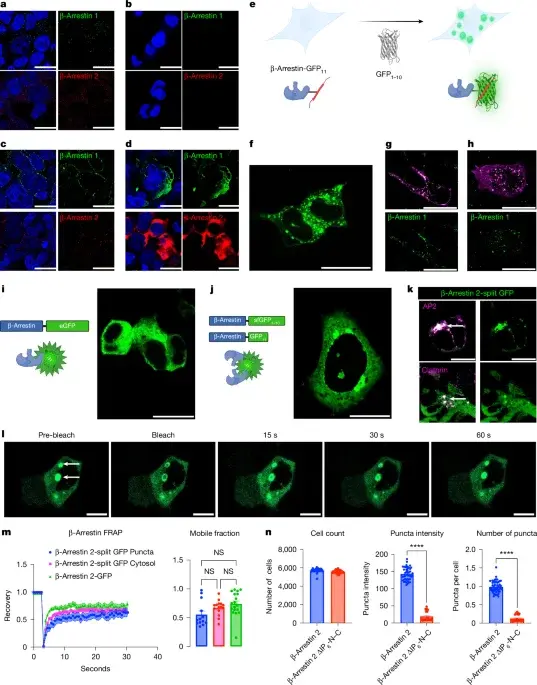
New research shows beta-arrestins 1 and 2 form endogenous condensates near activated GPCRs via liquid–liquid phase separation, a process regulated by IP6-induced oligomerization and the arrestin intrinsically disordered region. These condensates influence GPCR desensitization, internalization, and downstream signaling, with arrestin orientation and specific mutations (IP6 sites and IDR) altering function, suggesting LLPS compartments are important regulators of GPCR signaling and could inform drug development.
Topics:healthscience#beta-arrestin#cell-signaling#condensates#gpcr#liquid-liquid-phase-separation#science
Want the full story? Read the original reporting
Read on Nature