
UCSF researchers map 1,800 protein interactions to target severe autism therapies
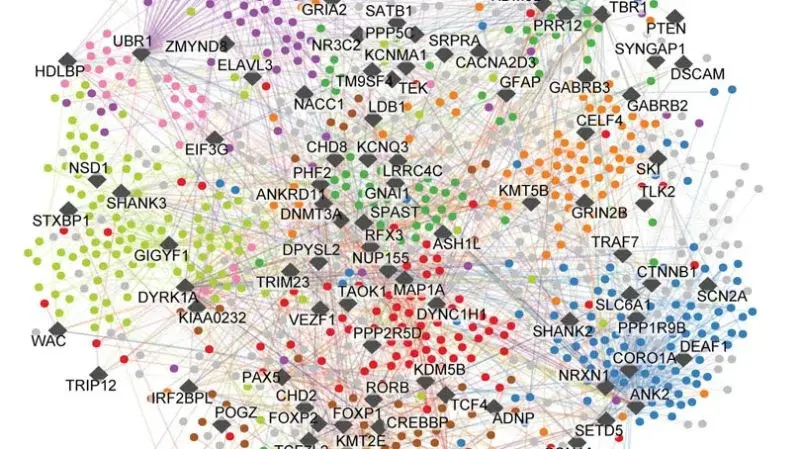
A new study published in Science details the largest molecular map of autism to date, identifying over 1,800 protein-protein interactions linked to genetic mutations. By using AI and lab-grown brain organoids, researchers aim to shift treatment strategies from targeting individual genes to stabilizing shared biological pathways, potentially leading to precision therapies for severe autism.
Key points
- Researchers at the University of California, San Francisco, published a study in Science detailing a comprehensive map of protein interactions associated with autism spectrum disorder.
- The map identifies over 1,800 protein-protein interactions, with 87% being previously unobserved, linking more than 250 autism-associated genes to shared biological pathways.
- The study utilized artificial intelligence, specifically AlphaFold, to prioritize key mutations and tested them in lab-grown brain organoids to understand how genetic changes rewire the brain.
- Dr. Nevan Krogan, a senior investigator at Gladstone Institutes, stated that this molecular blueprint allows for targeting protein interactions rather than individual genes, facilitating the development of targeted therapies.
- The findings are most directly relevant to the approximately 30% of individuals with profound autism who require 24-hour care, though implications may extend to other neuropsychiatric conditions.
- UCSF’s Quantitative Biosciences Institute has received a $46 million award to translate these findings into precision therapies, according to Genetic Engineering and Biotechnology News.
Background
This development follows recent advancements in autism research, including a 2026 study showing that rapamycin could rapidly reverse autism-like traits in mice by targeting circuit-level mechanisms. Additionally, a large U.S. study confirmed no link between the MMR vaccine and autism, reinforcing the focus on biological and genetic factors in understanding the disorder.
How outlets are covering it
CNN and The New York Times both highlight the potential of the new protein map to inform targeted therapies, with CNN emphasizing the use of AI and organoids, while The New York Times focuses on the opportunity for testing drugs. Genetic Engineering and Biotechnology News provides a specific financial detail, noting a $46 million award to UCSF’s Quantitative Biosciences Institute to translate the map into therapies. Perspectives on the timeline for clinical application vary, with Dr. Andy Shih of Autism Speaks cautioning that the translation process will take significant time, while Alison Singer of the Autism Science Foundation calls the study a 'watershed moment' for autism science. Additionally, there are concerns from some advocates that federal research plans may not adequately support this biological focus.
Why it matters
This study provides a new framework for understanding the molecular underpinnings of autism, potentially leading to more effective and targeted treatments. By mapping protein interactions, researchers can identify shared pathways across multiple genetic mutations, offering a more efficient approach to drug development than targeting individual genes. This could significantly impact the treatment of severe autism and other neuropsychiatric conditions.
What to watch
The next steps involve translating the findings from the protein map into drug candidates and testing them for safety and effectiveness. The $46 million award to UCSF’s Quantitative Biosciences Institute will likely accelerate this process. Additionally, the Interagency Autism Coordinating Committee is set to vote on a new national strategic plan for autism research, which may influence future funding and research priorities.
- Largest ever ‘map’ of autism may hold clues for new targeted therapies CNN
- A Study of Brain Proteins Offers New Targets to Treat Autism The New York Times
- UCSF gets $46 million autism research grant from Google cofounder Sergey Brin San Francisco Chronicle
- Largest ever molecular map of autism opens new paths to precision therapies Medical Xpress
- UCSF QBI Awarded $46M to Translate Landmark Autism Map Into Precision Therapies Genetic Engineering and Biotechnology News
Want the full story? Read the original reporting
Read on CNN