
Beihang University’s ‘Detangle’ Comb Achieves 98% Hair Regrowth in Mice via Electro-Stimulation
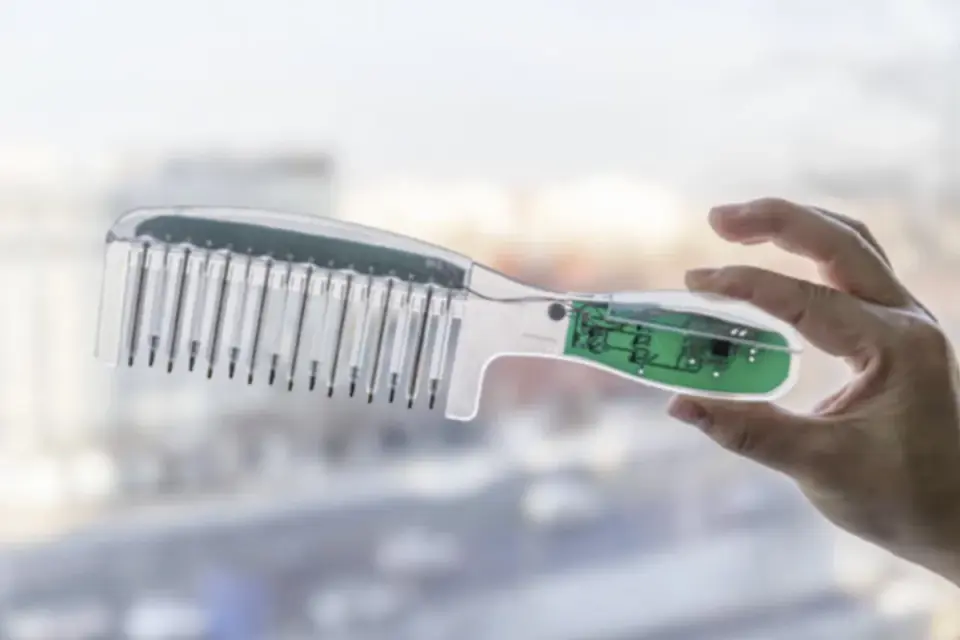
A new electronic comb developed by Chinese researchers has shown near-total hair regrowth in mice with pattern baldness. The device, named ‘Detangle’, uses height-differentiated electrodes to generate an electric field that delivers therapeutic molecules deep into hair follicles. In a study published in Nature Communications, the comb outperformed standard treatments like minoxidil, achieving 97.85% regrowth in mice within 28 days. While the results are promising, the technology remains experimental and has not yet been tested on humans.
Key points
- The ‘Detangle’ comb was developed by a team at Beihang University in Beijing and published in Nature Communications in November 2026.
- The device features electronic teeth with height-differentiated electrodes that create a stronger electric field, allowing drug delivery up to nine times deeper than conventional topical creams.
- In mouse trials, the comb combined with genetic therapies (SRD5A2 siRNA and VEGFA plasmids) achieved 97.85% hair regrowth, compared to 70% for minoxidil and 50% for finasteride.
- The treatment targets androgenetic alopecia, which affects 1.5 billion people worldwide, including up to 80% of men and 20-40% of women.
- The technology is currently in the animal testing phase; no human clinical trials have been conducted, and the genetic therapies used require further safety evaluation.
Background
Previous coverage in October and November 2026 highlighted the ‘Detangle’ comb as a breakthrough in hair loss treatment, noting its ability to restore hair in mice within 30 days. The device was described as a bioelectronic tool that outperforms existing FDA-approved treatments like minoxidil and finasteride in animal models. The current story confirms these earlier reports, adding specific details about the mechanism of action and the genetic therapies involved.
How outlets are covering it
The Independent emphasizes the comb’s potential to reverse baldness and its superiority over conventional treatments, noting the psychological impact of hair loss. South China Morning Post highlights the global scale of the problem, affecting 1.5 billion people, and frames the comb as a potential solution to a common daily anxiety. Popular Science provides a detailed breakdown of the comb’s mechanism, including the use of genetic therapies to block DHT and boost blood vessel growth, while cautioning that mouse results may not translate to humans. Popular Mechanics focuses on the historical context of comb design and the innovation of the ‘Detangle’ as a delivery system for therapeutic molecules, rather than a standalone treatment. All sources agree that the technology is promising but remains in the experimental stage, with no human trials yet conducted.
Why it matters
The ‘Detangle’ comb represents a potential shift in hair loss treatment by offering a non-invasive, deep-delivery method for therapeutic molecules. If successful in human trials, it could provide a more effective and less invasive alternative to current treatments like minoxidil and finasteride, which have limited efficacy and significant side effects. The technology could also reduce the need for costly and invasive hair transplants, addressing a major unmet need in dermatology and cosmetic medicine.
What to watch
The next steps for the ‘Detangle’ comb involve further research to ensure the safety and efficacy of the genetic therapies (SRD5A2 siRNA and VEGFA plasmids) in humans. If these therapies prove safe, the team may proceed to human clinical trials to determine if the mouse results translate to human patients. The development of a commercial product would depend on the success of these trials and regulatory approval.
- Scientists invent electric comb that restores hair growth ‘nearly 100%’ The Independent
- Chinese scientists’ comb restores hair growth by nearly 100% in mice study South China Morning Post
- New electric comb from China regrew nearly 100% of hair (in mice) Popular Science
- Humans Have Used the Same Comb Design Since the Stone Age. This One Might Finally Beat Baldness. Popular Mechanics
- Balding Worries? This New Device Uses Mild Electric Signals To Promote Hair Growth News18
Want the full story? Read the original reporting
Read on The Independent