
Berkeley Study Identifies Reactive Astrocytes as Primary Drivers of Tuberous Sclerosis Epilepsy
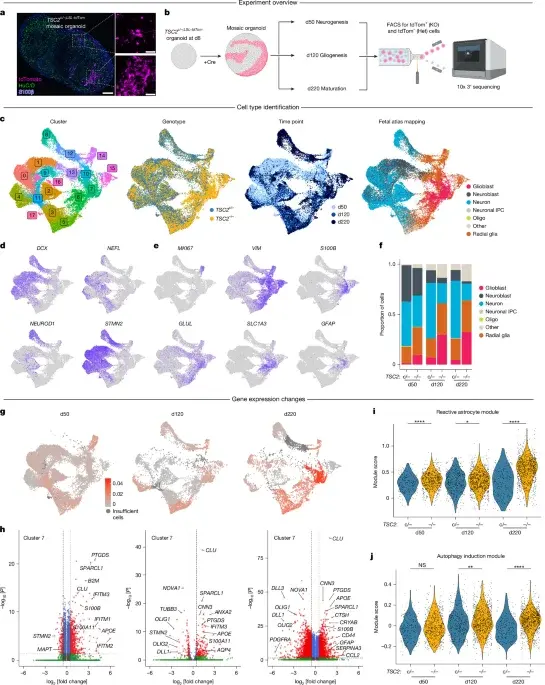
A new study published in Nature demonstrates that hyperactive mTORC1 signaling in tuberous sclerosis complex (TSC) causes neural progenitors to prematurely differentiate into reactive astrocytes. These abnormal glial cells, characterized by reduced glutamate transport and increased inflammation, are identified as a primary driver of brain lesions and seizures, rather than a secondary consequence of chronic epilepsy.
Key points
- UC Berkeley researchers used human brain organoids to track the development of cells with biallelic TSC2 mutations, finding a strong bias toward astrocyte formation.
- Single-cell transcriptomics revealed that these mutant astrocytes exhibit a 'reactive' state, characterized by upregulated inflammatory cytokines and neurodegenerative risk genes like APOE and CLU.
- The study confirms that these changes are cell-autonomous, occurring in the absence of seizures or external inflammatory signals, and are mirrored in resected tuber tissue from TSC patients.
- Reactive astrocytes show downregulated expression of the glutamate transporter EAAT1, which may lead to neuronal hyperexcitability and seizure activity.
- The findings suggest that targeting astrocyte reactivity with immunosuppressive therapies could offer a new treatment avenue for intractable pediatric epilepsy, potentially avoiding the side effects of systemic mTOR inhibitors.
Background
Tuberous sclerosis complex (TSC) is a genetic disorder affecting approximately 1 in 6,000 to 10,000 births, characterized by the formation of cortical tubers that often cause severe, drug-resistant epilepsy. Previous research had focused primarily on neuronal mechanisms, with glial abnormalities often considered a byproduct of chronic seizure activity. This study builds on earlier findings regarding mTOR pathway dysregulation in neurodevelopmental disorders and provides a definitive link between TSC2 loss and astrocyte dysfunction in human tissue models.
How outlets are covering it
The primary source, Nature, emphasizes the cell-autonomous nature of the astrocyte reactivity, highlighting that the changes occur in organoids lacking microglia and vascular cells, thus ruling out external inflammatory triggers. UC Berkeley’s press release frames the discovery as a shift in understanding the disease's pathophysiology, moving from a neuron-centric view to one where glia are primary drivers. Neuroscience News highlights the therapeutic implications, noting that the inflammatory signature of these astrocytes mirrors that seen in Alzheimer’s disease, suggesting potential for repurposing anti-inflammatory drugs. All sources agree on the core finding that TSC2 loss leads to reactive astrocytes, but they differ in emphasis: Nature focuses on the molecular and developmental mechanisms, UC Berkeley on the clinical implications for avoiding surgery, and Neuroscience News on the broader connection to neurodegenerative diseases and potential drug repurposing.
Why it matters
This research provides a new therapeutic target for TSC-related epilepsy, which is often resistant to standard antiseizure medications and requires surgical intervention. By identifying reactive astrocytes as a primary driver, the study opens the door for treatments that specifically target glial inflammation, potentially offering a less invasive and more effective alternative to current systemic mTOR inhibitors. Furthermore, the overlap between TSC-related astrocyte reactivity and neurodegenerative disease markers suggests a shared pathological mechanism that could inform treatments for a broader range of neurological disorders.
What to watch
Researchers will likely focus on developing and testing therapies that specifically target reactive astrocytes in TSC patients. This may include repurposing existing anti-inflammatory and immunosuppressive drugs to calm down glial signaling without affecting systemic mTOR pathways. Further studies will also aim to understand the mechanisms by which mTORC1 regulates astrocyte reactivity and whether this state can be reversed, potentially leading to new treatments for both TSC and other neurodegenerative conditions.
- mTORC1 drives cell-autonomous astrocyte reactivity in tuberous sclerosis Nature
- How tiny balls of human brain tissue are revealing the causes of childhood epilepsy — and possible treatments University of California, Berkeley
- "Angry" Astrocytes Drive Childhood Epilepsy Neuroscience News
- Modeling childhood epilepsy in brain organoids points to possible treatments EurekAlert!
Want the full story? Read the original reporting
Read on Nature