Tag

Brain Organoids

All articles tagged with #brain organoids

Seven-year lab-grown brain organoids reveal time-keeping in a dish
science1 day ago

Seven-year lab-grown brain organoids reveal time-keeping in a dish

Harvard researchers grew brain organoids for up to seven years, using DNA methylation epigenetic clocks to show the artificial brains develop and effectively age like human brains; mixing older organoid tissue with younger tissue warped development, suggesting organoids can record developmental time, though most organoids die from oxygen limits and are destroyed after experiments. The work illuminates brain development and offers new angles for studying neurodegenerative diseases and other conditions.

Five-Year Lab Brain Organoids Push the Boundaries of Maturation
science5 days ago

Five-Year Lab Brain Organoids Push the Boundaries of Maturation

Scientists grew human brain organoids in the lab for five years, finding that their biological age tracks closely with time in culture and mirrors the developmental sequence of a human brain from gestation onward. The study, which sequenced RNA every six months across 34 organoids, showed these “clumps of brain cells” can remember developmental steps and record elapsed time, a finding scientists call a time warp. While the results are unsettling, long-lived organoids offer insights for drug testing, viral effects on neurodevelopment, and brain evolution, and researchers aim to accelerate maturation even further.

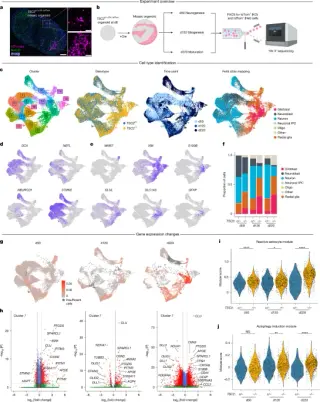
Lab-grown brain organoids reveal an intrinsic developmental clock that records years in culture
neuroscience7 days ago

Lab-grown brain organoids reveal an intrinsic developmental clock that records years in culture

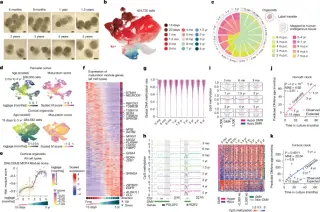
Researchers cultured human cortical organoids for over five years and found that they age along with in vivo humans, showing transcriptional maturation and DNA methylation changes that track culture time. Epigenetic clocks predicted the organoids’ age with high accuracy, and mixed-age (heterochronic) organoids demonstrated that older progenitors retain a memory of past development and can be steered to produce late-stage neurons, skipping earlier fates. This work positions long-term organoid culture as a powerful in vitro model to study postnatal human brain maturation and neoteny.

Living Brains, New Computers: The Organoid AI Frontier
technology14 days ago

Living Brains, New Computers: The Organoid AI Frontier

A longform feature explores how lab-grown human brain organoids are advancing from disease models to prototypes of computing, with organoids that can connect, learn, and even power bio-computers by interfacing with hardware. While researchers debate ethics and whether such tissue could be conscious, the practical promise is clear: better drug testing models and energy‑efficient, biology‑based computing that could complement or rival traditional AI.

Consent urgently needed as brain-organoid biocomputing advances
ethics1 month ago

Consent urgently needed as brain-organoid biocomputing advances

A Nature commentary argues that using lab-grown brain tissue for biocomputing raises an overlooked consent issue: donors may not foresee that their cells could power brain‑like computers or commercial AI tasks, and open-ended consent is inadequate. It calls for explicit, nuanced consent and new independent review boards, outlining three pathways—create new cell lines, obtain fresh consent from existing donors, or secure independent approval—before expanding biocomputing research.

Mini Brains Demonstrate Goal-Directed Learning
science5 months ago

Mini Brains Demonstrate Goal-Directed Learning

UC Santa Cruz researchers showed that lab-grown brain organoids can process information and, with targeted electrical feedback guided by a reinforcement-learning algorithm, solve the cart-pole balancing task, boosting success from 4.5% to 46%. The work demonstrates goal-directed learning in minimal cortical circuits and marks a milestone in organoid neuroscience.

Lab-grown brain organoids show adaptive learning in a cartpole task
science6 months ago

Lab-grown brain organoids show adaptive learning in a cartpole task

Mouse brain organoids grown in a dish were used in a closed-loop system with performance-based electrical feedback to train them to balance a virtual cartpole, achieving 46% proficiency under adaptive coaching. The results demonstrate short-term learning in neural tissue and offer a platform to study plasticity and neurological disease, while noting that the organoids are not conscious and the approach is not a replacement for traditional computing.

Race to Define Consciousness: Testing Awareness Across Humans, Machines, and Organoids
science6 months ago

Race to Define Consciousness: Testing Awareness Across Humans, Machines, and Organoids

As AI and neurotechnology accelerate, scientists warn that a lack of a solid understanding of consciousness could trigger ethical and legal mistakes. A Frontiers in Science review argues for developing evidence-based tests to detect consciousness in humans, fetuses, animals, brain organoids, and AI, with wide implications for medicine, law, animal welfare, and policy, and calls for coordinated, phenomenology-focused research amid ongoing debates about whether machines could be conscious.

Mini-Brains Uncover Brain Signals Linked to Schizophrenia and Bipolar Disorder
science7 months ago

Mini-Brains Uncover Brain Signals Linked to Schizophrenia and Bipolar Disorder

Scientists at Johns Hopkins have used lab-grown 'mini-brains' or organoids to identify neural signatures associated with schizophrenia and bipolar disorder, achieving up to 92% accuracy in distinguishing these conditions through electrical activity patterns, which could lead to more objective diagnoses and targeted treatments in the future.

Mini Brains Mimic Kindergarten Neural Wiring, Raising Ethical Questions
science8 months ago

Mini Brains Mimic Kindergarten Neural Wiring, Raising Ethical Questions

Scientists have developed complex brain organoids that mimic a kindergartner's neural wiring, raising ethical concerns about their potential to develop sensations or consciousness. Experts advocate for global regulation to oversee research, especially as these mini brains could lead to breakthroughs in treating neurological disorders, but also pose moral questions about their use and treatment.

Mini-Brains Unlock Secrets of Mitochondrial Disorders
science-and-technology1 year ago

Mini-Brains Unlock Secrets of Mitochondrial Disorders

Researchers at the University of Bergen have developed mini-brains, or brain organoids, to study mitochondrial dysfunction in brain cells, offering new insights into treating conditions like epilepsy, Alzheimer's, and Parkinson's diseases. These organoids mimic disease processes, allowing for real-time observation and testing of potential treatments, potentially revolutionizing the understanding and treatment of mitochondrial brain disorders.