
Skull Bone Marrow Acts as a Lymphoid Hub for Brain Immune Surveillance
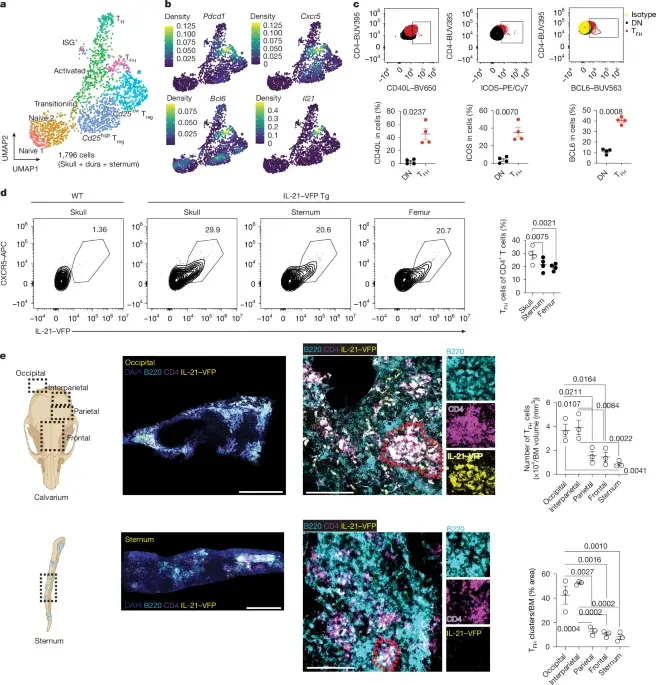
Researchers have identified functional lymphoid structures within the skull bone marrow that facilitate adaptive immune responses against central nervous system (CNS) antigens. These structures, containing germinal-centre-like formations and follicular helper T cells, enable the surveillance and response to brain-derived antigens, including tumours, independent of peripheral lymphoid organs. This discovery suggests the skull bone marrow is a critical site for CNS immunosurveillance and a potential target for therapeutic interventions in neurological diseases.
Key points
- Skull bone marrow contains lymphoid structures with germinal-centre-like formations, including follicular helper T cells and B cells, which are more abundant in the posterior skull regions.
- These structures facilitate antigen-specific adaptive immune responses to CNS-derived antigens, such as those from brain tumours, under both homeostatic and disease conditions.
- The skull bone marrow functions as an early responder to brain antigens, with immune responses occurring independently of secondary lymphoid organs like the spleen or lymph nodes.
- Therapeutic enhancement of skull lymphoid structures using a combination of CD40 agonist, IL-21, and IFNγ significantly extended survival in mouse glioma models by promoting anti-tumour immunity.
- The presence of these structures in human skull bone marrow, though at low abundance, suggests potential translational relevance for human neurological and cancer therapies.
Background
Previous studies established that the skull bone marrow is a primary lymphoid organ supplying immune cells to the CNS via osseous channels. However, the role of skull bone marrow in adaptive immune responses to CNS antigens remained unclear. This study builds on that foundation by identifying specific lymphoid structures within the skull bone marrow that support humoral immunity and anti-tumour responses.
Why it matters
Understanding the role of skull bone marrow in CNS immunosurveillance provides new insights into how the immune system monitors and responds to brain diseases, including cancer. This could lead to novel therapeutic strategies targeting skull lymphoid structures to enhance anti-tumour immunity or modulate immune responses in neurological disorders.
What to watch
Future research will likely focus on translating these findings to human models, exploring the therapeutic potential of targeting skull lymphoid structures in clinical settings, and investigating the role of these structures in other neurological diseases beyond cancer.
Want the full story? Read the original reporting
Read on Nature