
Brine Shrimp Reveal Geometry Can Reverse Turbulent Energy Flow
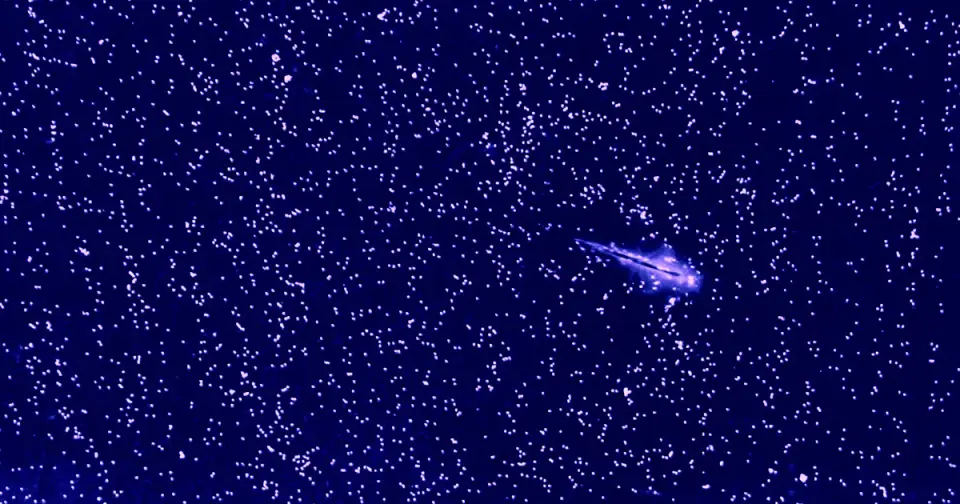
Researchers at the University of Pittsburgh have challenged a long-standing assumption in fluid dynamics by demonstrating that energy flow in two-dimensional turbulent systems can be reversed. By observing brine shrimp and using artificial rods in controlled water tanks, the team found that the orientation of an obstacle relative to the flow’s stretching direction dictates whether energy cascades from small to large scales or vice versa. This discovery suggests that simple geometric interventions can manipulate energy transfer in turbulent fluids, with potential applications in pollution control and drug design.
Key points
- In 2D turbulent systems, energy traditionally cascades from small to large scales, opposite to 3D systems.
- University of Pittsburgh researchers Lei Fang and Xinyu Si found that the angle of an obstacle determines energy flux direction.
- Obstacles angled less than 45 degrees to maximum stretching promote small-to-large energy flow.
- Obstacles angled more than 45 degrees reverse the flow, moving energy from large to small scales.
- The findings were validated using both live brine shrimp and centimeter-long artificial rods.
- Independent simulations by Italian scientists confirmed the results, increasing confidence in the findings.
Background
This research builds on foundational work by Lewis Fry Richardson and Andrey Kolmogorov, who described energy cascades in turbulent systems. While Richardson focused on 3D atmospheric turbulence, later work by Robert Kraichnan and George Batchelor identified inverse energy cascades in 2D systems like Jupiter’s Great Red Spot. The current study extends this by showing that these flows are not fixed but can be manipulated through geometry. Earlier archive articles on sea spiders and deep-sea hitchhiking are unrelated to this fluid dynamics study and provide no relevant background.
Why it matters
Understanding how to control energy flow in turbulent systems could lead to more efficient methods for mixing fluids, controlling pollution, and developing drugs. The ability to reverse energy cascades with minimal intervention suggests new strategies for managing complex fluid dynamics in both natural and engineered systems.
What to watch
Researchers are now testing these principles in three-dimensional systems, including tabletop tornado models. Francesca De Serio at the Polytechnic University of Bari is conducting experiments with large rotating vortices to see if similar energy flux manipulations can be achieved in real-world, high-viscosity fluids. The team is also exploring how to disrupt transport barriers between mixing fluids, which could have significant implications for industrial and environmental applications.
Want the full story? Read the original reporting
Read on Quanta Magazine