Tag

Fluid Dynamics

All articles tagged with #fluid dynamics

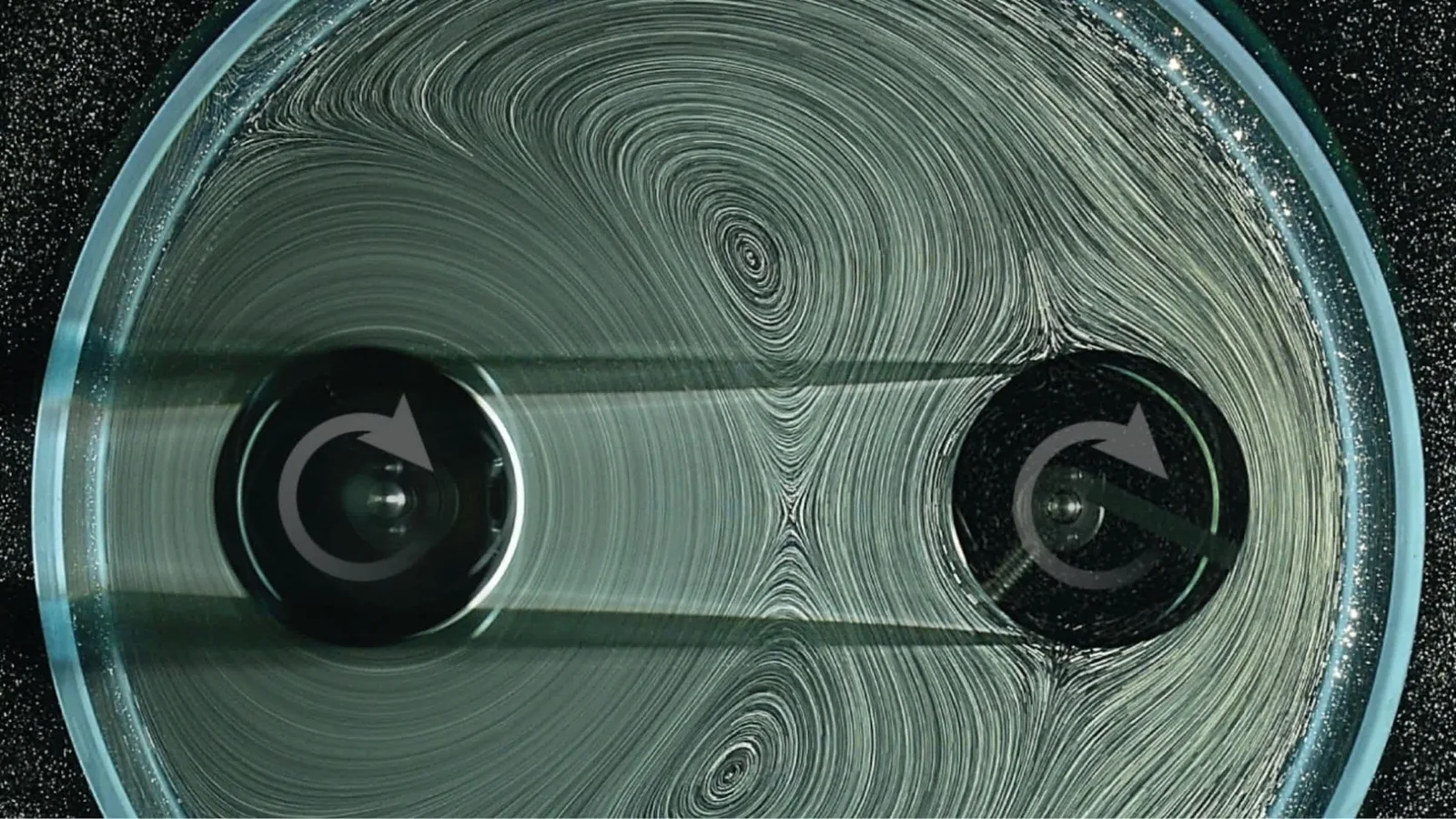
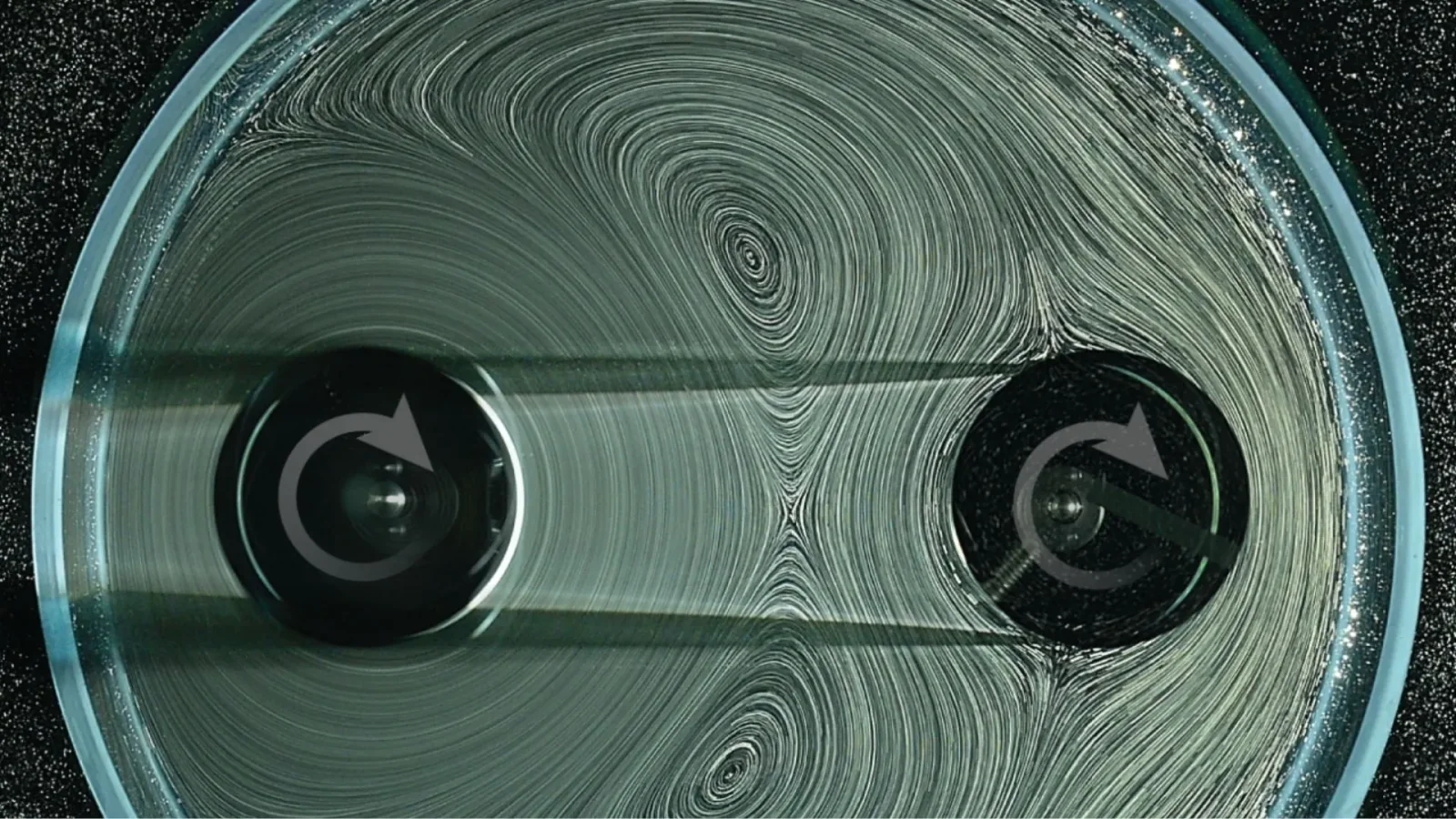
Gears Without Teeth: Fluid Flows Spin Rotors in a Noncontact Engine
science1 month ago

Gears Without Teeth: Fluid Flows Spin Rotors in a Noncontact Engine

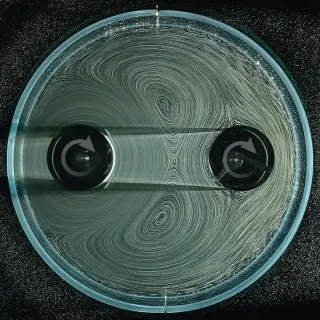
NYU researchers demonstrate fluid-driven gear-like coupling: two submerged rotors in a glycerol–water mix generate motion in a passive rotor via controlled liquid flows. By adjusting distance and rotation speed, the system can mimic interlocking gears (opposite directions) or belt-and-pulley systems (same direction), offering a tunable, noncontact alternative to traditional gears. Published in Physical Review Letters with NSF support.

When Liquids Snap: A New Solid-Like Fracture Under Stress
science1 month ago

When Liquids Snap: A New Solid-Like Fracture Under Stress

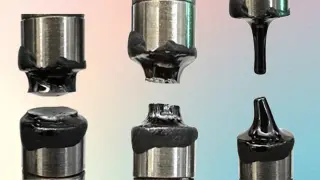
Scientists found that simple, viscous liquids can fracture like solids when pulled beyond a 'critical stress,' with the threshold depending on stress per area rather than viscosity. The rapid fractures travel at 500–1,500 m/s—consistent with cavitation—and were observed in tar-like hydrocarbons and styrene oligomer, hinting that many liquids might exhibit this behavior and opening potential for applications in inkjet printing, soft robotics, and 3D printing.

Liquid gears promise wear-free, contactless motion transmission
technology4 months ago

Liquid gears promise wear-free, contactless motion transmission

NYU researchers demonstrated a completely fluid-driven, contactless gearbox by placing two cylinders in a viscous glycerol-water mix; depending on spacing, the rotating liquid generated either opposing or same-direction motion, offering a wear-free, jam-resistant method that could revolutionize gear design and enable tunable ratios for soft robotics and distributed actuation.

Liquid gears promise wear-free robotics, NYU study shows
ai-and-robotics4 months ago

Liquid gears promise wear-free robotics, NYU study shows

NYU researchers developed a fluid-based gear system that transmits motion via directed fluid flows instead of interlocking teeth, enabling non-contact transmission and reducing wear and jam risks. Demonstrated with two submerged cylinders in a water–glycerol mix, the approach could inform soft robotics and instantly tunable gear ratios, with findings published in Physical Review Letters.

Scientists uncover how sperm defy a fundamental law of physics
science10 months ago

Scientists uncover how sperm defy a fundamental law of physics

Scientists have discovered that sperm and other microorganisms use a unique form of elasticity called 'odd elasticity' in their flagella, allowing them to swim efficiently in thick fluids by bending asymmetrically and bypassing traditional physics laws like Newton's third law. This discovery, supported by mathematical modeling and high-speed microscopy, could inspire new micro-robotic designs and improve understanding of microbial movement and human health issues related to cilia function.

Germany's JUPITER Supercomputer Achieves Fourth Fastest Global Rank with Green Exascale Power
technology10 months ago

Germany's JUPITER Supercomputer Achieves Fourth Fastest Global Rank with Green Exascale Power

Germany's JUPITER supercomputer has become the world's fourth fastest, featuring advanced NVIDIA hardware and demonstrating significant energy efficiency. It facilitates groundbreaking research in fluid dynamics and simulations that benefit aerospace, medicine, and engineering, setting new standards for sustainable high-performance computing.

Research Reveals Human Sperm's Unique Motion Challenge to Newton's Third Law
science11 months ago

Research Reveals Human Sperm's Unique Motion Challenge to Newton's Third Law

A recent study reveals that human sperm can defy Newton's third law of motion by utilizing non-reciprocal internal forces powered by 'odd elasticity,' enabling efficient movement through viscous environments and challenging traditional physics principles, with implications for biomedical engineering and fertility research.

Squirting Cucumbers: Nature's Seed-Launching Marvels
science1 year ago

Squirting Cucumbers: Nature's Seed-Launching Marvels

Scientists from the University of Manchester and the University of Oxford have uncovered the unique seed dispersal mechanism of the squirting cucumber (Ecballium elaterium), which uses fluid pressure to launch its seeds up to 10 meters away. This process involves the fruit engorging with mucilaginous fluid, altering the stem's angle for optimal launch, and a rapid recoil that propels the seeds. This adaptation reduces competition among offspring and has been studied since ancient times, with the findings published in PNAS.

Physicist Unveils Overlooked Aspect of Einstein's Relativity
science1 year ago

Physicist Unveils Overlooked Aspect of Einstein's Relativity

Physicist Alessio Zaccone has discovered a new effect of Einstein's theory of special relativity on fluids, termed "fluid thickening," which describes how fluid viscosity changes under relativistic conditions. This groundbreaking theory, detailed in Physical Review E, combines relativistic equations with current fluid dynamics theories to explain viscosity behavior at near-light speeds and high temperatures. Zaccone's work suggests a potential new fundamental law of physics, enhancing our understanding of relativistic effects on fluids and their implications in astrophysics and high-energy physics.

Einstein's Relativity Theory Expanded to Real Fluids
science1 year ago

Einstein's Relativity Theory Expanded to Real Fluids

A new theory extends Einstein's relativity to real fluids, proposing a relativistic theory of viscosity that accounts for the effects of high-speed motion on fluid properties. This theory, based on the relativistic Langevin equation, suggests that fluid viscosity increases with speed, analogous to length contraction and time dilation, and introduces the concept of "fluid thickening" at relativistic speeds. The findings have implications for understanding high-energy fluids like quark-gluon plasma in astrophysics and high-energy physics.

"Breakthrough Model Predicts Flow of Blood and Unusual Fluids"
science-and-technology2 years ago

"Breakthrough Model Predicts Flow of Blood and Unusual Fluids"

Researchers have developed a new model to predict the behavior of non-Newtonian fluids, such as blood and cornstarch mixtures, which exhibit unique properties like elastic turbulence. This advancement could have significant industrial applications, including optimizing the flow of slurries and biological solutions. The study, led by Marco Rosti at the Okinawa Institute of Science and Technology, reveals that elastic turbulence in non-Newtonian fluids shares similarities with classical turbulence in Newtonian fluids, offering new insights into fluid dynamics.