
Study identifies 36 high-risk genes for OCD and tic disorders, expanding treatment targets
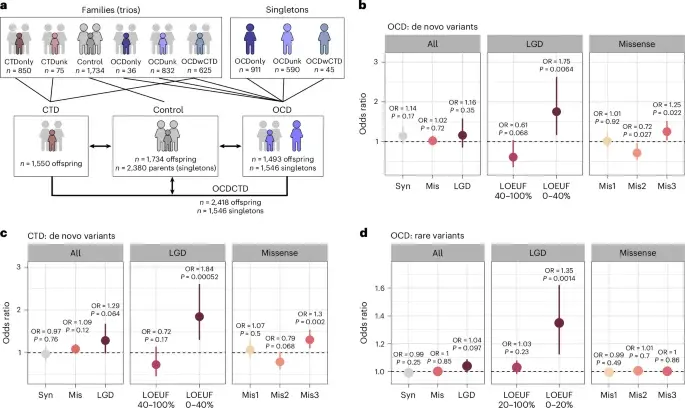
A large-scale whole-exome sequencing study published in Nature Neuroscience identified 36 high-confidence genes that significantly increase the risk for obsessive-compulsive disorder (OCD) and chronic tic disorders (CTDs). Analyzing data from nearly 4,000 individuals, including 2,418 trios, researchers found an excess of rare, damaging mutations in cases compared to controls. This discovery expands the known genetic landscape from just four previously identified genes to over 30, offering new biological targets for pharmaceutical development. The study highlights shared genetic pathways between OCD and CTDs, suggesting these conditions may stem from similar disruptions in brain circuitry and neurotransmitter signaling. While the findings do not offer immediate cures, they provide a foundation for designing therapies that target underlying mechanisms rather than just symptoms. Some identified genes are also linked to autism and schizophrenia, reinforcing the concept of shared genetic risks across psychiatric disorders.
Key points
- Researchers identified 36 high-confidence risk genes for OCD and CTDs using whole-exome sequencing data from 3,964 individuals.
- The study found an excess of de novo and rare protein-damaging mutations in cases, with many genes shared between OCD and CTDs.
- The expansion from four to 36 known genes provides new targets for drug development, moving beyond symptom management to targeting underlying biological networks.
- Several identified genes are also associated with autism and schizophrenia, suggesting common genetic roots for multiple psychiatric conditions.
- The findings indicate that these disorders involve disruptions in brain circuitry and neurotransmitter signaling, offering insights into the biological mechanisms of the diseases.
Background
Previous research had identified only four high-confidence genes for OCD and CTDs, limiting opportunities for targeted pharmaceutical development. This study builds on earlier findings, such as the 2026 FNIP1 metabolism study, by expanding the genetic map of psychiatric disorders. It aligns with broader trends in psychiatric genetics, where large-scale sequencing efforts are uncovering shared genetic architectures across conditions like autism, schizophrenia, and OCD. The study also complements recent advances in understanding how genetic variants influence brain development and communication, as seen in the 2026 chemo footprints study, which highlighted how prior treatments can reshape genomic risk profiles.
How outlets are covering it
The primary source, Nature Neuroscience, emphasizes the statistical and methodological rigor of the study, detailing the use of whole-exome sequencing, de novo mutation analysis, and the TADA framework to identify 36 high-confidence genes. It focuses on the biological mechanisms, such as the role of neurotransmitters and brain circuitry, and the shared genetic pathways between OCD and CTDs. The secondary source, The Mighty 790 KFGO, highlights the translational potential of the findings, quoting coauthor Jay Tischfield to note that the discovery of over 30 genes opens up new possibilities for treatment development. It also emphasizes the shared genetic links with autism and schizophrenia, reinforcing the idea that multiple psychiatric conditions may stem from related disruptions in brain development. Both sources agree on the significance of the 36 genes but differ in emphasis: Nature Neuroscience focuses on the genetic and biological mechanisms, while The Mighty 790 KFGO focuses on the practical implications for drug development and treatment.
Why it matters
The identification of 36 high-risk genes for OCD and CTDs provides a new foundation for developing targeted therapies. By expanding the known genetic landscape, the study offers pharmaceutical companies and researchers new targets for drug development, potentially leading to treatments that address the underlying biological mechanisms of these disorders rather than just managing symptoms. The shared genetic pathways between OCD, CTDs, autism, and schizophrenia suggest that therapies developed for one condition may have applications for others, accelerating the development of treatments for multiple psychiatric disorders. This could lead to more effective and personalized treatments for individuals with these conditions, improving outcomes and quality of life.
What to watch
Researchers will likely focus on translating the identified genes into therapeutic targets, developing drugs that address the underlying biological mechanisms of OCD and CTDs. The shared genetic links with autism and schizophrenia may lead to cross-disorder therapeutic strategies, where treatments developed for one condition are tested for efficacy in others. Further studies will be needed to validate the identified genes in larger, more diverse populations and to understand the specific roles of these genes in brain development and neurotransmitter signaling. Clinical trials may also be initiated to test new therapies based on the identified genetic targets, potentially leading to new treatments for OCD and CTDs in the coming years.
- Whole-exome sequencing in individuals with obsessive–compulsive disorder and chronic tic disorders identifies 36 large-effect risk genes Nature
- Dozens of genes tied to OCD and tic disorders discovered Medical Xpress
- Health Rounds: Scientists find genes linked to OCD, raising the prospect of new treatments The Mighty 790 KFGO
Want the full story? Read the original reporting
Read on Nature