
Global study links 58 genetic regions to endometriosis, revealing new therapeutic targets
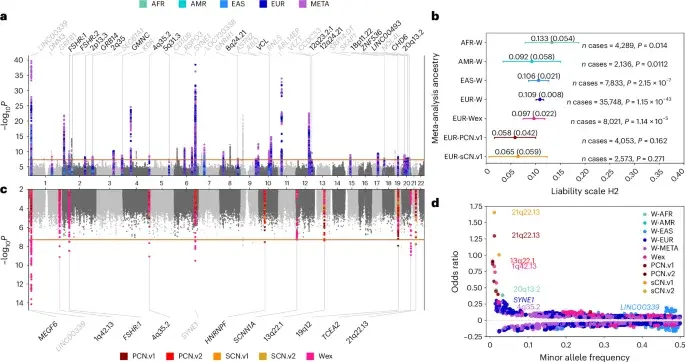
A massive international study involving over one million women has identified 58 genomic regions linked to endometriosis, including 27 previously unknown loci. By analyzing diverse ancestries and integrating multiple molecular layers, researchers pinpointed 314 candidate genes involved in immune and hormonal pathways. The findings suggest new avenues for non-invasive diagnostics and targeted therapies, though functional validation remains necessary.
Key points
- The study analyzed data from 14 global biobanks, including 32% non-European participants, to improve genetic mapping accuracy.
- Researchers identified 58 genomic regions associated with endometriosis, with 27 being newly discovered.
- Multi-omic analyses implicated 314 genes, highlighting pathways related to inflammation, hormone regulation, and cellular adhesion.
- The study revealed genetic correlations between endometriosis and conditions like insomnia, headaches, and cardiovascular risks.
- Findings suggest that diverse ancestry data is crucial for identifying population-specific risk factors and causal variants.
Background
Endometriosis affects approximately 10% of women of reproductive age, often causing chronic pain and fertility issues. Previous genetic studies were largely limited to European populations, explaining only about 7% of the disease's heritability. This new research addresses those gaps by utilizing a broader, more diverse cohort to better understand the complex genetic architecture of the condition.
How outlets are covering it
While all sources agree on the core findings, they emphasize different aspects. The primary source, Nature, focuses on the technical methodology, including the use of six distinct phenotyping algorithms and the integration of five molecular layers to identify 314 genes. Newswise highlights the clinical implications, noting that the findings could lead to non-invasive risk prediction tools. Bioengineer.org provides detailed quantitative metrics, such as the specific heritability estimates across different ancestries and the replication of 65 previously cataloged variants. CASRAI emphasizes the translational timeline, stressing that these are preclinical targets requiring further functional validation through CRISPR screens and organ-on-a-chip models.
Why it matters
This study provides a more comprehensive map of the genetic underpinnings of endometriosis, a condition that often suffers from long diagnostic delays. By identifying new genes and pathways, researchers hope to develop better diagnostic tools and targeted therapies that address the root causes of the disease rather than just managing symptoms. The inclusion of diverse ancestries also helps address health disparities in genetic research.
What to watch
Researchers plan to validate the most promising candidate genes through functional assays, including CRISPR-Cas9 perturbation screens in human cell lines. They also aim to develop multi-gene risk scores that could differentiate between aggressive and superficial forms of endometriosis in prospective clinical cohorts.
- Multiancestry genome-wide association and integrative multiomics analyses implicate key pathways in endometriosis Nature
- Genetic Study of Endometriosis Reveals New Clues to Disease Biology | Newswise Newswise
- Genetic data from over one million people reveals new clues to how endometriosis develops Medical Xpress
- Multiancestry Biobank Study Uncovers 58 Genetic Risk Regions for Endometriosis Bioengineer.org
- NIH-Backed Multi-Center Study Identifies Core Molecular Pathways in Endometriosis CASRAI
Want the full story? Read the original reporting
Read on Nature