
HypoAD Atlas Reveals Hypothalamic Shifts in Aging and Alzheimer's
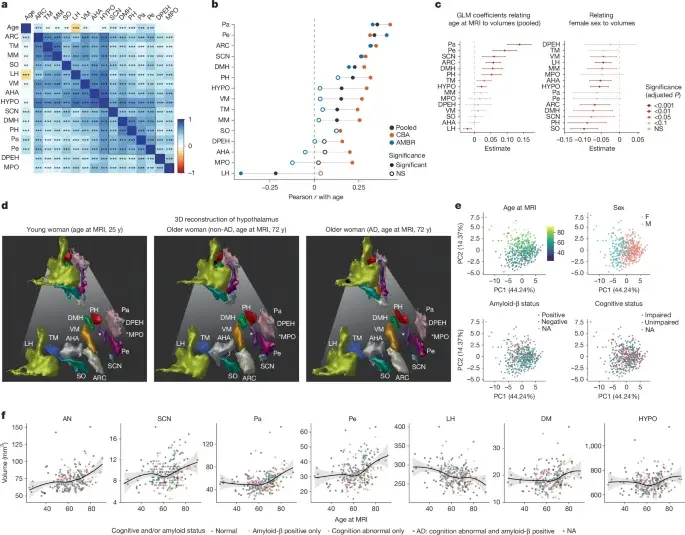
Researchers have released HypoAD, a multimodal atlas mapping the human hypothalamus in aging and Alzheimer's disease (AD). By combining high-resolution MRI data from 458 individuals with single-nucleus RNA sequencing of 614,403 nuclei, the study identifies specific subregions and cell types that change during aging and AD. Key findings include volume shifts in the suprachiasmatic nucleus and arcuate nucleus, and a transition of microglia toward a pro-inflammatory state. Machine learning models highlight circadian rhythm regulators and inflammatory responses as primary predictors of AD at the cellular level, suggesting new targets for interventions aimed at slowing disease progression.
Key points
- HypoAD combines MRI volumetric data from 458 adults with transcriptomic data from 14 post-mortem donors to map hypothalamic changes.
- While total hypothalamic volume shows weak correlation with age, specific subregions like the lateral hypothalamus shrink, while the suprachiasmatic nucleus and arcuate nucleus grow.
- Microglia in the hypothalamus transition to a pro-inflammatory state in AD, mirroring changes seen in memory-related brain regions.
- Inhibitory neurons in sleep and circadian-regulating areas show profound transcriptional alterations, including disruptions in vasopressin signaling.
- Machine learning models identified inflammatory response and circadian rhythm regulators as the strongest cellular predictors of AD.
Background
Recent advancements in single-cell genomics, such as the TenK10K study and AlphaGenome 2, have improved the ability to link genetic variants to specific cell types. This new study extends that resolution to the hypothalamus, a region previously understudied in AD research compared to the hippocampus and cortex. It builds on earlier findings linking microglial genetics to neurodegenerative risk, providing a structural and molecular map for how non-cognitive symptoms like sleep disruption and metabolic changes may precede cognitive decline in AD.
How outlets are covering it
The primary source, Nature, emphasizes the technical depth of the HypoAD atlas, detailing the specific statistical models and gene expression changes. Genetic Engineering and Biotechnology News highlights the clinical implications, noting that circadian disruptions may be early intervention targets. News-Medical frames the findings within a broader context of body-brain connections presented at Neuroscience 2026, linking gut health and vascular issues to AD, though it does not detail the HypoAD findings specifically. Longevity.Technology provides no substantive content, consisting only of cookie consent text. The outlets agree on the significance of hypothalamic changes but differ in emphasis: Nature focuses on the data atlas, while GENEBI focuses on the potential for targeted therapies.
Why it matters
This research shifts the focus of AD research beyond cognitive decline to systemic physiological disruptions. By identifying specific cell types and subregions that change early in the disease, it provides a roadmap for interventions that could slow progression by targeting sleep, metabolism, and inflammation. The atlas offers a new framework for understanding how lifestyle and behavioral changes relate to molecular pathways in the brain.
What to watch
Researchers plan to follow these changes over time to test whether protecting circadian rhythms and neuropeptide signaling can slow AD progression. Future studies will likely expand the donor cohort and combine imaging and sequencing data from the same individuals to establish causal relationships rather than associations.
- Hypothalamic volume and cell-type changes in ageing and Alzheimer’s disease Nature
- Alzheimer’s research turns to the body’s clock Longevity.Technology
- The hypothalamus is not a bystander in Alzheimer's disease Medical Xpress
- Research on Alzheimer's finds strong links between physical and brain health News-Medical
- Alzheimer’s Disease and Aging Linked to Changes in the Hypothalamus Genetic Engineering and Biotechnology News
Want the full story? Read the original reporting
Read on Nature