Tag

Hypothalamus

All articles tagged with #hypothalamus

Old Diabetes Drug Metformin Shows Brain-Led Control of Metabolism
health20 days ago

Old Diabetes Drug Metformin Shows Brain-Led Control of Metabolism

New preclinical work links metformin’s metabolic effects to the brain, showing it acts in the hypothalamus via the Rap1 pathway to enhance central insulin signaling and reduce liver glucose production in mice. This brain-first mechanism could reshape diabetes and obesity therapies, informing drug combinations and trial endpoints, but human validation is needed and questions remain about dosing, blood–brain barrier crossing, and interactions with AMPK.

Snake-Derived pTOS Points to New Appetite-Control Path
science21 days ago

Snake-Derived pTOS Points to New Appetite-Control Path

Researchers found that after meals ball pythons exhibit a 1000-fold rise in pTOS, a gut-bacteria–derived metabolite. In mice, high doses of pTOS reduced appetite and caused weight loss without typical GLP-1 drug side effects, likely by activating neurons in the ventromedial hypothalamus. While promising, translating this to humans is still early, and the study in Nature Metabolism notes many more metabolites to explore.

Snake metabolite pTOS hints at a new appetite-control drug path
science23 days ago

Snake metabolite pTOS hints at a new appetite-control drug path

Researchers identified pTOS, a metabolite produced by python gut bacteria that surges after a meal (more than 1,000-fold); when given to obese mice, it suppressed appetite, leading to about 9% body weight loss over 28 days, without notable changes in energy expenditure or organ size. Unlike GLP-1 drugs that slow gastric emptying, pTOS appears to act on the hypothalamus to regulate hunger. The molecule also exists at low levels in human urine, suggesting potential safety, though clinical applicability requires more research; the findings were published in Nature Metabolism.

Childhood Junk Food Rewires Appetite Center, Gut Bacteria Offer Reset
science1 month ago

Childhood Junk Food Rewires Appetite Center, Gut Bacteria Offer Reset

In a mouse study, early-life exposure to a high-fat, high-sugar diet permanently shifts hypothalamic appetite pathways and adult feeding behavior even after weight normalizes; however, interventions targeting the gut microbiome—probiotic Bifidobacterium longum APC1472 or prebiotic fibers FOS/GOS—can restore brain–gut signaling and mitigate these long-term effects, with some sex-specific vulnerabilities observed.

Metformin's Hidden Brain Pathway Discovered After Six Decades
science7 months ago

Metformin's Hidden Brain Pathway Discovered After Six Decades

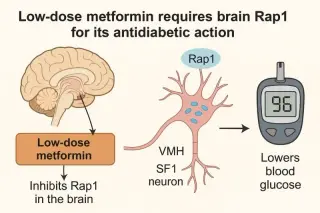
Researchers have discovered that metformin, a common diabetes drug, also acts in the brain, specifically in the ventromedial hypothalamus, by turning off the protein Rap1, which is essential for its blood sugar-lowering effects. This finding suggests new avenues for more targeted diabetes treatments and highlights the brain's role in metformin's mechanism of action.

Night Brain Activity Regulates Glucose Levels
health7 months ago

Night Brain Activity Regulates Glucose Levels

A study from the University of Michigan found that specific hypothalamic neurons, VMHCckbr, actively regulate blood glucose during routine conditions by promoting fat breakdown and glycerol production, which supports glucose stability overnight. Overactivity of these neurons may contribute to prediabetes, highlighting the brain's nuanced role in metabolic health.

Hidden Source of Insulin Beyond the Pancreas
health9 months ago

Hidden Source of Insulin Beyond the Pancreas

Scientists have discovered that the brain, in addition to the pancreas, can produce insulin, with at least six different types of insulin-producing cells identified in the brain. This local insulin may play roles in cognitive function, growth regulation, and appetite suppression, and could be significant in understanding and treating conditions like Alzheimer's disease. However, much remains unknown about the functions and origins of brain insulin, and further research is needed.

Breakthrough in Appetite Control: New Neurons and GLP-1 Insights
science1 year ago

Breakthrough in Appetite Control: New Neurons and GLP-1 Insights

Researchers have discovered a new population of neurons in the hypothalamus that regulate appetite by expressing leptin receptors and the BNC2 gene. These neurons respond to hunger-suppressing signals and food-related cues. Disrupting these neurons in mice led to increased food intake and weight gain, highlighting their role in energy balance. This finding offers a potential new target for obesity treatments, providing hope for more effective therapies against the obesity epidemic.

Scientists Identify Brain Circuit for Female Sexual Rejection
science1 year ago

Scientists Identify Brain Circuit for Female Sexual Rejection

Researchers at the Champalimaud Foundation have identified a neural circuit in the anterior ventromedial hypothalamus (VMH) that regulates sexual rejection in female mammals based on their fertility cycle. Progesterone-sensitive neurons in this brain region become active in non-receptive females, prompting rejection behaviors, while their activity decreases during fertility, allowing mating. This discovery highlights the brain's dual control system for balancing sexual receptivity and rejection, providing insights into the neural mechanisms governing reproductive behavior.

Scientists Identify Brain Circuit for Female Sexual Rejection
neuroscience1 year ago

Scientists Identify Brain Circuit for Female Sexual Rejection

Researchers have discovered that progesterone-responsive neurons in the anterior ventromedial hypothalamus (VMH) of female mice toggle between sexual receptivity and rejection based on fertility. These neurons are active during rejection behaviors outside the fertile phase and receive inhibitory signals during fertility, reducing their activity and allowing mating. Using optogenetics, the study confirmed these neurons act as a neural switch for rejection, offering insights into human sexual behavior and related disorders.

"Cannabis-Induced Munchies: The Science Behind the Phenomenon"
science2 years ago

"Cannabis-Induced Munchies: The Science Behind the Phenomenon"

Neuroscientists at Washington State University have discovered that cannabis exposure activates a specific group of neurons in the hypothalamus, known as AgRP neurons, which are linked to increased feeding in mice. This real-time study is the first to investigate how cannabis impacts the brain regions that control appetite, shedding light on the mechanisms behind the notorious "munchies" effect. The findings could have implications for future drug research in the treatment of appetite-related disorders.