
IgA deficiency linked to increased colorectal cancer risk via DMBT1 pathway
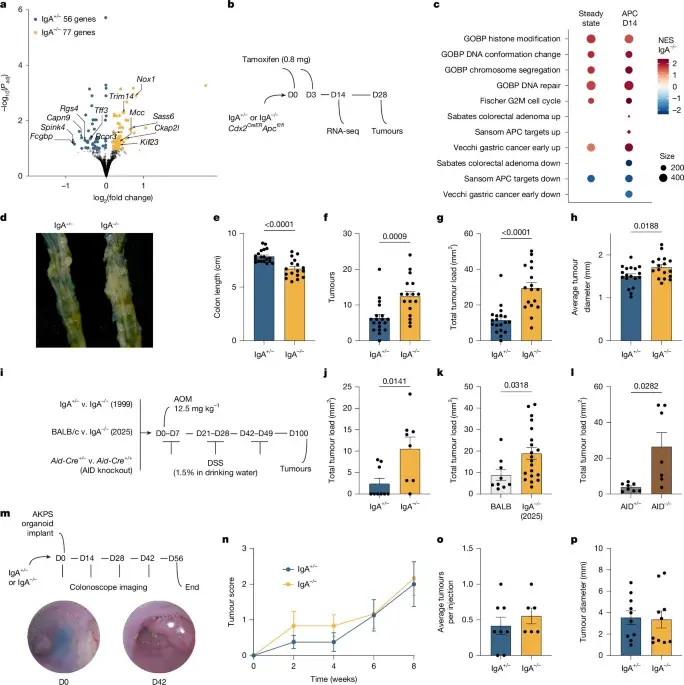
New research from Rockefeller University reveals that immunoglobulin A (IgA) deficiency significantly increases susceptibility to colorectal cancer in mouse models. The study identifies DMBT1 as a key epithelial surface protein that binds IgA to suppress abnormal cell proliferation. Without IgA, colon cells accelerate cycling in response to the microbiota, leading to tumorigenesis. Oral IgA treatment restored protection, highlighting a direct homeostatic role for this antibody in maintaining mucosal health.
Key points
- IgA-deficient mice showed higher rates of endogenous colorectal cancer across multiple models.
- Absence of IgA caused colonic epithelial cells to produce antibacterial factors and cycle faster.
- Oral IgA administration reduced proliferation and prevented tumor development in mice.
- The protective effect depended on IgA structure, not its binding specificity to bacteria.
- DMBT1 was identified as the essential epithelial receptor mediating IgA's anti-proliferative effect.
Background
Previous studies noted associations between IgA deficiency and cancer risk in humans but lacked mechanistic clarity due to complex comorbidities. Earlier research established IgA's role in regulating gut microbiota colonization, but its direct impact on epithelial cell behavior remained unclear. This study builds on prior findings regarding mucosal immunity and microbiota interactions to define a specific cellular mechanism.
Why it matters
This finding clarifies a potential biological link between common IgA deficiency and colorectal cancer, moving beyond observational correlations. It identifies DMBT1 as a therapeutic target for mucosal health and suggests that IgA's structural properties, rather than specific antigen binding, are critical for preventing cancer. This could inform future strategies for managing IgA-deficient patients or developing mucosal therapies.
What to watch
Researchers will likely investigate whether DMBT1 expression levels in human patients correlate with cancer risk or IgA status. Clinical trials may explore oral IgA supplementation or DMBT1-targeted therapies for colorectal cancer prevention. Further studies are needed to determine if these mouse findings translate to human populations with complex IgA deficiency etiologies.
Want the full story? Read the original reporting
Read on Nature