
Gut Microbiota Metabolites Target AhR Pathway to Alleviate Adolescent Depression
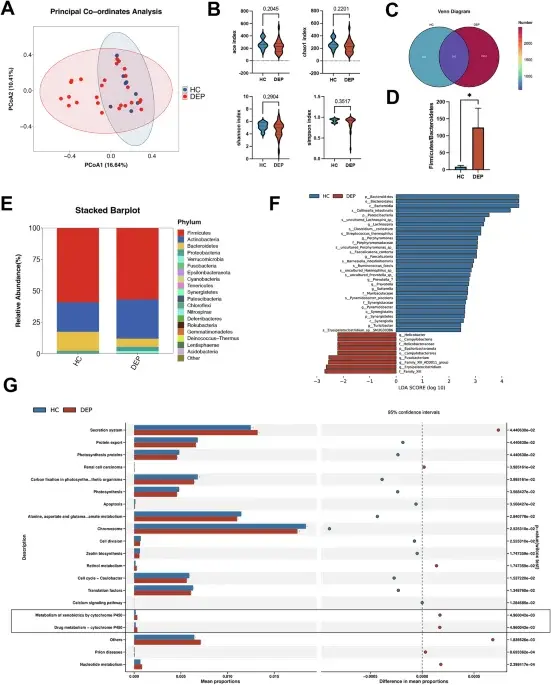
A new study in Molecular Psychiatry identifies a direct link between gut microbiota metabolites and adolescent depression. Researchers found that unmedicated depressed adolescents have reduced levels of indole derivatives, which are produced by gut bacteria. In mouse models, supplementing these metabolites or increasing tryptophan intake reduced depressive behaviors and restored neurogenesis by activating the aryl hydrocarbon receptor (AhR) pathway, which balances microglial inflammation.
Key points
- 16S rRNA sequencing revealed significantly reduced Bacteroidetes abundance in unmedicated adolescents with depression.
- Levels of indole derivatives (IAA, IPA, IAld) were markedly lower in depressed patients and correlated negatively with depression severity.
- In chronic restraint stress (CRS) mice, a high-tryptophan diet or direct indole supplementation ameliorated depressive behaviors.
- Indole derivatives activate AhR signaling, which balances anti-inflammatory (IL-10, TGF-β) and pro-inflammatory (IL-1β, CD68) factors.
- AhR activation restored microglial morphology and promoted hippocampal neurogenesis, while low-tryptophan diets induced depressive behaviors in healthy mice.
Background
This research builds on prior findings that gut microbiota influence brain health. In August 2026, researchers at the University of Louisville demonstrated that urolithin A, a microbe-produced metabolite, activates the same aryl hydrocarbon receptor (AhR) pathway to repair gut barriers in inflammatory bowel disease. Additionally, July 2026 studies highlighted how plant-based diets and fiber fermentation shape microbial outputs, including indole and phenol metabolites, further supporting the role of diet in modulating gut-brain communication.
How outlets are covering it
The primary source from Nature focuses on the mechanistic role of indole derivatives and AhR signaling in adolescent depression, using both human and mouse data. Secondary sources broaden the scope: Psychology Today highlights a German study identifying specific microbes (Eggerthella, Hungatella) as causal factors in major depressive disorder, emphasizing statistical causality over correlation. News-Medical reviews the broader context of gut-brain interactions in aging, noting that while tryptophan-derived metabolites like indoles signal through AhR, direct human evidence for cognitive outcomes remains less developed than for short-chain fatty acids. Minute Mirror reports on a University of Surrey study linking gut bacteria to brain chemicals GABA and glutamate, noting that different bacterial pathways affect different brain regions, but stresses that these findings show correlation rather than causation.
Why it matters
This study provides a potential new therapeutic strategy for adolescent depression, a population with limited treatment options and significant side effects from current medications. By targeting the indole-AhR signaling axis, treatments could address the underlying mechanisms of neuroinflammation and impaired neurogenesis without the broad side effects of traditional antidepressants. This could lead to more precise, microbiome-based interventions for mood disorders.
What to watch
Future research will likely focus on clinical trials to test the efficacy of indole derivative supplementation or tryptophan-enriched diets in treating adolescent depression. Researchers may also explore how to modulate gut microbiota to increase the production of these beneficial metabolites. Additionally, studies may investigate the long-term effects of AhR activation on brain health and whether this pathway can be targeted in other neuropsychiatric disorders.
- Novel insight into the effects of the metabolites from gut microbiota in both unmedicated depressive adolescents and mice: key roles of indole derivatives-aryl hydrocarbon receptor signaling in neurogenesis and microglial homeostasis Nature
- Nearly half of depression risk factors overlap with physical illnesses, especially gut disease Medical Xpress
- Two microbes have been reliably accused of causing depression. Psychology Today
- What your gut microbes may have to do with how your brain ages News-Medical
- Gut bacteria linked to brain chemistry Minute Mirror
Want the full story? Read the original reporting
Read on Nature