
Little Ice Age climate may have worsened childhood rickets in pre-industrial England
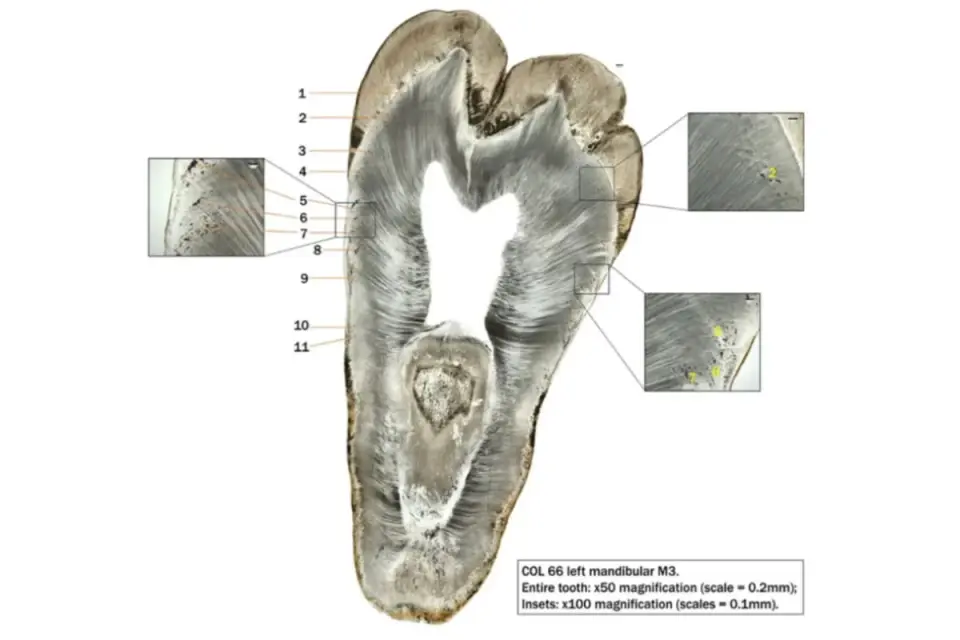
Researchers from Durham University analyzed teeth from a Quaker cemetery in North Shields, England, to investigate childhood vitamin D deficiency during the 18th and 19th centuries. The study suggests that the Little Ice Age, characterized by volcanic eruptions and low solar activity, contributed to rickets alongside industrialization and poverty. By linking burial records to dental defects, the team found that many individuals were born during periods of reduced sunlight, which likely limited vitamin D production. This adds climate variability to the existing understanding of historical health crises.
Key points
- A study published in Frontiers in Environmental Archaeology examined 30 teeth from 21 individuals buried at the Coach Lane cemetery in North Shields between 1711 and 1829.
- Dental defects known as interglobular dentin, which indicate failed mineralization, were found in 76.2% of the sample, with many showing recurring seasonal patterns linked to vitamin D deficiency.
- Burial records allowed researchers to estimate birth years for 109 individuals, revealing that 84% were born within 10 years of major volcanic eruptions, and 38% during periods of overlapping low solar output and volcanic activity.
- The Little Ice Age, a cooling period from the 13th to 19th centuries, reduced UV light reaching the ground, which is necessary for the skin to produce vitamin D.
- Comparisons with other European sites showed that rates of dental defects did not correlate strictly with industrialization or latitude, suggesting climate played a significant role independent of urban pollution.
- Lead author Ellen Kendall emphasizes that climate was one of several factors, including diet and social conditions, that influenced vitamin D status, and that historical bioarchaeology should incorporate climate records.
Background
Recent UK news has highlighted rising vitamin D deficiency among youth, prompting calls for policy changes like food fortification. This historical study provides long-term context for how environmental factors, such as climate variability, have impacted vitamin D levels and bone health in populations, complementing modern discussions on public health and nutritional policy.
How outlets are covering it
While all sources agree on the core findings, they emphasize different aspects. Archaeology News Online focuses on the methodological innovation of using burial registers to link climate events to dental defects. Science News highlights the behavioral impact of cold weather, suggesting that residents kept children indoors, further limiting sunlight exposure. Euronews stresses the complexity of the issue, noting that climate was just one factor among many, including pollution and diet. The Watchers provides detailed statistical breakdowns, such as the specific percentages of individuals born during volcanic or solar minima, and emphasizes the limitations of the study due to the lack of individual grave markers. All sources agree that the study does not claim climate was the sole cause but rather an overlooked contributor to vitamin D deficiency.
Why it matters
This research underscores the importance of considering environmental and climatic factors in historical and modern health assessments. It suggests that past populations faced similar challenges to today's concerns about vitamin D deficiency, offering insights into how humans adapted to environmental changes. Understanding these historical patterns can inform current public health strategies, particularly in regions with limited sunlight or high pollution levels.
What to watch
Future research will likely focus on larger samples with more precise chronological data to better link specific climate events to individual health outcomes. Advances in non-destructive scanning and chemical testing may allow for more extensive studies without damaging dental remains. Researchers also plan to examine other signs of poor health, such as stunted growth, to build a more comprehensive picture of historical metabolic health.
- Centuries-old cemetery points to colder climate as a factor in childhood vitamin D deficiency in industrial England Archaeology News Online Magazine
- Little Ice Age cooling in Europe may have raised the risk of rickets Science News
- Can a centuries-old cemetery show how climate shocks fuelled disease? Euronews.com
- Did climate change help fuel disease during the Industrial Revolution? Yahoo
- Study adds Little Ice Age climate variability to explanations for vitamin D deficiency in industrial-era England The Watchers - Watching the world evolve and transform
Want the full story? Read the original reporting
Read on Archaeology News Online Magazine