Tag

Climate History

All articles tagged with #climate history

Antarctica's Deep Core Unlocks 1.2 Million Years of Climate History
science1 month ago

Antarctica's Deep Core Unlocks 1.2 Million Years of Climate History

An international team at Little Dome C, East Antarctica, drilled 2.8 km to bedrock and retrieved an ice core with a continuous climate record dating back at least 1.2 million years, extending the EPICA archive. The trapped air bubbles provide direct samples of ancient atmosphere, crucial for understanding why Earth’s glacial cycles shifted during the Mid-Pleistocene Transition. Gas measurements, isotope data, and dating (including krypton-81) are being processed across labs, with some bottom ice possibly older but not perfectly in chronological order. The result is a direct atmosphere-to-temperature record that will help identify the drivers of the planet’s changing ice-age rhythm, beyond the influence of industrial emissions.

Alpine Ice Core Unlocks 2,000 Years of European Climate and Human Activity
science1 month ago

Alpine Ice Core Unlocks 2,000 Years of European Climate and Human Activity

An international team drilled a 33-foot ice core on the Weißseespitze glacier, retrieving a 2,000-year climate record (128–1641 CE) that shows medieval metal mining (lead, copper, silver, arsenic), widespread forest fires, mineral dust, and distant volcanic eruptions. The record reveals natural vs. human signals, including a warm, dry period around 950–1040 CE that boosted fires. Dating combined carbon methods with argon-39, with surface ice from 2019 already 400 years old. Rapid Alpine warming is melting the glacier and could erase this climate memory within 10–20 years unless more cores are saved from threatened peaks.

The 1452–1453 Mystery Eruption That Shivered the World
science1 month ago

The 1452–1453 Mystery Eruption That Shivered the World

A likely global-scale eruption in 1452–1453 injected about 11 megatons of sulfur into the stratosphere—roughly a third of Tambora’s 1815 output—leaving a distinct chemical spike in ice cores and evidence of widespread cold in historical records, including Chinese chronicles and tree rings. The source volcano remains unidentified as no ash layer has been found, though contemporaries reported a red glow near Hagia Sophia that may have been sunlight on ash clouds; the event coincided with the fall of Constantinople, but its exact volcanic origin remains a mystery.

Online Tool Rewinds Earth's Map to 320 Million Years Ago
science3 months ago

Online Tool Rewinds Earth's Map to 320 Million Years Ago

Researchers at Utrecht University have built Paleolatitude.org, an online platform that lets you enter any modern location and see its estimated latitude at different times up to 320 million years ago, using refined tectonic reconstructions, magnetic rock data, and dating techniques to map continental movement—and including smaller plates and lost landmasses. The tool supports studies of past climates, fossils, biodiversity, and mass extinctions, with plans to extend back further in time.

From Sea Floor to Sea Stacks: Unveiling the Twelve Apostles' Formation
science3 months ago

From Sea Floor to Sea Stacks: Unveiling the Twelve Apostles' Formation

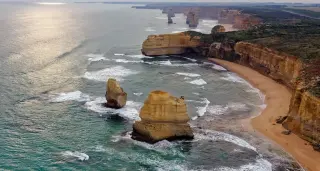
New research uses high‑resolution mapping and fossil analysis to pin down the Twelve Apostles’ formation: Miocene seas deposited limestone about 14 to 8.6 million years ago (with the Gellibrand Marl around 14–15 Ma and Port Campbell Limestone forming later), followed by crustal compression and tilting that began around 8.6 Ma. The dramatic sea stacks took their present form in the last 20,000–23,000 years as sea levels rose after the last glaciation, with ongoing erosion causing collapses (one in 2005, another in 2009) and the landscape continuing to evolve as a climate record from the Miocene.

How Australia’s Twelve Apostles Were Carved by Time and Tectonics
world4 months ago

How Australia’s Twelve Apostles Were Carved by Time and Tectonics

University of Melbourne researchers show the Twelve Apostles formed when millions of years of tectonic uplift lifted limestone, followed by about 20,000 years of erosion; dating now places the rocks at 8.6–14 million years old, with tilted layers and fault lines revealing ancient earthquakes, and only seven stacks remaining after collapses in 2005 and 2009. The study uses photography, mapping, and microfossil analysis to trace 15 million years of Earth history and climate records.

Caves Unveil Green Sahara From 8,000 Years Ago
science5 months ago

Caves Unveil Green Sahara From 8,000 Years Ago

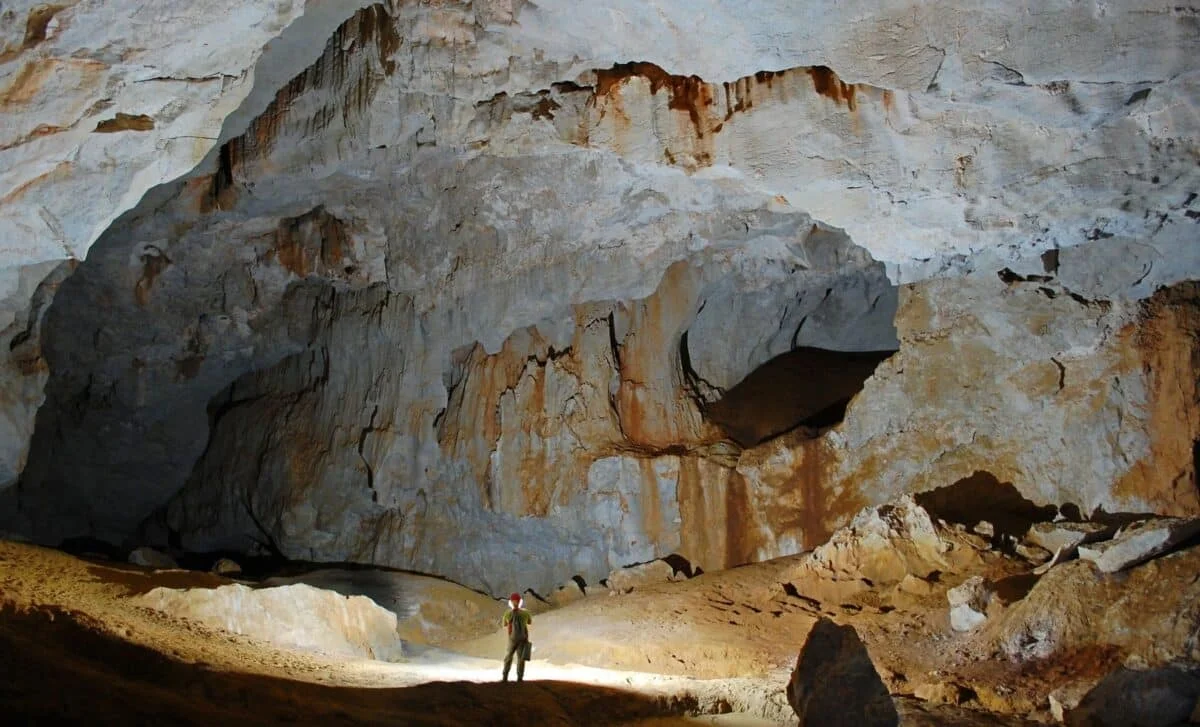
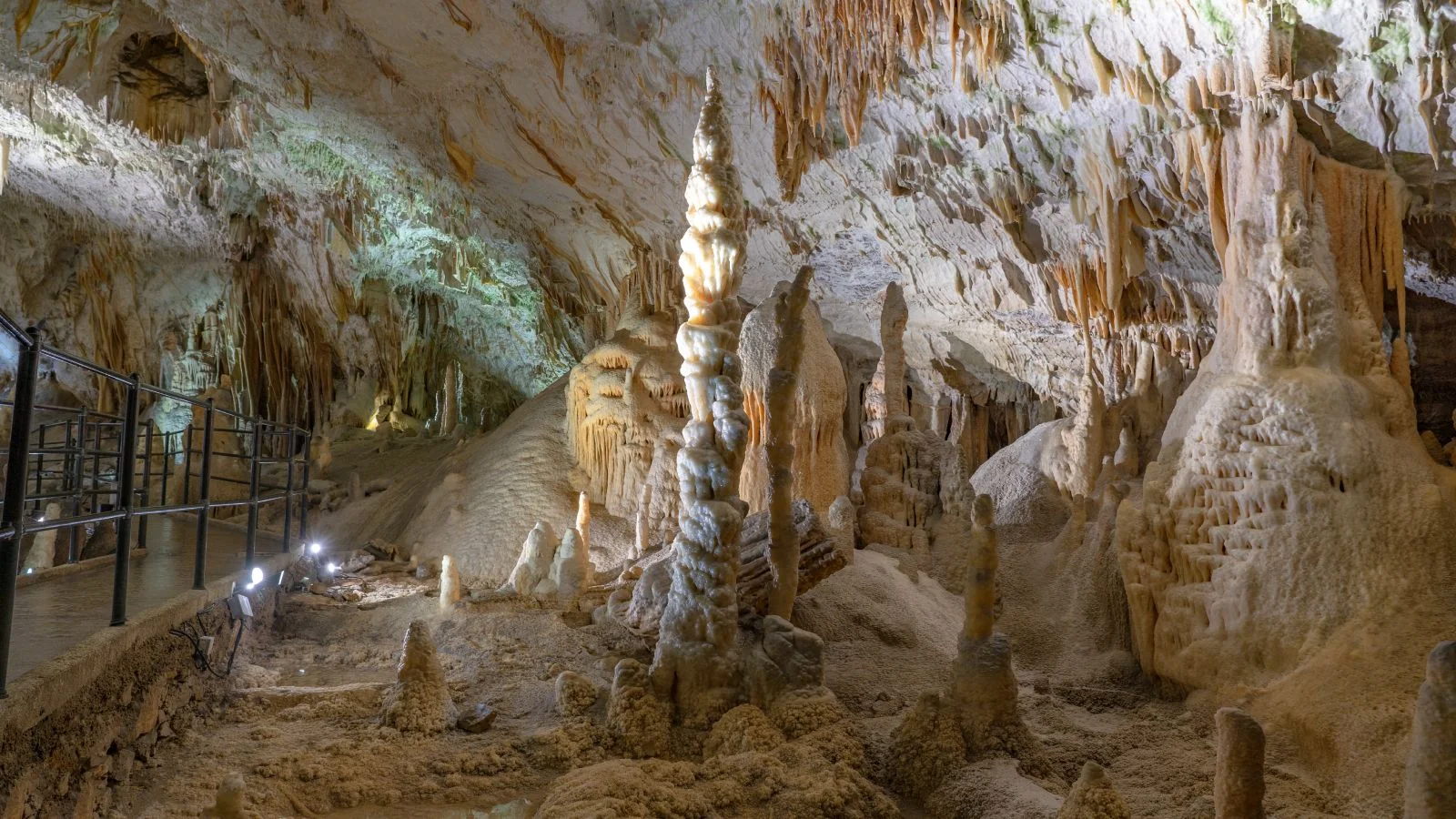
Scientists analyzing stalagmites from caves south of the Atlas Mountains in southern Morocco find rainfall persisted from 8,700 to 4,300 years ago, signaling a greener Sahara; uranium-thorium dating and oxygen isotope analysis tie the wetter period to tropical moisture plumes, and archaeological records show Neolithic communities expanding there as grazing lands widened.

Antarctica Unlocks 23-Million-Year Climate Tale From a 523-Meter Ice Drill
science5 months ago

Antarctica Unlocks 23-Million-Year Climate Tale From a 523-Meter Ice Drill

Researchers drilled 523 meters into Crary Ice Rise in West Antarctica to recover a 228‑meter sediment core, revealing a 23‑million‑year archive of climate and ice‑sheet dynamics, including past open‑ocean conditions and potential West Antarctic Ice Sheet retreats during warmer periods, informing predictions of future sea‑level rise under ongoing warming.

Shifting Plates Drive Climate Through Deep Carbon Recycling
science7 months ago

Shifting Plates Drive Climate Through Deep Carbon Recycling

New computer-model research shows Earth’s plate movements—especially mid-ocean ridges and continental rifts—have been a major driver of long-term carbon cycling. Carbon stored in seafloor rocks is released or sequestered as plates move and subduct, helping to trigger greenhouse or icehouse climates over the last 540 million years. Historically, volcanic arcs were thought to dominate carbon release, but the study finds that divergent plate boundaries played a larger role, with arc emissions rising mainly in the last ~120 million years due to the evolution of planktic calcifiers.

Scientists Discover Hidden Underwater Canyons Beneath Antarctica's Ice
science1 year ago

Scientists Discover Hidden Underwater Canyons Beneath Antarctica's Ice

Scientists have uncovered a hidden ecosystem beneath Antarctica's ice, centered around the ancient Transantarctic Mountains, which have shaped the continent's geological and climatic history over hundreds of millions of years. These findings, including fossilized trees and insights into tectonic activity, enhance understanding of Earth's past climate cycles and could inform predictions about future climate change impacts.