
Human lungs retain long-lived memory T cells, defying mouse models
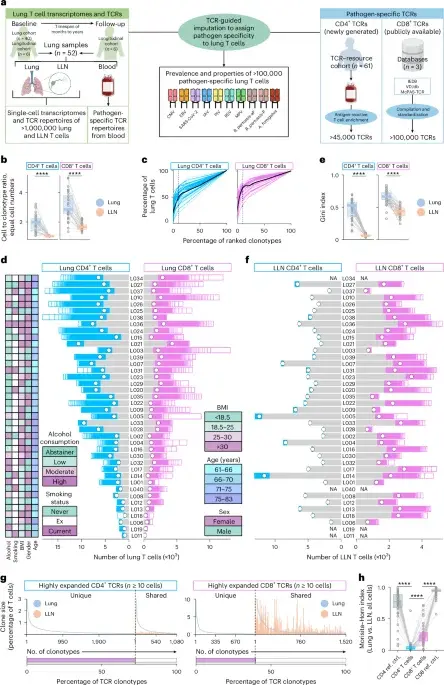
A comprehensive study in Nature Immunology reveals that human lungs maintain a stable, diverse pool of tissue-resident memory T cells (TRM) for years, unlike the rapid attrition seen in mice. By profiling over 87,000 T cells from 40 individuals, researchers found that these cells provide durable frontline immunity against a broad spectrum of pathogens, including SARS-CoV-2, influenza, and bacteria. This discovery challenges previous animal-based assumptions and suggests that boosting lung TRM cells could be a key strategy for designing vaccines that offer long-term protection against severe respiratory infections.
Key points
- Human lung TRM cells persist for months to years, contrasting with the rapid decline observed in mouse models.
- The study analyzed over 87,000 T cells from 40 individuals, mapping pathogen specificity using T cell receptor (TCR) profiling.
- Most participants harbored TRM cells specific to multiple pathogens, including respiratory viruses, herpesviruses, and bacteria like Bordetella pertussis.
- Lung TRM cells show limited clonal sharing with lung-draining lymph nodes, suggesting they are not primarily maintained by retrograde migration from lymph nodes.
- The findings imply that vaccine strategies should focus on generating durable lung TRM responses rather than relying solely on blood-based immune markers.
Background
Previous research in mouse models suggested that lung TRM cells undergo rapid attrition, with lung-draining lymph nodes serving as a reservoir to maintain these responses. This paradigm raised questions about whether human lungs similarly lack durable TRM cells, which could limit long-term protection against reinfection. The current study addresses this gap by providing a high-resolution, large-scale analysis of human lung T cells, offering a more accurate picture of human respiratory immunity.
How outlets are covering it
The primary source, Nature Immunology, emphasizes the stability and diversity of human lung TRM cells, highlighting their potential for durable protection. The secondary source, bioengineer.org, underscores the implications for vaccine design, noting that evaluating only blood immune signatures may miss the most relevant forms of immunity. Both sources agree that the findings challenge previous animal-based assumptions and highlight the need for translational studies to prioritize human lung tissue directly. However, the primary source provides more detailed methodological insights, while the secondary source focuses on the broader implications for public health and vaccine development.
Why it matters
Understanding the durability and diversity of human lung TRM cells is crucial for designing vaccines that offer long-term protection against respiratory infections. This knowledge could lead to more effective vaccines that target tissue-resident immunity, potentially reducing the burden of severe lung infections, which account for over 2 million deaths worldwide each year.
What to watch
The researchers plan to investigate how vaccination reshapes the lung TRM landscape in humans, particularly using samples from donors who received recent immunizations. This could provide insights into how to design next-generation respiratory vaccines that elicit stronger, longer-lasting protection against severe disease.
- Human lungs maintain tissue-resident memory T cells against a broad spectrum of pathogens Nature
- Building immunity: Tissue-resident immune cells defend human lungs from viral, bacterial, and fungal infections Medical Xpress
- Tissue-Resident Immune Cells Protect Human Lungs from Viral, Bacterial, Fungal Infections bioengineer.org
Want the full story? Read the original reporting
Read on Nature