
Memory-based thalamus–brainstem circuit biases decisions across trials
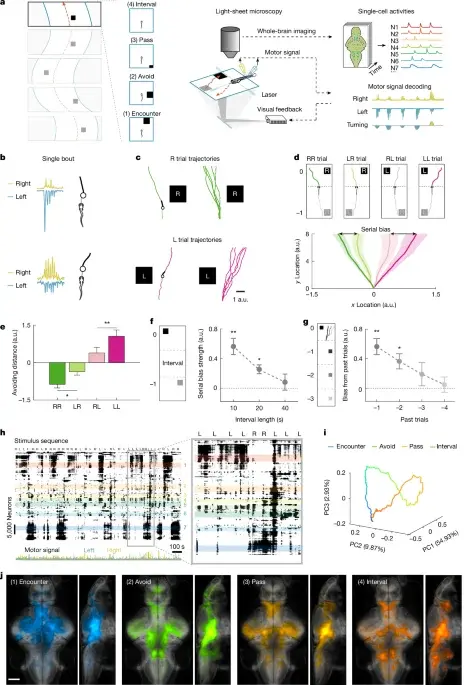
In larval zebrafish, researchers uncover a hierarchical thalamus–hindbrain circuit where discrete attractor dynamics in the dorsal thalamus maintain the position of the most recent obstacle for 10–20 seconds, creating a categorical memory that biases subsequent choices. A downstream hindbrain integrator combines this history with current sensory cues to produce graded motor outputs, enabling history-biased decisions across multiple trials. Optogenetic perturbations show the dorsal thalamus can either suppress or induce serial bias, while a whole-brain computational model links these attractor dynamics to multi-trial memory via NMDA-mediated processes. The findings propose a general, modular mechanism for history-dependent decision making and demonstrate how persistent history signals can be flexibly integrated with present sensory information.
Want the full story? Read the original reporting
Read on Nature