Tag

Thalamus

All articles tagged with #thalamus

Memory-based thalamus–brainstem circuit biases decisions across trials
science1 month ago

Memory-based thalamus–brainstem circuit biases decisions across trials

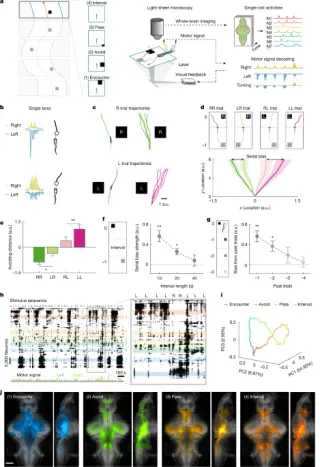
In larval zebrafish, researchers uncover a hierarchical thalamus–hindbrain circuit where discrete attractor dynamics in the dorsal thalamus maintain the position of the most recent obstacle for 10–20 seconds, creating a categorical memory that biases subsequent choices. A downstream hindbrain integrator combines this history with current sensory cues to produce graded motor outputs, enabling history-biased decisions across multiple trials. Optogenetic perturbations show the dorsal thalamus can either suppress or induce serial bias, while a whole-brain computational model links these attractor dynamics to multi-trial memory via NMDA-mediated processes. The findings propose a general, modular mechanism for history-dependent decision making and demonstrate how persistent history signals can be flexibly integrated with present sensory information.

Hidden thalamic rhythm may mark conscious brain states
health1 month ago

Hidden thalamic rhythm may mark conscious brain states

Researchers identified a new thalamic rhythm (19–45 Hz, peaking around 28 Hz) that only appears during wakefulness and REM sleep, vanishing in non-REM sleep. Detected via deep-brain recordings in epilepsy patients, this pattern is strongest near the central thalamus and closely links with rapid eye movements, suggesting it could serve as a measurable biomarker of conscious states and inform targeted brain therapies for disorders of consciousness and related conditions.

Night Shifts Subtly Shrink Brain Regions, But Reversals Occur After Stopping
science1 month ago

Night Shifts Subtly Shrink Brain Regions, But Reversals Occur After Stopping

A large UK Biobank MRI study found that among 2,122 shift workers, there is a modest, symmetrical loss of brain volume in the right thalamus and left amygdala (areas tied to sleep regulation, emotion, and memory) with associated white‑matter changes. The negative association with cognitive performance is small, and the researchers caution interpretation. Importantly, ceasing shift work was linked to partial recovery of brain volume within about 2.5 years, suggesting a potential reversible window, though the study focused on older adults and applicability to younger workers remains uncertain.

Midbrain–Thalamus Rhythm Identified as a Consciousness Signature
science1 month ago

Midbrain–Thalamus Rhythm Identified as a Consciousness Signature

Researchers found a 20–45 Hz thalamic oscillation, recorded via implanted electrodes in epilepsy patients, that occurs only during wakefulness and REM sleep and vanishes in non-REM sleep. This robust bio‑signature of consciousness could enable real‑time monitoring of brain states and guide adaptive deep‑brain stimulation therapies for neurological disorders, representing a potential clinical tool and a new window into how the brain sustains conscious states.

Shift Work Linked to Subtle Shrinkage in Amygdala and Thalamus, Reversible Upon Stopping
neuroscience1 month ago

Shift Work Linked to Subtle Shrinkage in Amygdala and Thalamus, Reversible Upon Stopping

An analysis of UK Biobank data found that people who work shifts show a small but detectable volume loss in the left amygdala and right thalamus compared with non-shift workers, with greater loss at higher shift-work frequency. In participants who ceased shift work, the brain-volume decline halted within about 2.4 years and may show slight recovery; additional microstructural changes and lower scores on memory, processing speed, and fluid intelligence were observed. The authors caution that causality cannot be established and the effects are small, noting the UK Biobank sample is healthier and less diverse than the general population.

New Brain Circuit May Explain Tourette's and OCD Overlap
science2 months ago

New Brain Circuit May Explain Tourette's and OCD Overlap

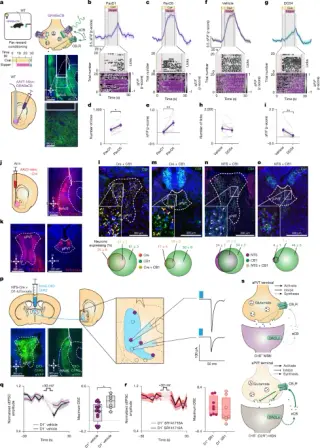
Kobe University researchers mapped a thalamus-to-insular pathway linking the basal ganglia to the insular cortex in mice, a circuit that could explain why Tourette's tics overlap with OCD and other neuropsychiatric conditions. Blocking this thalamus-to-insular connection reduced tic-like movements, suggesting a potential target for less invasive treatments such as ultrasound neuromodulation, though results in humans are not yet established and deep brain stimulation remains a current option.

Neuroscientists Discover Brain's Consciousness Gatekeeper
science1 year ago

Neuroscientists Discover Brain's Consciousness Gatekeeper

A study published in Science reveals that the thalamus, particularly its intralaminar and medial nuclei, actively initiates conscious visual perception by influencing the prefrontal cortex, challenging the traditional view of the thalamus as merely a sensory relay. Using deep brain recordings from patients, researchers found early and strong activity in these thalamic regions during moments of awareness, suggesting they serve as a gateway for consciousness. The findings highlight the thalamus's active role in shaping conscious experience, although the study's small sample size and clinical context limit generalization.

Unraveling the Brain's Translation of Motivation into Goal Pursuit
neuroscience2 years ago

Unraveling the Brain's Translation of Motivation into Goal Pursuit

Researchers have discovered how distinct neuronal populations within the brain's thalamus, specifically the paraventricular nucleus (PVT), regulate actions towards achieving a goal, such as foraging for food. The study shows that dopamine D2 receptor-positive (PVTD2(+)) neurons amplify motivation and pursuit behaviors, while their counterparts, PVTD2(–) neurons, are associated with action termination. This challenges previous notions of the PVT's uniformity and suggests its critical role in translating hunger into motivated action, potentially leading to new treatments for motivation-related psychiatric conditions.

"Unveiling the Brain's Response to Blue Light: Insights from Ultrahigh-field MRI"
neuroscience2 years ago

"Unveiling the Brain's Response to Blue Light: Insights from Ultrahigh-field MRI"

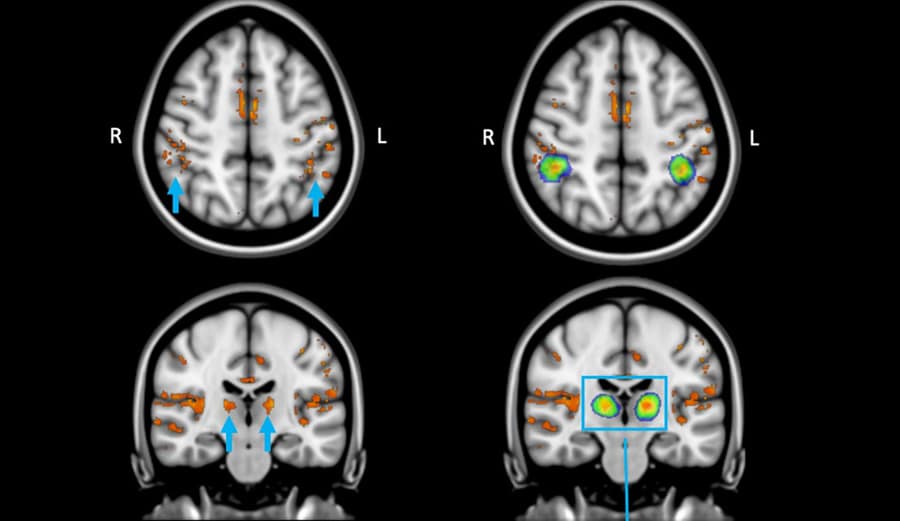
Researchers at the University of Liège have used ultrahigh-field MRI to investigate how blue light stimulates the brain. They found that exposure to blue-enriched light strengthened the connectivity between the posterior thalamus and the intraparietal sulcus, an attentional-related area of the cortex. This modulation of information flow from subcortical to cortical areas suggests that blue light affects non-visual cognitive activity. The study provides empirical data supporting the impact of blue light on brain function and highlights the role of the thalamus in relaying non-visual light information.

The Crucial Role of the Thalamus in Adult Brain Adaptability
neuroscience2 years ago

The Crucial Role of the Thalamus in Adult Brain Adaptability

The thalamus, traditionally seen as a relay station, has been found to play a crucial role in adult brain plasticity, challenging the belief that adaptability mainly occurs in the cortex. Through mouse models in vision studies, researchers discovered that the thalamus actively participates in adaptive processes, particularly in sensory and motor information. These findings could lead to innovative therapeutic approaches for conditions like lazy eye, shifting the focus from the cortex to also include the thalamus.

"Ibudilast: Safeguarding Brain Tissue Integrity with Promising Treatment"
health2 years ago

"Ibudilast: Safeguarding Brain Tissue Integrity with Promising Treatment"

Treatment with ibudilast, an anti-inflammatory drug being developed for progressive forms of multiple sclerosis (MS), was found to significantly preserve tissue integrity in the thalamus, a brain region involved in sensory processing, in patients participating in the SPRINT-MS clinical trial. However, the therapy did not prevent the loss of thalamic tissue over a two-year period. Ibudilast slowed brain atrophy and exerted neuroprotective effects in the retina. The findings suggest that while ibudilast has neuroprotective properties, it may not prevent thalamic volume loss as effectively as an anti-inflammatory therapy. Thalamic integrity may be a useful outcome measure in future clinical trials of neuroprotective strategies for MS.

Autistic preschoolers' sleep issues linked to thalamus connectivity.
neuroscience3 years ago

Autistic preschoolers' sleep issues linked to thalamus connectivity.

Preschool children with autism spectrum disorder who have sleep problems show heightened sensory sensitivity and excessive connectivity between the thalamus and auditory cortex regions of the brain, according to a neuroimaging study. The research also indicated a likely lack of auditory habituation during sleep. The study makes an important contribution to the scientific understanding of the physiological aspects of autism spectrum disorder.

LSD's effect on the brain's "gatekeeper" explained by neuroscience research.
neuroscience3 years ago

LSD's effect on the brain's "gatekeeper" explained by neuroscience research.

A new study published in Neuropsychopharmacology has found that LSD disrupts the brain's gatekeeping process, leading to increased information flow and altered perception. The study utilized data from two randomized, placebo-controlled, double-blind, cross-over trials involving a total of 45 healthy participants. The researchers found evidence that LSD resulted in widespread changes in both functional connectivity and effective connectivity. Additionally, LSD was found to enhance connectivity in brain areas associated with thinking and cognitive functions. The study raises the possibility that LSD may disrupt the balance between excitation and inhibition in the brain, a factor that has been linked to psychosis and hallucinatory experiences.